
The HPV vaccine story
A shot at the future


Fun fact! There was the exact same number of eight year old girls in Sweden on 1st January 1994 as 9 year old girls on 1st January 1995. Put simply – none of them died that year. They all got to celebrate a 9th birthday. Isn’t that beautiful? It’s a statistical anomaly – and has not happened before or since, but I love this statistic.[1] It holds an optimism about an imagined future. Accidents, negligence, crime and disease will always exist, but sometimes we can outwit them.
Here’s another fact. In the most recent five-year period (2020 – 2024), no woman in their early 20s died from cervical cancer in England.[2] This is no happy accident. The statistic exists because of a new technology built on ancient knowledge – a vaccine. Around 9 in 10 women in this age group received the HPV vaccine when they were aged 12 or 13. My daughter was one of them. I had no hesitation in signing the document to consent to the jab.
I had concerns with writing about a vaccine, when I am not a scientist. As a recovering academic, I know it used to infuriate me when people would plough into my field of expertise without the research, knowledge or skills required. My field was domestic abuse, and everybody has an opinion – quite often a victim-blaming, “why doesn’t she just leave, she probably likes it, she should stop nagging/lying” kind of opinion. I'd get shouted down by people who claim their “common sense” outweighs my thoughtful contributions to the field of knowledge. So, I don’t want to wander too far out of my lane.
But, science shouldn't get a free ride. It needs to be open to scrutiny from other scientists, but also from us know-nothing lay people. We might not get the intricacies of molecular biology, but we are the people who need convincing of the efficacy of a treatment, the properties of potential cures and the role of vaccines in supporting our own and others’ health.
We are also often the people who fund research through tax or charity donations, so the work should be public-facing and accountable. Especially, in relation to ethics. Scientists, like anyone else, might well go down an ethical dead end, a hyper-focus that prevents them from seeing a bigger picture. (Just because you can bring back a T-Rex doesn’t mean Jurassic Park should exist.)
Holding science accountable is not just about picking it apart. It is also about defending science from false accusations and celebrating the wins.
In writing this piece, I made sure that the sources I am citing are reliable. In particular, I leaned on the work of Stanley Plotkin – a virologist who played a pivotal role in the development of the rubella vaccine. In April 2006, he published an article in Nature called Vaccines: Past, Present and Future. It starts:
“The beginnings of vaccination, defined as an overt attempt to use part or all of a microbial pathogen to protect against that microbe, are lost in the proverbial mists of time.”
Plotkin (2006)
This next bit gets technical, so for non-scientists it might help to imagine it being read by a favourite teacher.
Plotkin goes on to say that by the 11th century there were hints in Chinese literature of the use of scabs breathed into the nose to immunise against smallpox.
This process still underlines much of modern immunology, which relies on two key principles: attenuation (creating a vaccine by reducing the power of the virus) and inactivism (rendering viruses non-infectious through processes such as heating or freezing, so that the structure remains intact allowing the recipient’s body to form anti-bodies).
Robert Jenner discovered that exposure to cowpox, a mild illness in humans, could prevent smallpox, a potentially fatal disease. This is because the structures of the two viruses are similar, allowing the body to build an immunity. This discovery led to the eradication of smallpox in the 20th century through a global vaccination programme.
Pasteur is credited with the development of our understanding of attenuation. He showed that exposing pathogens to high temperatures and oxygen could give us safe milk, but also improved treatments for anthrax and rabies.
An understanding of antibodies, and cellular immune responses began with the original work of Paul Ehrlich and Ilya Metchnikoff which led to the development of numerous attenuated virus vaccines, including those for polio, measles, rubella, mumps and varicella between the 1950s and 1980s. Yay, for science!
Now the science gets a little space-age, so again it might help to envisage a narrator. This time I’m going to suggest a good-looking Hollywood actor wearing glasses that accentuate their cheekbones and a white coat so that you can take the science seriously.
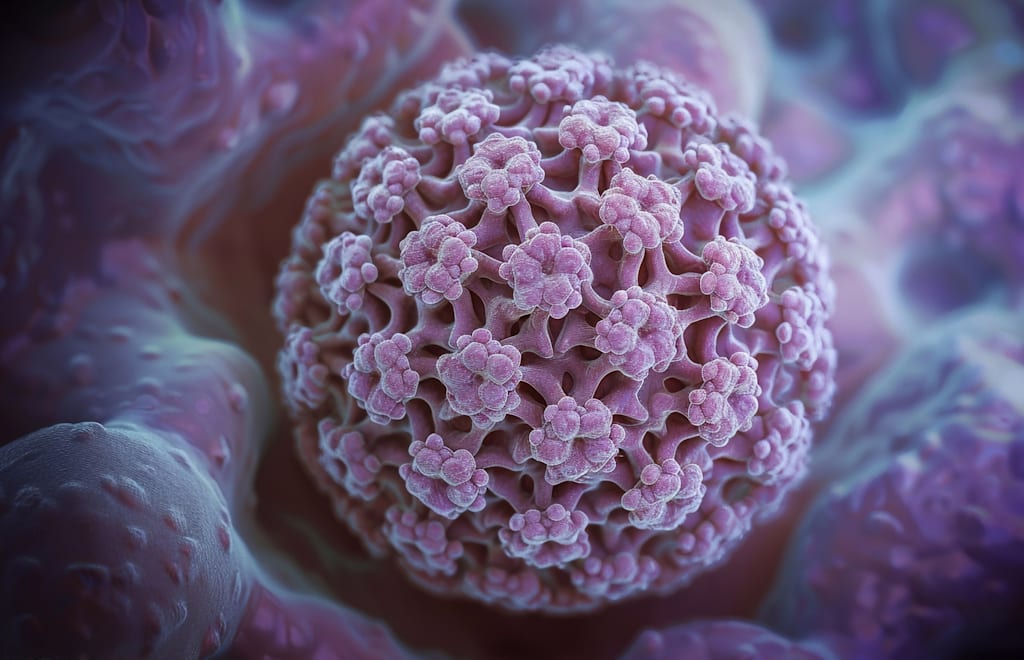
According to Cancer Research UK and the National Health Service, the Human Papillomavirus (HPV) is the name of a very common group of viruses. They do not cause problems in most people, but some types can produce genital warts. Some high-risk HPV types can cause cancer if they stay in the body for a long time. Cancer Research UK scientists helped prove this link 25 years ago, and now we know that almost every cervical cancer case is caused by HPV.
The HPV vaccine has been offered to all girls in school year eight since September 2008 and from September 2019 the vaccine has also been offered to year 8 boys. This is because the evidence is clear that the HPV vaccine helps protect both girls and boys from HPV related cancers.
And this is why we have that lovely statistic about the lack of cervical cancer deaths in young women.
Yay, and double yay for science!
But alongside this wonderful advance, something very odd is happening. A new dark-ages of scientific literacy is dawning. No matter the evidence that diseases that used to kill are slowly being eradicated, the idea of expertise is being eroded by and replaced with vociferous opinion.
If you can shout louder, because you have more money, power or followers, your opinion can replace evidence and research. People are being directed to ignore historical data, to pretend that science doesn’t matter (whilst making sure that their own families are protected – isn’t that right, Mr Kennedy?) The irony is we have an anti-vaccine movement that is determined to go viral. There is a forced amnesia that says our ancestors survived without vaccines, without pasteurised milk, without germ theory or even basic literacy and numeracy – a collective forgetting of the people who didn’t survive, the diminished life expectancy, the brutal, short lives of many.
Ah but, Rachel, I think you’ll find, the first smallpox vaccine came out in 1796 and 100% of those who received it are now dead.
A joke, maybe. However, the World Health Organisation placed vaccine hesitancy as one of the top ten threats to global health, alongside climate change, air pollution and HIV.[3]
For vaccine efficacy we know that the higher the uptake the better the outcomes. Unfortunately, access to vaccines is patchy – depending on geography, resources, even gender. Some countries are reliant on aid programmes that increasingly come with untenable conditions, rather than having home-grown technology and development.
Yet, even here in the UK, in a developed country with a free at point-of-delivery heath service, vaccine uptake is declining.
I don’t know the answer to this. I have read various reviews of interventions that might help. The top intervention they recommend is to arm Healthcare Providers with information and communication training. Practitioner advocacy is a cost-effective means of improving vaccine uptake.[4]
I can see that health professionals are probably the best placed to address fears about side-effects, allergies and risks. However, the idea that the responsibility for vaccine hesitancy should fall to individual practitioners seems unfair and a tad lop-sided, when the misinformation is coming from rich and powerful individuals and the media organisations they own and control.
My solution would be more radical. I say, let’s ridicule the charlatans, the fake-newsers and the unqualified. I want to see them held properly to account when faced with scarred faces of virus victims, pictures of patients looped onto life-saving equipment, statistics about child deaths. I want to see them squirm against fact-checking and the consequences of their exaggerations and lies.
Of course, I issue this advice with the disclaimer that there has been no random control trial to see if it would work. But I do think all of us have a duty to ask – what is your evidence for that claim? What research are you citing?
I get that the small stories, the anecdotal "it worked for me," can be very convincing and easy to absorb in a world full of big data. However, we also need to train ourselves to view the bigger picture.
For now, however, let’s get back to the celebration. Cancer has long been a big, scary word. All of us will have lived, at some point, in its shadow. The HPV vaccine is a little miracle, a glimpse of a potential future, right here in the present. More people are celebrating birthdays because it exists and that is beautiful.
The HPV vaccine is a statement that young people’s (especially young women’s) lives matter. My daughter hasn’t had the easiest time of it, but this is one area of her life where I can take a big breath out. I think of a vaccine that stops cancer as mind-blowing magic. And since I planned this article, I have read about more exciting possibilities in eliminating cancer through vaccines.
All this signals a possible bright future. If we start taking young people’s health seriously, give them the full access to the opportunities that good health can provide, maybe they can start to take themselves more seriously, demand more, become more, take up more space. A quiet change that could spark a revolution.

[1] I first heard this statistic on the British panel show – QI – the fact-checking QI elves then verified it for me.
[2] Cancer Research UK New data shows the HPV vaccine is saving lives from cervical cancer - Cancer Research UK - Cancer News
[3] Ten threats to global health in 2019
[4] Tull, K. (2019). Vaccine hesitancy: guidance and interventions. K4D Helpdesk Report 672. Brighton, UK: Institute of Development Studies.
About the Creator
Rachel Robbins
Writer-Performer based in the North of England. A joyous, flawed mess.
Please read my stories and enjoy. And if you can, please leave a tip. Money raised will be used towards funding a one-woman story-telling, comedy show.
Enjoyed the story? Support the Creator.
Subscribe for free to receive all their stories in your feed. You could also become a paid subscriber, letting them know you appreciate their work.
Comments
There are no comments for this story
Be the first to respond and start the conversation.