
Clean fuel may be made from wet coffee grinds.
The problem of soggy waste in coffee

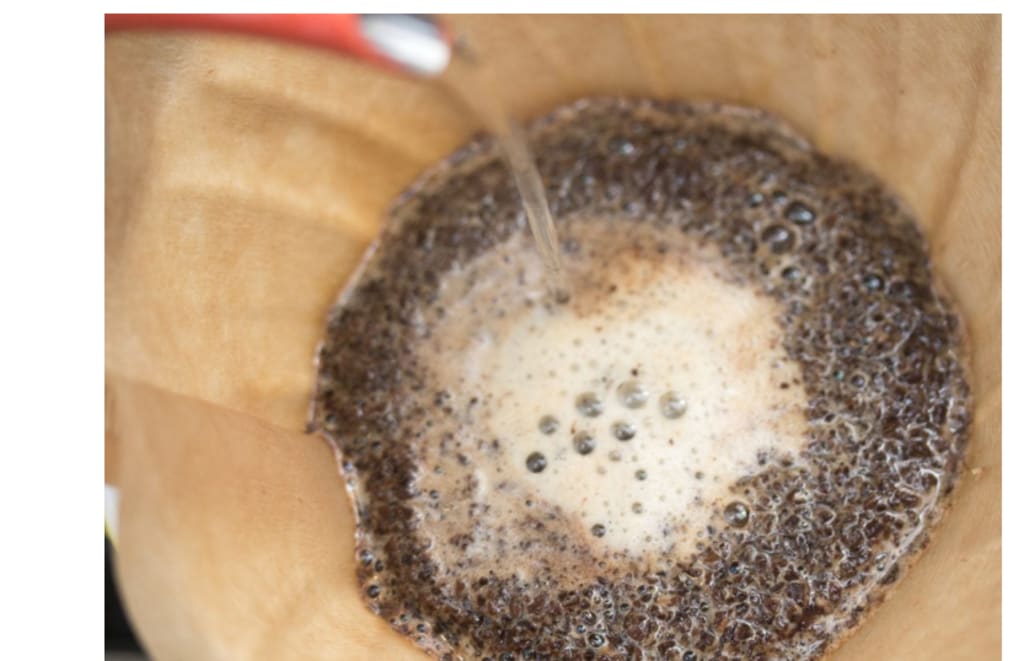
Although coffee is one of the most popular beverages in the world, it produces a lot of soggy trash. Even though the leftover damp grounds from each cup still have a lot of stored energy, they typically wind up in the garbage.
One issue prevented that garbage from being used as fuel for years: it was just too wet. In less than two minutes, researchers in South Korea have discovered a technique to shift that moisture from a hindrance into a benefit, turning used coffee grounds into a fuel that resembles coal.
The problem of soggy waste in coffee
Over 10 million tonnes of discarded coffee grounds are disposed of worldwide each year, with the majority ending up in landfills or incinerators. The trash isn't completely worthless because the grounds contain a sizable quantity of stored energy.
The water is the catch. The moisture content of freshly ground coffee, which is roughly 55% by weight, has long been a barrier between waste and fuel. Large-scale recycling nearly never works out because drying them first uses so much energy and money.
Studies on coffee waste have revealed that when the grounds are allowed to decompose in a landfill, they also release methane, a much more powerful greenhouse gas than carbon dioxide.
Allowing heat to perform the job
Under the direction of Dr. Taejun Park, a research team at the Korea Institute of Geoscience and Mineral Resources (KIGAM) made the decision to give up on the water. Their process, known as flame plasma pyrolysis, feeds the wet grinds directly into high heat without any drying.
The device produces a plasma flame that is between 1,470 and 1,650 degrees Fahrenheit by burning compressed air and liquefied petroleum gas. Rather than waiting for the water to evaporate, that wall of energy strikes the ground and starts working on it.
Previous methods view moisture as an enemy that must be eliminated before any meaningful processing can start. Here, the water never has a chance to slow things down because the heat arrives so quickly and intensely. It turns into a tool.
The unexpected popcorn effect
Each particle's water flashes to steam as soon as heat touches it. Pressure increases more quickly than the ground can release it. The team called this phenomenon the "popcorn effect" because the particles burst from the interior in tiny spurts.
The micro-blowouts are quite effective. They use pores to riddle the remaining carbon, creating a structure like a sponge where a The steam appears to do more than simply depart; as it does so, it scours and forms the substance.
The alteration is visible under a microscope. Pictures taken at various times show the grounds changing from being solid and sealed to having holes in them, and ultimately collapsing if the heat continues to push past the sweet spot.
Making fuel out of coffee grounds
It is difficult to overlook the statistics underlying the change. The grounds lose around 83% of their mass in 90 seconds, leaving behind carbon-dense biochar that contains about one-third more energy than the raw material.
This puts it in the same category as the hardest and most energy-dense type of coal, anthracite. From about 16 percent to 46 percent, the fixed carbon content—the portion that truly burns as fuel—rose almost twofold.
Additionally, the sulphur was totally eliminated by the procedure. The researchers saw very little smoke or tar during treatment, and burning this biochar should prevent the sulphur oxides that contaminate the air when regular coal ignites.
Fuel in less than two minutes
Where the approach really shines is in speed. When the objective is to process waste at scale, the slower methods of extracting fuel from wet biomass, such as coffee grounds, represent the entire bottleneck.
Simmering biomass in hot water is one such method. It can take one to six hours to complete a single batch. A same task can be completed in far under two minutes using flame plasma, which operates dozens to hundreds of times quicker.
It still takes at least 30 minutes to roast biomass using a different technique that uses milder temperatures. This technology uses less energy while maintaining that blazing velocity since it produces its plasma by burning gas rather than heavily relying on electricity.
Additionally, coffee waste cleans
Only half the story is revealed by the fuel value. A material with a large internal surface area—the very characteristic that determines how efficiently a carbon can absorb substances—is left behind after all those pores are blown wide during treatment.
The surface area of raw coffee grounds is nearly nothing. That significantly alters after just 90 seconds of processing. with each gram creating a porous surface area of almost 100 square meters.
The end product is a substance that resembles activated carbon, a highly porous material used in air purifiers, water filters, and other cleaning technologies. Pollutants can be drawn out of water by a carbon that has so many pores. It might be cleaned up by the same coffee waste that clogs landfills.
Wet waste's future
The moisture of coffee grounds made quick and inexpensive conversion seem unattainable prior to this effort. By converting moisture into an active component—a built-in steam source that both accelerates the reaction and shapes the pores rather than obstructing the path—the study challenges that presumption.
This method is also unrelated to coffee. Park's team anticipates that it will manage additional moist waste streams, such as food scraps, sewage sludge, and leftover agricultural stuff, which are typically dismissed as being too wet to recover.
The equipment's small size and brief cycle allow it to operate directly where garbage is generated, reducing the expenses associated with transportation and drying, which are the main obstacles to most recycling plans. Other research on porous carbons continues to explore the possibility of using biochar produced in this manner to filter contaminated water or feed power plants.
According to Dr. Park, "this technology presents a new paradigm in which waste is viewed as a valuable energy resource instead of a disposal problem." Park believes the reward will be greater than any one fuel, and the team is currently working toward industrial size.
About the Creator
Enjoyed the story? Support the Creator.
Subscribe for free to receive all their stories in your feed.
Comments
There are no comments for this story
Be the first to respond and start the conversation.