
Subtle Body Language Signs a Covert Narcissist Is Trying to Mimic Your Personality
When someone mirrors you too closely, admiration can start to feel like imitation.

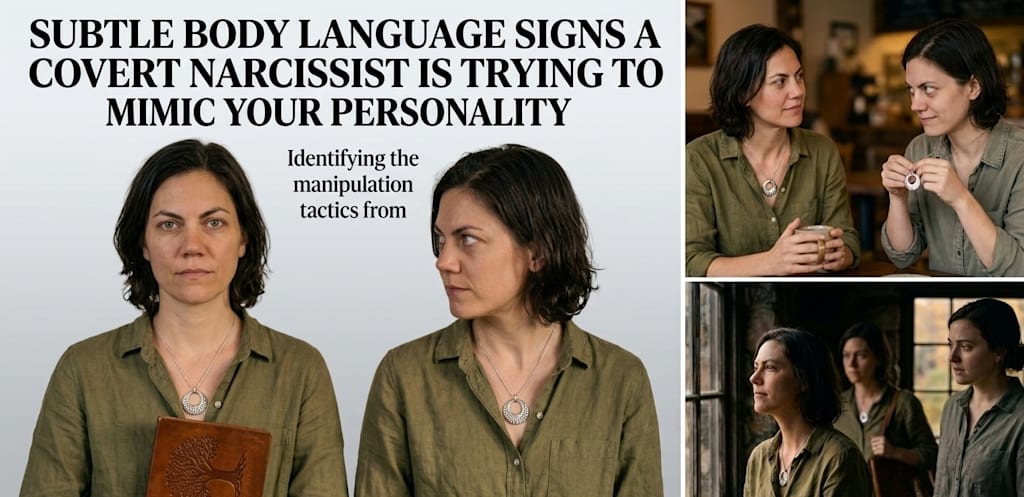
At first, it can feel like a strange kind of connection.
Someone suddenly likes the same things you like. They use your phrases. They copy your gestures. They seem to “understand” you almost too quickly.
Mirroring is not always negative. In healthy relationships, people naturally pick up small habits from each other. Friends may share expressions. Couples may develop similar routines. Coworkers may unconsciously match each other’s tone during conversation.
But sometimes, mimicry does not feel warm or natural. It feels calculated.
When someone copies your personality too closely — especially while quietly competing with you, studying you, or trying to gain emotional access — it can leave you with a strange discomfort you cannot easily explain.
When Mirroring Feels Different From Connection
Healthy mirroring feels mutual. It happens slowly and naturally.
Unhealthy mimicry can feel sudden, intense, and oddly strategic.
A person may begin copying your clothing style, your humor, your emotional expressions, your opinions, or even the way you tell stories. At first, you may think, “Maybe we just have a lot in common.”
But over time, something feels off.
You may notice they are not simply relating to you. They are borrowing pieces of you.
Most people do not notice this pattern at first because it begins with familiarity. And familiarity can feel comforting before it starts to feel invasive.
They Copy Your Gestures Too Precisely
One subtle body language sign is overly precise imitation.
For example, if you cross your arms, they cross theirs. If you tilt your head, they do the same. If you lean back, they lean back almost immediately.
Normal mirroring is usually soft and unconscious. It has a natural delay. It does not feel like someone is performing your reflection back to you.
Calculated mimicry can feel sharper.
You may sense that the person is watching you more than listening to you. Their body language may appear slightly rehearsed, as if they are trying to create a false sense of closeness.
This does not prove someone is narcissistic. But if it happens repeatedly alongside emotional manipulation, competitiveness, or boundary testing, it may be worth noticing.
They Study Your Reactions Before Copying Them
A covertly manipulative person may watch your emotional responses carefully.
They may observe what makes people like you, trust you, laugh with you, or open up to you. Then, slowly, they begin adopting those same expressions.
If you are known for being calm, they may suddenly present themselves as peaceful and thoughtful. If people admire your humor, they may start using your style of jokes. If you are emotionally expressive, they may begin copying your warmth in public.
The strange part is that it may not feel authentic.
You may notice their expression changes depending on who is watching. Around others, they may imitate your charm. In private, they may become cold, dismissive, or subtly critical.
That contrast can be confusing.
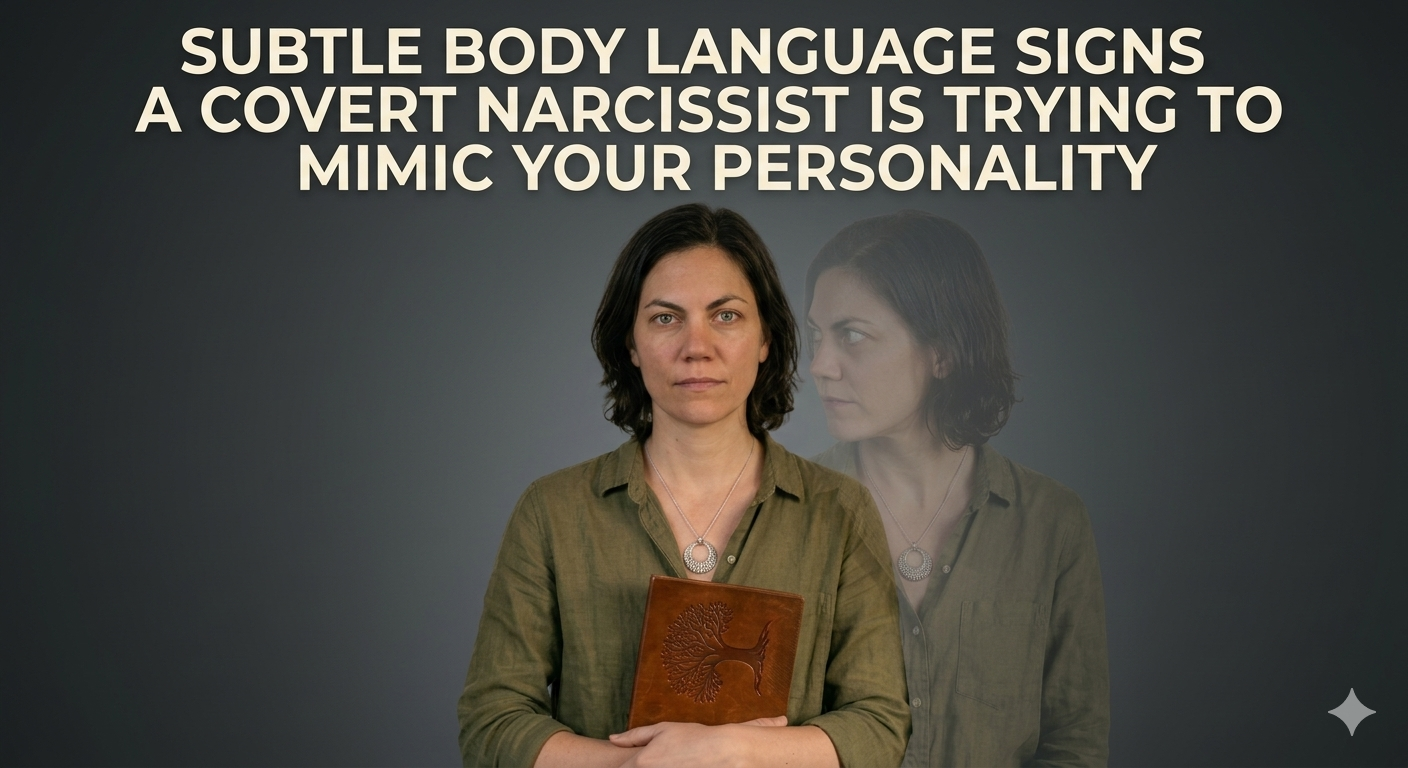
They Borrow Your Words and Make Them Their Identity
Another sign is verbal mimicry.
They may start using your favorite phrases, your storytelling style, or your way of explaining things. Again, this can happen naturally between close people. But unhealthy mimicry often feels like they are taking ownership of your voice.
For example, you share a personal belief, and a few days later they present it as their own. You explain a life lesson, and later they repeat it to others as if it came from them. You describe a goal, and suddenly they talk about having the same dream.
Sometimes the most uncomfortable part is not the copying itself. It is the quiet erasure.
You may feel like they are not appreciating your personality — they are absorbing it.
Their Eye Contact Feels Like Observation, Not Warmth
Eye contact can reveal a lot about intention, but it should never be judged alone.
Still, one unsettling sign is when someone’s gaze feels more like analysis than connection.
They may watch your facial expressions closely, scan your reactions, or stare slightly too long when you speak. Instead of feeling heard, you feel studied.
This kind of attention can feel flattering at first. Many people mistake intense observation for deep interest.
But real emotional connection usually feels safe. Being studied often feels tense.
If you leave conversations feeling exposed, drained, or strangely copied afterward, your discomfort may be trying to tell you something.
They Mirror Your Vulnerability to Gain Trust
One of the most confusing patterns is emotional mimicry.
You share something painful, and suddenly they reveal a similar story. You express insecurity, and they quickly match it. You describe trauma, and they seem to produce a parallel experience almost immediately.
Of course, people can genuinely relate through shared pain. That is normal.
The concern begins when their vulnerability feels timed, vague, or used to pull you closer before trust has been earned.
A manipulative person may mirror your emotions to make you feel, “They understand me better than anyone.”
This can create fast emotional intimacy. But if the connection later becomes controlling, competitive, or guilt-based, the early mirroring may have been part of the hook.
They Copy You Publicly but Undermine You Privately
A deeper warning sign appears when someone imitates you in public but minimizes you in private.
They may copy your style, interests, or social energy around others, while privately making small comments that reduce your confidence.
They might say things like:
“You think too much.”
“That is not really special.”
“Everyone does that.”
“You are not the only person who likes that.”
This creates a strange emotional split. They seem to admire your traits enough to copy them, but not enough to respect you.
That contradiction can be painful.
It may leave you wondering, “If they dislike me so much, why are they acting like me?”
Sometimes mimicry is not admiration. Sometimes it is competition.

How to Respond Without Overreacting
The goal is not to accuse someone based on one copied gesture or shared interest.
Instead, slow down and observe the pattern.
Ask yourself:
- Do I feel flattered, or do I feel studied?
- Do they respect my boundaries?
- Do they copy me while also competing with me?
- Do they use my words, ideas, or personality traits as their own?
- Do I feel emotionally safe around them?
- Do they become defensive when I create distance?
If the pattern makes you uncomfortable, protect your personal information. Share less. Watch how they respond when they no longer have easy access to your emotions, ideas, or vulnerabilities.
Healthy people respect distance.
Manipulative people often react poorly when access is reduced.
Practical Takeaways
- Mirroring is normal, but intense or calculated mimicry can feel unsettling.
- Repeated patterns matter more than one copied gesture or phrase.
- Pay attention if someone copies you publicly but criticizes you privately.
- If their attention feels like studying rather than connection, slow down.
- Protect your boundaries and avoid oversharing with people who make you feel emotionally watched.
Final Conclusion
Being copied can feel flattering in the beginning. It can make you feel seen, understood, and chosen.
But when someone starts borrowing your personality while quietly competing with you, dismissing you, or using your vulnerability to get closer, the feeling changes.
You are not wrong for noticing.
Sometimes your discomfort is not jealousy, paranoia, or overthinking. Sometimes it is your intuition recognizing that connection should feel mutual — not like someone is slowly trying on your identity.
The healthiest people do not need to become you to be close to you.
They meet you as themselves.
About the Creator
Abdul Jamil Nasir
Welcome! I decode dark psychology, human secrets, and hidden body language. Learn how to spot manipulation, protect your peace, and read people like an open book. Read minds, spot manipulation, protect your peace.
Please Subscribe! 🧠✨
Enjoyed the story? Support the Creator.
Subscribe for free to receive all their stories in your feed.
Comments
There are no comments for this story
Be the first to respond and start the conversation.