aging
Aging with grace and beauty. Embrace age with aging advice, tips, and tricks.
When the Castle Falls
I remember my first thought. It was something about light. If I squinted, the light looked like diamonds. I used to do that when I was a baby lying on my back. Later, I did it on benches in the underground while I waited for the train.
By Stephanie Van Orman2 months ago in Longevity
Isabel: Sings in the Dark
I asked my mom, “Why do you sing so much?” Her answer came quickly: “Because she likes singing.” She answered in the third person. Leti, our friend and caregiver, and I were surprised. We were pleasantly surprised. The noise she had been making for nearly ten hours consistently was not out of agitation but out of enjoyment.
By Rick Henry Christopher 2 months ago in Longevity
The Factor Most People Miss When Considering Emotional And Cognitive Intelligence (EQ/EI and IQ)
Written by a human, for humans, always. Many people discuss the importance of different types of intelligence. Cognitive Intelligence, or IQ, has been something we have scored and tried to understand and correlate with success for decades...
By H.E. Dr. Cody Dakota Wooten, COIE, DFM, DHM2 months ago in Longevity
Forget Living Forever: New Model Suggests a Surprising Upper Limit on Human Life. AI-Generated.
Humans may never live forever, but new research suggests that even in a best‑case scenario, our bodies might top out somewhere around 150 to 190 years—and that says a lot about what longevity actually is, and isn’t.
By Eina Liban3 months ago in Longevity
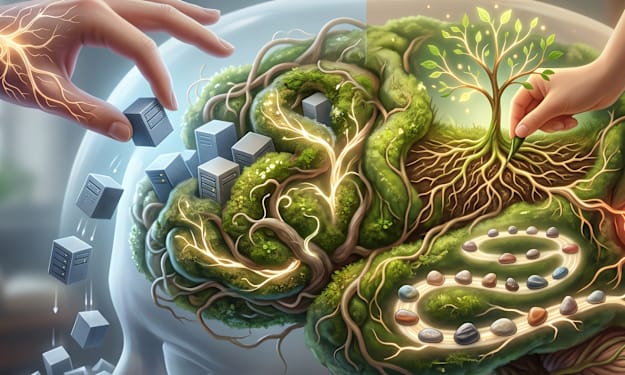
Your Brain Was Never Built to Learn Like a Computer: Three Neuroscience Principles That Make Learning Stick
Every day your brain encounters far more information than it could ever preserve. Because preserving every experience would be metabolically costly, the brain continuously strengthens some neural pathways while allowing countless others to weaken. Forgetting, in other words, isn't a design flaw — it's one of the brain's most important learning strategies. Learning, in this framing, is not simply adding information to storage. It is a process of remodeling the brain's physical architecture, strengthening some pathways, letting others decay, and reorganizing the wiring in between. High performers may not describe what they're doing in this language, but the habits that separate fast, durable learning from forgettable exposure line up closely with what memory researchers have been documenting for decades.
By Khali Sollis3 months ago in Longevity