
Natalise Kalea Robinson traded the recording studio for the skin microbiome
How Natalise Kalea Robinson went from signed recording artist to cofounder of Parallel Health, a precision health company built on the skin microbiome.

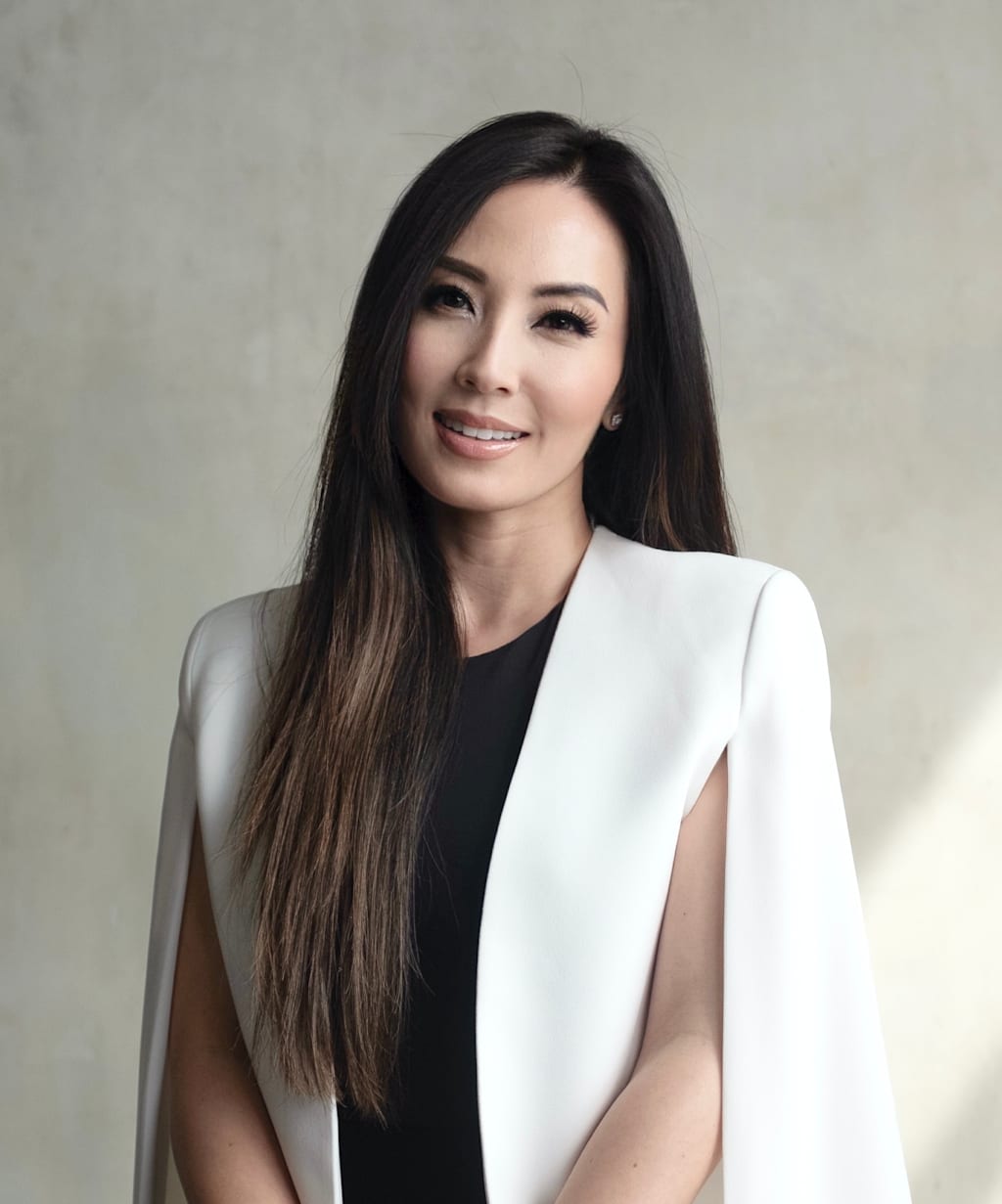
At 23, Natalise Kalea Robinson stood on a stage at an arena in Oakland and performed for a crowd of 30,000 people. She was a signed recording artist with songs on MTV and VH1, a Stanford graduate who had already toured the country and started her own record label. If someone had told her that night that she would one day run a biotech company built on genomic sequencing, she says she would have brushed it off. Today, she is the cofounder and chief executive of Parallel Health, a precision health company that reads the skin microbiome the way a genomics lab reads DNA and turns what it finds into personalized treatment. The gap between those two lives looks vast. Robinson has spent her career closing it. What connects the touring musician and the biotech founder is one stubborn instinct: she refuses to be tied to a single identity, and she has always cared more about the substance of a thing than the way it is sold.
From a record deal to a research lab
Natalise Kalea Robinson grew up in San Francisco, the daughter of immigrant parents from Myanmar. Her mother arrived in the United States with two hundred dollars, which was stolen on her first day, and raised her on a single rule: outwork everyone else in the room. She started piano and opera at the San Francisco Conservatory of Music at ten. She was valedictorian of her high school class, and she entered Stanford at sixteen as a physics major, pulled toward astrophysics because she loved constellations as much as equations. Then, a record label signed her during her sophomore year. She switched her major to communication and journalism, graduated in three years, summa cum laude, and left campus for a recording contract and a national tour.

The music business taught her early that talent alone decides very little. One record executive told her he liked her voice but that America was not ready for an Asian American recording artist. Rather than shrink to fit someone else's idea of the market, she signed with an independent label, toured, and then built her own record label and publishing house. Her songs ran on MTV, VH1, and across television shows and commercials. She started a marketing firm for startups and creative businesses, spent a few years in film finance in Los Angeles and London, and eventually went back to Stanford for an MBA. After business school, she joined the pet technology company CUDDLY as chief operating officer, rose to chief executive, and grew its revenue fivefold in eighteen months. She later held leadership roles at the mental health company Octave and at the skincare company Ellis Day Skin Science, where she was vice president of brand marketing. There she met Dr. Nathan Brown, a scientist who had spent his career on phages, and heard about the skin microbiome for the first time.
Why the science comes before the marketing
Robinson and Brown founded Parallel Health in 2021, and she agreed to join on one condition: that they get into the Illumina Accelerator, which they did. The company built a skin microbiome test based on whole genome sequencing, then wrapped it in a fully licensed teledermatology practice offering personalized phage serums and prescriptions. Parallel calls the approach Microbiome Dermatology™, and the reasoning behind it is plain. Most of the DNA in and on the human body is microbial, and Robinson argues that skincare has spent decades ignoring that ecosystem.
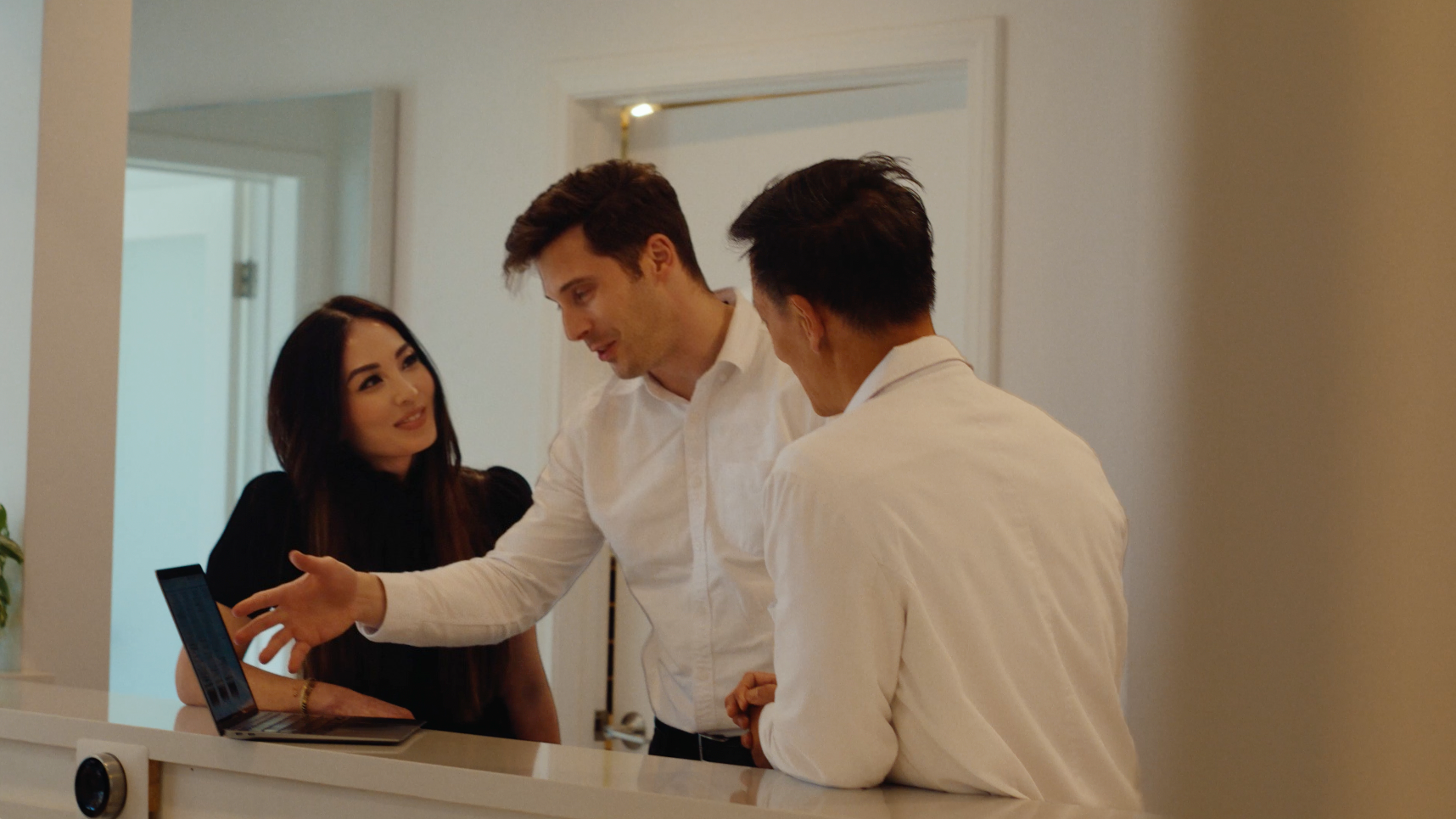
Her role as chief executive is mostly translation. To investors, she lays out the broader stakes, including the promise of phage therapy as a precise alternative to antibiotics at a moment when antibiotic resistance is becoming a serious threat. To customers, she explains the same science in plain language and shows how it fits in an ordinary routine. The mission she describes stays deliberately modest: "We are not trying to change who you are. We just want to empower you to be your best self." That preference for substance over packaging shows up in the numbers. Parallel reached breakeven with no marketing spend, a rare thing for an early-stage consumer health company, and a fair signal of where Robinson puts her energy.
The numbers behind a quiet biotech
Parallel made its public debut in 2023 at TechCrunch Disrupt's Startup Battlefield 200, where it revealed its first product and $2.3 million raised ahead of its seed round. It finished as one of the top six finalists, in the top 0.2 percent of the field. According to PitchBook, the company has since raised more than $4 million in total, backed by the Illumina Accelerator, Stanford StartX, and UC Berkeley's HealthEngine. Fast Company named Parallel a World Changing Idea in 2022, and in 2026 Natalise Kalea Robinson was named to Inc.'s Female Founders 500 list.
The clinical record is just as concrete. As a licensed teledermatology practice, Parallel has cut dermatology wait times from roughly six months to about one month. The company holds eight pending patents, maintains biobanks of more than ten thousand characterized microbial strains, and is in network with Aetna, Blue Shield, Cigna, and UnitedHealthcare in California. Its product line runs from custom active phage serums and the Blue Biotic™ peptide cream to a suite of tests covering the face, scalp, body, and even odor.
Robinson resists calling Parallel a skincare company. She describes it instead as a precision health platform that begins in dermatology and reaches outward across human health, and she has talked about using the microbiome to understand autoimmune disease. The more patients Parallel sequences, she says, the stronger its data advantage becomes. The near-term evidence is quieter but harder to argue with. Parallel turned a profit without buying attention, shortened a routine dermatology wait from roughly six months to one, and now holds a library of more than ten thousand characterized skin microbes. Robinson once decided, in her words, to be open to the waves of life and not so tied to one identity or another. The recording artist who was told America was not ready for her has built a precision health company that four major insurers are ready to cover.
Comments
There are no comments for this story
Be the first to respond and start the conversation.