
Exposure to air pollution for just one hour can significantly change lung and brain function.
The exposure chamber for air pollution

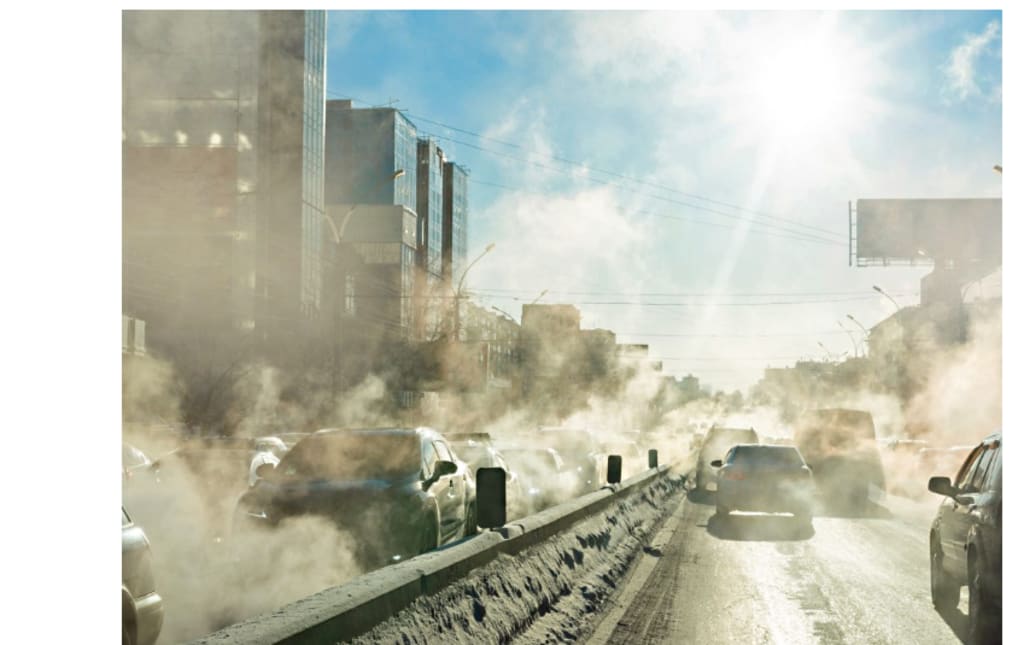
One basic concept underpins air quality regulations worldwide: count the particles. Regardless of whether the particles originated from a car, a fireplace or a frying pan, measuring the tiny particles of matter floating in a cubic metre of air gives you a number that indicates how dangerous exposure to that pollution is.
A controlled experiment was used in a clinical study in the United Kingdom to test that hypothesis. It used four entirely distinct sources of pollution, the same particle count, and the same exposure duration. The responses from the brain and lungs were very different.
The exposure chamber for air pollution
The study's lead author, Thomas Faherty, a researcher at the University of Birmingham, gathered 15 healthy persons over 50 who had a family history of dementia. Each volunteer breathed a single, controlled mixture through a fitted mask for sixty minutes inside a sealed container.
Clean air, woodsmoke, diesel exhaust, culinary emissions, and the citrus aerosol that is created when limonene cleaners react in indoor air are the five conditions in total. Two weeks separated each volunteer's exposure to each of the five air pollutants. The concentration of particulate matter, or the tiny particles that resemble soot and are measured by existing air quality regulations, was the same in each blend.
As a result, the team was able to separate the effects of each source from particle mass. Tests of pulmonary function and cognition were conducted both before and four hours after each exposure.
How the lungs responded
Following two exposures to air pollution, lung function decreased somewhat but noticeably. A person's forced expiratory volume, or the amount of air they can expel in a second, was lower after woodsmoke and limonene aerosol than after pure air.
The drop was not significant enough for a physician to raise a clinical concern because it was within the healthy range. However, the team had not anticipated any change at all.
The breathing tests were not the main result, but rather a safety measure. In healthy persons, a brief exposure shouldn't alter airway numbers. The fact that it did implies that the respiratory system is more susceptible to particular compositions than what is currently captured by particle-mass standards.
A surprise in reaction time
The greater surprise was on the brain side. On a simple reaction-time test, volunteers reacted more quickly after breathing woodsmoke or diesel exhaust than after breathing clean air. Not significantly, but consistently—and the trend persisted when examined.
That contradicts the plot that the majority of readers follow. Not slower, but faster. Not duller, but sharper. The chemistry provides a tenable explanation. Both woodsmoke and diesel exhaust include nitrogen oxides, which cause blood vessels to dilate.
Although the research hasn't precisely verified this connection, more open veins may improve blood flow to the brain, which may help explain the quicker reactions. According to a previous study, healthy individuals who were exposed to a gas hob for ninety minutes saw a comparable drop in blood pressure via the same process.
Diesel's contradictory message
The speed increase had little effect on more difficult jobs. On a face-identification test that required sustained focus rather than pure reflex, volunteers performed better after clean air and worse after diesel exhaust.
Although the statistics were insufficient to draw a firm conclusion, the tendency was in line with the results of Faherty's group's previous study on brief exposure to air pollution and complex thinking.
After just one hour of exposure, the reflexive layers of cognition might become sharper, but the purposeful layers might take longer. Gases that are advantageous in one context could be harmful in another.
Compared to quantity, composition
Gordon McFiggans, a professor of atmospheric science at the University of Manchester and the head of the consortium, summarised the main conclusion. According to McFiggans, "each source of pollution produced its own pattern of short-term changes in the brain and lungs."
Each source contributed a unique fingerprint to the data. Cooking emissions did not improve working memory on the simplest version of a memory task, but limonene aerosol did. Reaction time was accelerated by diesel and woodsmoke but not by cooking pollutants.
In the same individuals, two contaminants with identical particle concentrations had distinct effects on cognition. Current air quality regulations don't take that kind of distinction into account.
The question of odour
In certain cases, volunteers were able to guess which exposure they were receiving. Participants selected the distinct scents of woodsmoke and frying pan air more frequently than chance would have anticipated. It was more difficult to detect the citrus aerosol, clean air, and diesel.
That brings up an issue that the team publicly raised. Regardless of any chemistry taking place in the airways, a pleasant or unpleasant smell has the power to alter focus, mood, and attentiveness on its own.
Rather than the actual contents of the air, some of the cognitive alterations might be based on how it smelt. To distinguish between the two effects, future experiments will require controls that replicate the smell of each pollutant without its chemical makeup.
Exposure to air pollution and human health
This is the first clinical research that tracks both the brain and lungs while exposing the same volunteers to multiple real-world pollution mixtures at equal particle counts. Up until recently, long-term population studies that were unable to distinguish between different pollutants have been the main source of research relating air pollution to brain health.
Regardless of the source, air quality guidelines currently treat fine particulate matter at a single concentration as generally comparable. According to these findings, assumptions fail to account for actual variations in the body's response.
Knowing which sources do what could change indoor-air guidelines and professional advice for vulnerable groups, as dementia rates are rising and older populations spend hours every day near gas stoves, wood burners, and busy highways. The team has started advocating for larger-scale follow-up trials and a nitrogen-oxide-only exposure intended to test the blood-flow theory in isolation.
About the Creator
Enjoyed the story? Support the Creator.
Subscribe for free to receive all their stories in your feed.
Comments
There are no comments for this story
Be the first to respond and start the conversation.