Research
Pakistan Army in Global Perspective
Pakistan Army in Global Perspective The Pakistan Army is widely regarded as one of the most capable armed forces in the developing world. While it may not rival the scale and technological dominance of superpowers, it has built a reputation for efficiency, resilience, and operational effectiveness. To understand its true standing, it is essential to compare it with other major militaries such as those of the United States, China, Russia, and India.
By Wings of Time 5 months ago in History
Encephalitis Lethargica: Why a Century of Science Still Cannot Find the 1917 Pathogen
In 1997, a team of molecular archaeologists exhumed the body of an Inuit woman who had been buried in the Alaskan permafrost. She had died from the 1918 influenza virus. Her lungs, preserved by the ice, still contained fragments of the virus. Using those fragments, scientists reconstructed the full genome of the deadliest pandemic in modern history.
By Chronicle and Void5 months ago in History
A Millennium of Glory: The Byzantine Empire's Ascent and Decline
One of the most dramatic eras in human history was late antiquity, when nations and peoples rose and collapsed in a bloody struggle for dominance and territory. The world was changing as a result of massive migrations, the emergence of bizarre new religions, and the obsolescence of centuries-old customs.
By Francis Dami5 months ago in History
Beneath the Streets of Alexandria, a Secret Greek and Roman City
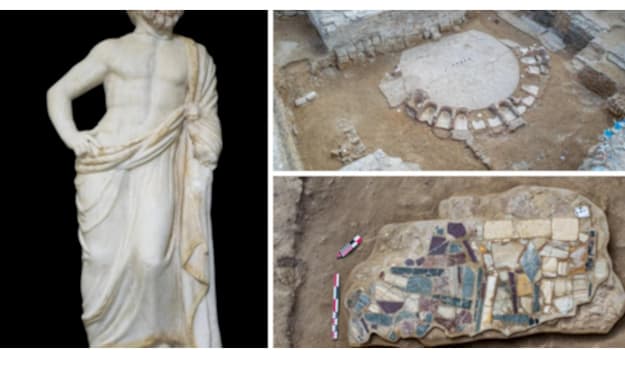
In the Muharram Bek neighbourhood of central Alexandria, an Egyptian archaeological team has uncovered a remarkable series of settlement levels from the Hellenistic, Roman, and Byzantine eras. The discovery offers striking new insights on the city's urban development immediately following Alexander the Great's founding in 331 BC.
By Francis Dami5 months ago in History
Under Scottish Crannog, Archaeologists Discover a 5,000-Year-Old Timber Platform
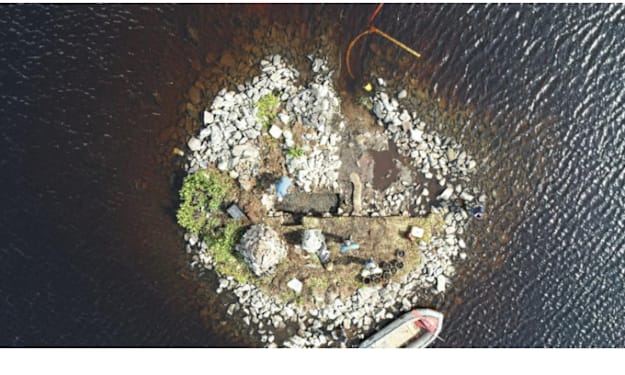
Our knowledge of prehistoric engineering has been completely transformed by a discovery unearthed by archaeologists in the murky waters of a remote loch in Scotland. Researchers from the University of Southampton and the University of Reading have used cutting-edge shallow-water
By Francis Dami5 months ago in History
The intricate plastering technique was mastered by ancient builders. 8,000 Years Prior to the Romans
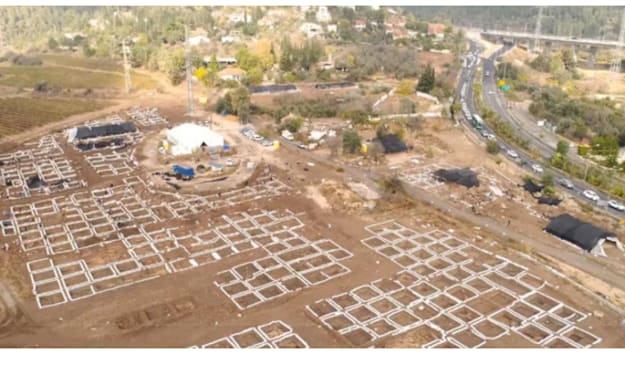
Nearly 8,000 years before the Romans, Neolithic builders at the Motza site near Jerusalem mastered a very complicated plaster production technology, according to a recent research. The discovery of pyrogenic dolomite in 10,000-year-old plaster floors challenges preconceived notions about prehistoric building methods and shows that these materials were utilised by Pre-Pottery Neolithic cultures long before recorded history was established.
By Francis Dami5 months ago in History
10 Times Microscopic Killers Quietly Rewired Human History. AI-Generated.
Napoleon Bonaparte’s ambitions in the Americas weren't just defeated by rebel armies; they were dismantled by yellow fever. While history books prioritize the grand strategies of generals, the reality is often dictated by biological forces that leave leaders with few options. These microbes didn't just cause mass casualties; they acted as catalysts, accelerating shifts in laws, borders, and global structures that might have otherwise taken centuries to unfold.
By Essam Writes5 months ago in History
Under a huge metropolis, a massive secret water resource was found.
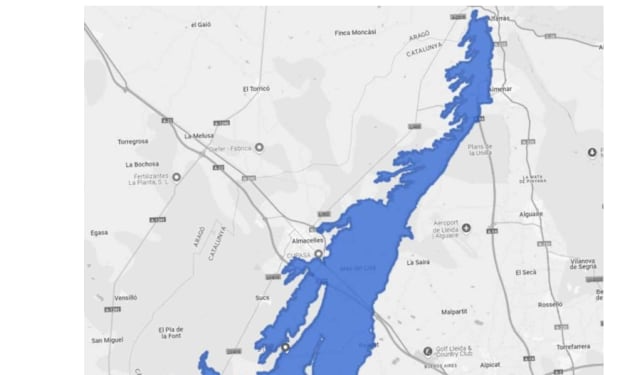
A huge subterranean water reserve covering 31 square miles beneath farmland in northeastern Spain has been discovered by scientists. The discovery challenges preconceived notions about how to use and safeguard the area's subsurface water.
By Francis Dami5 months ago in History
The Cluentius Murder Trial: How Rome Solved Murders Using Social Graphs
Cicero studied the scroll for the third time. It listed thirty-four names. None of them were murderers. The charge was poisoning. The victim, Statius Albius Oppianicus, had died eight years earlier from what was believed to be a sudden illness. There was no corpse to examine. There was no cup to test. The prosecution's case rested on something else entirely: a map of human relationships. The trial of Aulus Cluentius Habitus was not about a murder weapon. It was about who ate with whom, who owed money to whom, and who stood to gain when a wealthy father figure stopped breathing.
By Chronicle and Void5 months ago in History
Amos Guiora, Ph.D., J.D. on Recovered Holocaust Books, Enablers, and Denial
How do recovered Holocaust books connect Amos Guiora’s work on enablers to antisemitism today? Prof. Amos N. Guiora is an Israeli-American professor of law at the University of Utah’s S.J. Quinney College of Law and directs the school’s Bystander Initiative. He holds an A.B. in history from Kenyon College, a J.D. from Case Western Reserve University School of Law, and a PhD from Leiden University. Guiora served 19 years in the Israel Defence Forces, retiring as a lieutenant colonel, and helped implement the Oslo Peace Process (1994–1999). His work examines national security, institutional complicity, and enabling cultures behind sexual abuse; he has authored The Crime of Complicity, Armies of Enablers, and Legitimate Target.
By Scott Douglas Jacobsen5 months ago in History
The Roman Navy’s Secret Weapon Wasn’t Iron or Fire — It Was Tree Sap and Pollen
The ship sank in shallow water. Four meters. That was all it took to preserve the wreck for 2,200 years. Oxygen could not reach it. Shipworms could not eat it. The seabed of the Adriatic, off the coast of modern-day Croatia near the island of Ilovik, became a time capsule. The merchant ship had carried wine and timber, and it sank sometime in the middle of the second century BCE.
By Chronicle and Void5 months ago in History
Julius Caesar's Real Killers Weren't in Rome. They Were in Pergamum.
Three days before the Ides of March, a bannerless ship docked at Pergamum. It carried no cargo except a single leather satchel. The courier rode directly to the Athena Nikephoros temple complex, which served as the city's treasury, and did not emerge until dawn. No Roman official was informed of the visit.
By Chronicle and Void5 months ago in History