
Julius Caesar's Real Killers Weren't in Rome. They Were in Pergamum.
The official story blames Brutus and Cassius. However, the financial trail leads 2,000 kilometers east to a banking city that could not afford to let him live.

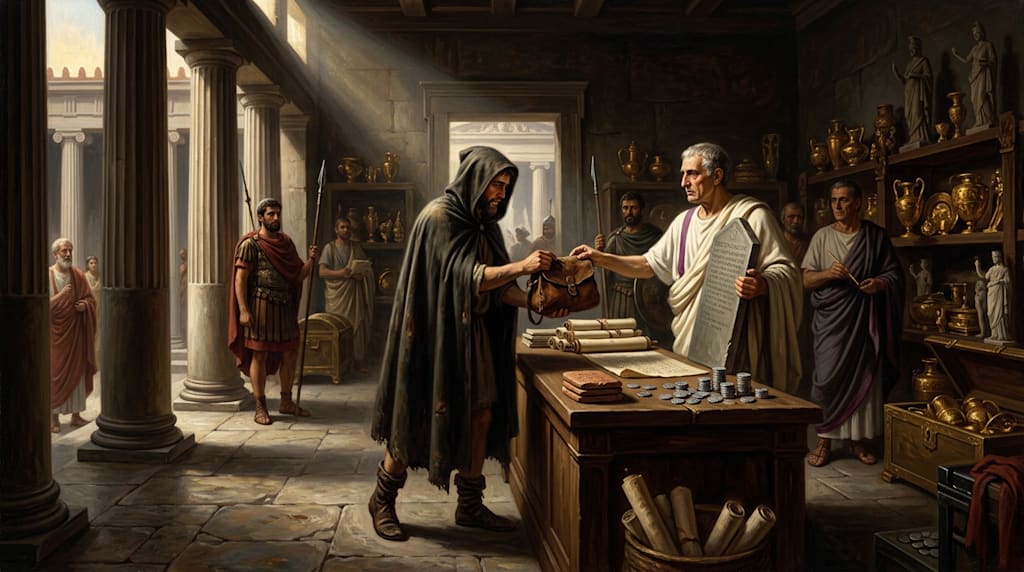
Three days before the Ides of March, a bannerless ship docked at Pergamum. It carried no cargo except a single leather satchel. The courier rode directly to the Athena Nikephoros temple complex, which served as the city's treasury, and did not emerge until dawn. No Roman official was informed of the visit.
On the morning of March 15, 44 BCE, Gaius Julius Caesar was fatally wounded by twenty-three daggers in the Senate House. By that same afternoon, messengers were already riding east. They were not carrying the news—the news would travel on its own. They were riding to confirm that the investment had paid off.
By nightfall, the satchel's contents had disappeared from every record.
Caesar's murder was presented as an act of republican virtue; Brutus, Cassius, and sixty senators were said to have made a last stand against tyranny. The story is clean, theatrical, and morally clear. It works because it gives Rome an understandable enemy—ambitious men with daggers and ideals.
The problem is not the daggers. The problem is the money.
A conspiracy of sixty senators requires more than a shared philosophy. It requires bribes for the urban poor who might riot, payments to gladiator troupes positioned around the city, and funds to hire armed escorts when the time comes. Decimus Brutus, who convinced Caesar to attend the Senate that morning, maintained a private force of gladiators at his own expense. Marcus Brutus could command loyalty, but loyalty doesn't buy iron.
No ancient source explains where the money came from. Plutarch, Suetonius, and Appian all detail the death but none trace the financing. The traditional narrative treats the funds as a given. However, Roman senators were not liquid. Their wealth was tied up in land. Suddenly converting estates into coins would have attracted attention and been taxed.
The treasury that could produce coins quickly, quietly, and without Roman oversight was located in Pergamum.
The War That Was Coming
To understand why a banking city in the province of Asia would finance an assassination, it is important to understand what Caesar was about to do.
In the winter of 45–44 BCE, he assembled military resources on a scale Rome had never seen before. Sixteen legions—over 80,000 soldiers—gathered at Apollonia, the staging ground for a campaign against the Parthian Empire. The Parthian Empire controlled the western end of the Silk Road. Defeating them would reroute the entire luxury trade—silk, spices, and gems—through Rome directly, bypassing the intermediaries of Asia Minor.
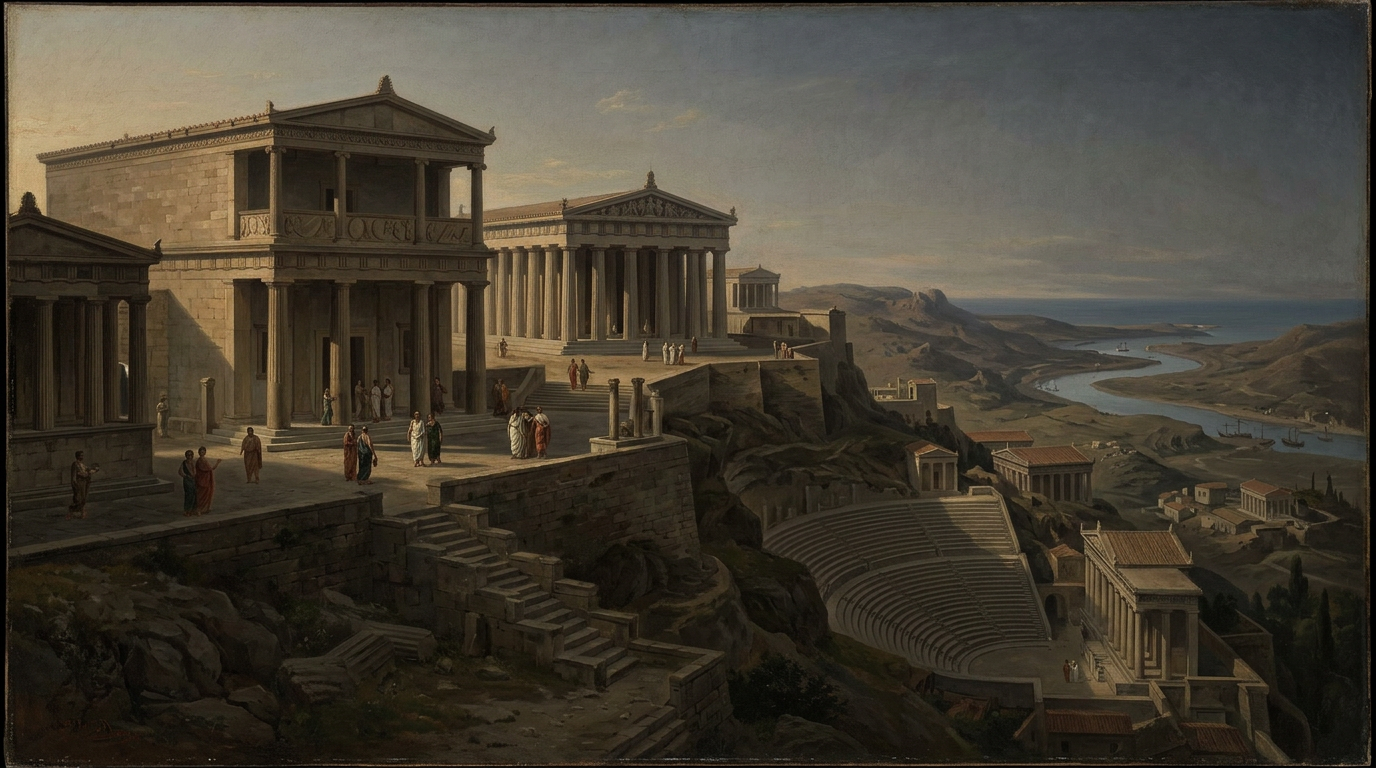
Pergamum was precisely such an intermediary. Its temple treasuries, banking houses, and merchant elite flourished on the flow of goods from east to west. The city served as the financial hub of the Roman province of Asia, holding deposits from across the Greek-speaking world. A victorious Parthian campaign would collapse this system overnight. No more transit fees. No more commissions. There was no longer any reason for anyone to bank in Pergamum.
The campaign was scheduled to begin in March of 44 BCE. Caesar himself planned to leave Rome on the 18th, three days after the Ides.
He never left.
The Money Had a Destination
Two weeks after the assassination, the killers panicked. They had expected to receive popular support. Instead, they barricaded themselves on the Capitoline Hill while Mark Antony consolidated power. Within months, Brutus and Cassius fled Italy.
Where did they go? East.
Brutus traveled directly to the province of Asia and took command of its resources. Cassius did the same in Syria. Together, they began collecting tribute from the same eastern cities that had the most to fear from a Parthian campaign, not from Italy or Gaul. The speed and ease with which they raised armies from these territories suggest pre-existing arrangements. These were not conquests. These were collections.
The figures are recorded. Brutus levied twenty talents from the Lycian League alone. Cassius stripped the temple of Baalbek of its entire treasury. When Rhodes hesitated to contribute, Cassius took everything: the gold, the silver, and the sacred vessels.
None of these cities resisted convincingly.
The obvious explanation is fear. A second, less comfortable explanation is the repayment of a debt.
The Currency That Should Not Have Been There
In the first century BC, one financial instrument dominated the eastern Mediterranean: the syngrapha, a debt contract recognized across jurisdictions and enforced by temple treasuries rather than Roman courts. The Temple of Athena in Pergamum was one of the largest issuers of these contracts. A syngrapha could be drawn up in one city, stamped in Pergamum, and honored in Antioch or Ephesus.
The Roman governor of Asia had no access to temple banking records. They were sacred. Legally untouchable. They were the perfect conduit for untraceable financing.
Now, consider the coin.
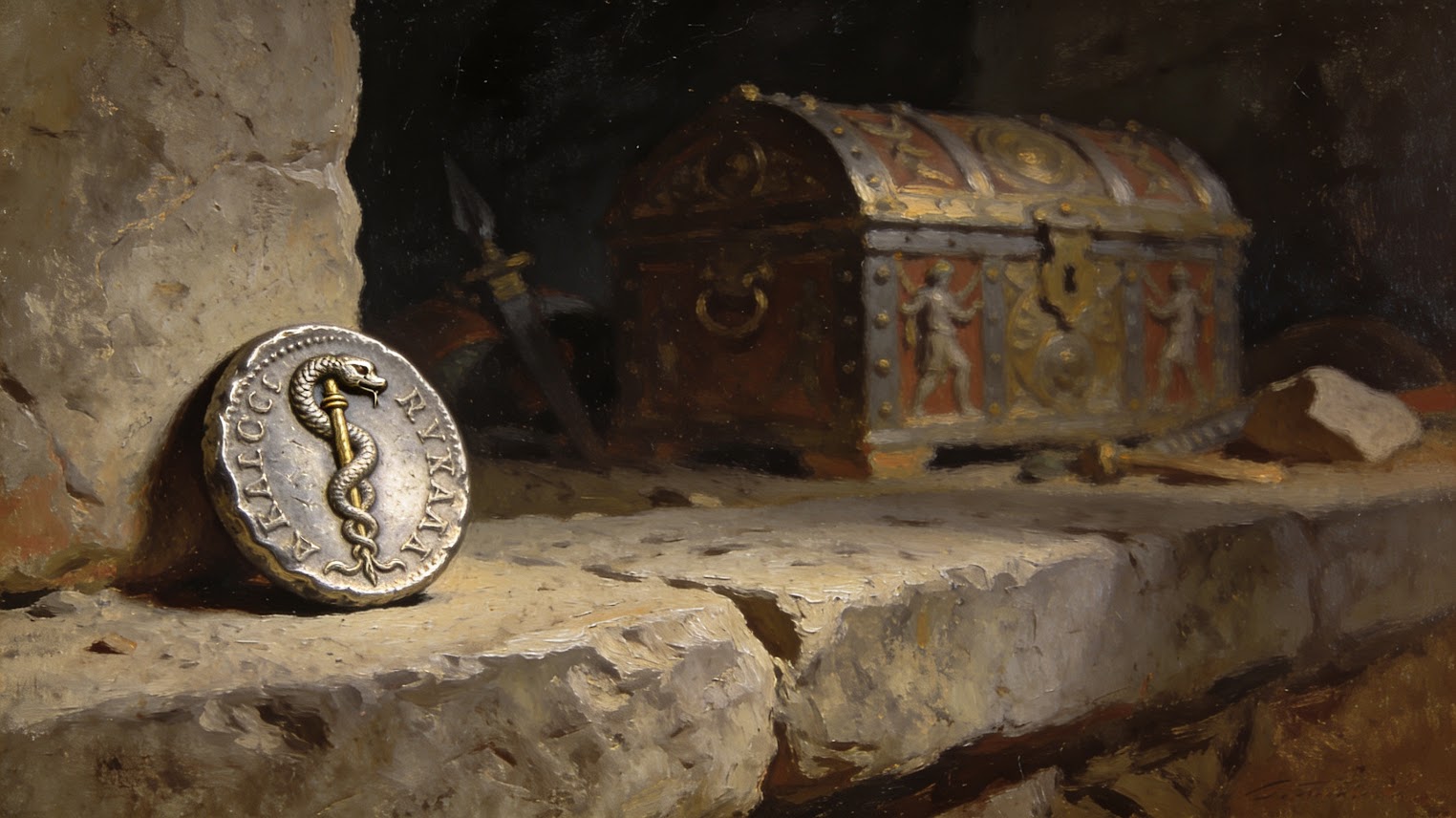
When Brutus and Cassius paid their legions before the Battle of Philippi in 42 BCE, they paid with the currency they had raised. That currency was predominantly the cistophoric standard, which was silver coinage issued by the city of Pergamum and its immediate trading partners. This was not the standard Roman military pay, which used denarii minted in Rome. It was eastern merchant currency, the kind stored in temple treasuries for large-scale transactions.
The historical record tells us where Brutus and Cassius raised their funds. It tells us which cities they squeezed. Through the coins themselves, we can determine the origin of the silver. Pergamum did not merely contribute under duress. The cistophoric standard was the province's default currency — the city that controlled its issuance controlled its flow.
The assassins of Caesar financed their war with Pergamene silver. This is not conjecture. It is what the coinage record shows.
The Objection
This is where sincere doubt belongs.
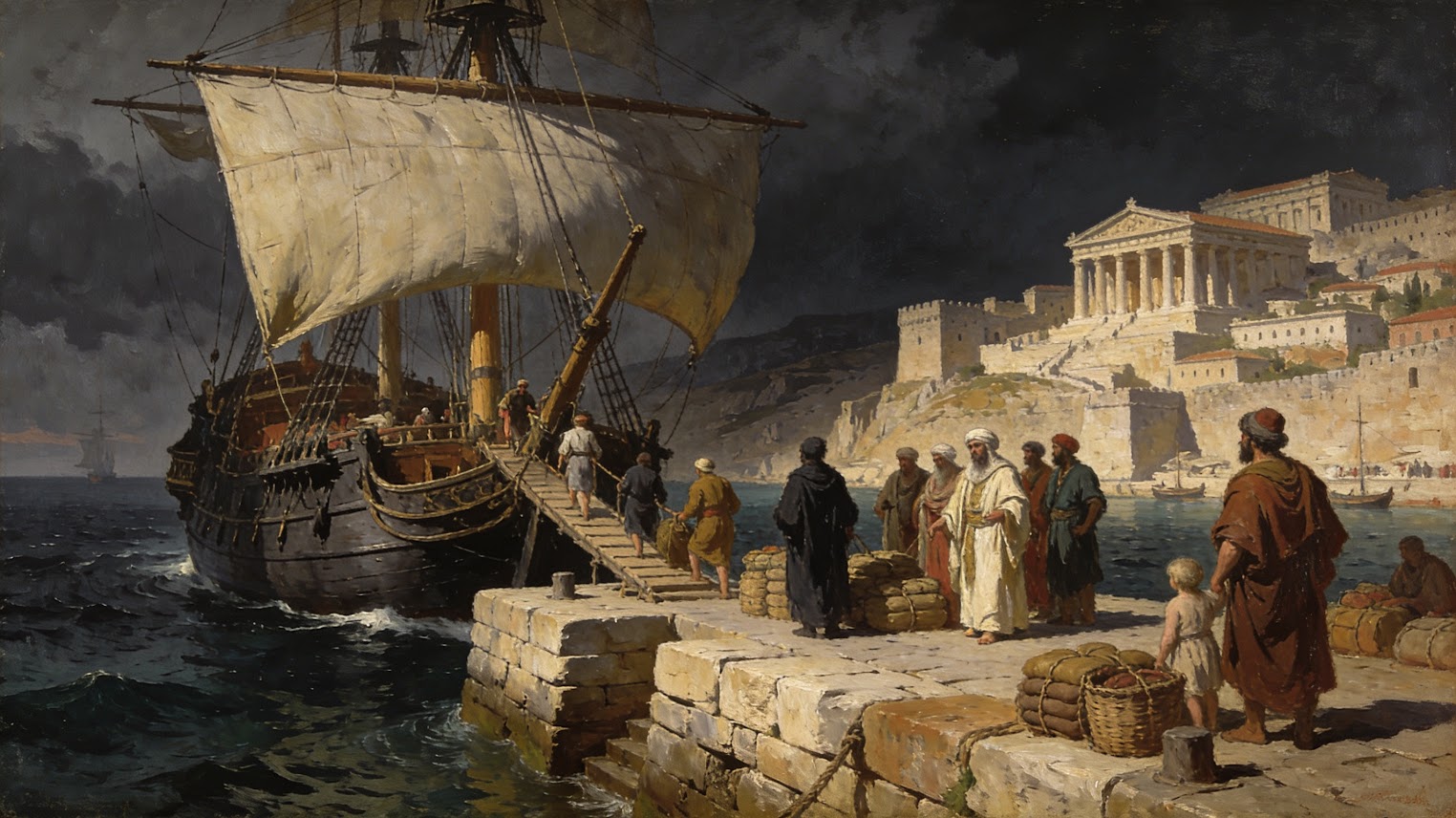
The cistophoric coin was widely circulated in Asia Minor and was the province's standard currency. Its presence in Brutus's and Cassius's war chest proves nothing sinister. Of course, they used local coinage. They were raising funds locally. Any army operating in the East would have carried cistophoric silver. The coins' Pergamene origin is consistent with a legitimate levy of tribute from a province dominated by Pergamum.
That is the honest counterargument. Now, weigh it against three things.
First, the gladiators. Decimus Brutus maintained his private troupe in Rome before any official tribute could have been collected. The funds for those men existed before the assassination, not after. The Roman treasury did not pay for them. Someone else did.
Second, consider the timing of Pergamum's financial activity after the Ides. While Rome's financial district suspended operations amid panic and uncertainty, with no lending occurring, Pergamum's temples resumed issuing credit faster than any other banking center in the region. The city acted as if it knew the crisis was coming and had positioned itself accordingly.
Third, there is the silence. No ancient historian mentions eastern financing. There is no trace of it in the sources. This absence of information is a kind of noise in itself. Roman authorities did not audit the temple treasuries of Asia until the reign of Tiberius, seventy years later. By then, all records from 44 BCE were gone. A transaction that leaves no paper trail is not imaginary. Rather, it is exactly what a transaction designed to leave no paper trail would look like.
Who Really Paid
History tells us a story of ideals: freedom against tyranny, a republic against a monarchy, and a philosophy-wielded dagger.
What history does not tell is the story of a city that calculated its survival, converting its fear into silver and placing that silver in the hands of men willing to kill. It was a transaction, not a conspiracy. An investment, not an ideology.
The parallel is not ancient Greece. The parallel is every empire that has ever faced a moment when commerce and conquest collide, and commerce acts first. Centuries later, you can find the same pattern when the Templar treasure disappeared in one night in 1307, not because a pope deemed the order heretical but because a king owed an unpayable debt. History's most famous murders are rarely only about politics. They are usually about money.
Brutus and Cassius held the daggers. The ink on the syngrapha had dried long before in a city two thousand kilometers from the Senate floor.
Caesar was killed by a blade. The blade was purchased with a debt. The debt was incurred in Pergamum.
This is not a theory. That is where the evidence leads.
You have read the same evidence that the historians read. The Senate blamed twenty-three daggers. However, the Senate never asked who paid for them.
You just saw who.
If this investigation resonated with you, similar hidden histories are waiting:
— The Perfect Heist That Broke the King: The Mystery of the Templar Treasure
— The Antonine Plague That Destroyed Rome — And We Have Been Calling It the Wrong Thing
About the Creator
Chronicle and Void
Every collapse has a cover story. Every war has a cause that didn't make it into the history books. History is not an accurate record of what happened. It's a record of what they allowed to survive.
Enjoyed the story? Support the Creator.
Subscribe for free to receive all their stories in your feed.
Comments
There are no comments for this story
Be the first to respond and start the conversation.