Research
7 Unknow Stories from US History
1. Franklin: America’s Almost-Forgotten 14th State After the American Revolution, North Carolina struggled with major financial debt and decided to offer a massive stretch of western territory to Congress in hopes of easing economic pressure. The settlers living in the region, however, worried that they would lose political representation and military protection, especially against nearby Cherokee groups, and feared the land could eventually be sold to another foreign power. When North Carolina later reversed its decision and reclaimed authority over the territory, many frontiersmen rejected the move entirely and began organizing their own independent government. Delegates gathered in Jonesborough in 1784, created a constitution, elected officials, and declared the formation of a new state originally called “Frankland,” later renamed “Franklin” in an attempt to gain support from Benjamin Franklin. The region functioned independently for more than four years, operating almost like a separate republic with its own courts and administration. Leaders petitioned Congress for official statehood, but although several states voted in favor, they failed to secure the necessary two-thirds majority under the Articles of Confederation. During its brief existence, Franklin expanded territory through conflicts with Indigenous populations while tensions with North Carolina steadily worsened. By 1789, the experimental state collapsed under political and military pressure, and North Carolina regained control of the territory before it eventually became part of Tennessee. Interestingly, legendary frontiersman Davy Crockett was born during Franklin’s short-lived existence, and his father strongly supported the movement for independence.
By History Seeker5 months ago in History
Looking Back: Court Rules No Connection Between Vaccines and Autism
A Court Decision That Should've Ended the Debate The U.S. Court of Federal Claims weighed in and decided the fate of a controversial theory that links childhood vaccination to autism spectrum disorder. In three stunning decisions made between 2009 and March 2010, the court found that there was no link between MMR vaccines and the developmental disorder that has affected millions of children.
By Dean Traylor5 months ago in History
Roman Concrete: The 2023 MIT Discovery That Rewrote 2,000 Years of Engineering
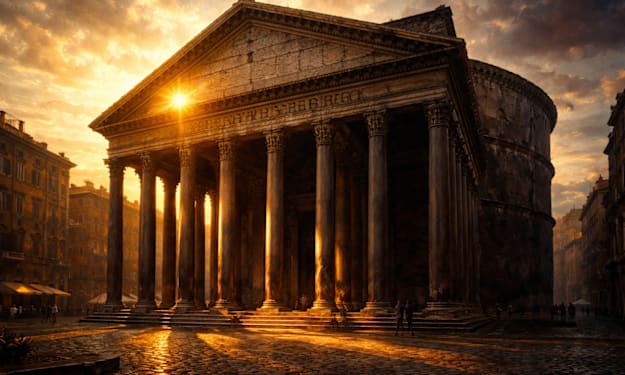
January 6, 2023: MIT, Cambridge, Massachusetts. Associate Professor of Civil Engineering Admir Masic is examining a fragment of Roman concrete under a scanning electron microscope. The sample is from a wall near Privernum in central Italy. It is approximately 1,900 years old.
By Chronicle and Void5 months ago in History
Viking Silver Treasure Discovered on a Farm in Norway
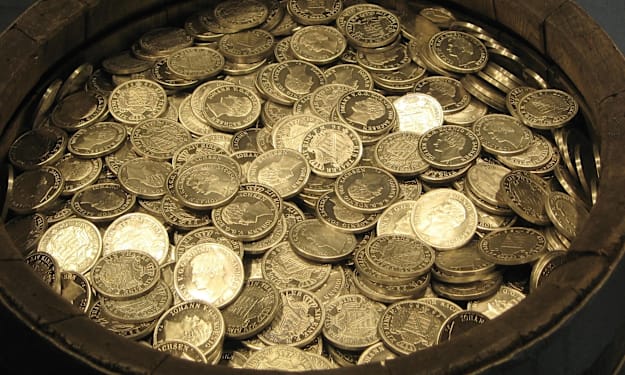
The discovery of Viking silver hidden beneath a Norwegian farm offers an extraordinary glimpse into the dramatic world of the Viking Age. What first appeared to be nothing more than twisted scraps of metal buried beneath old floorboards soon revealed itself as a remarkable treasure hidden for more than 1,100 years. Deep within the rugged mountain landscapes of Norway, archaeologists uncovered four heavy silver bracelets dating back to the 9th century, a time when Viking society dominated large parts of northern Europe through trade, exploration, warfare, and seafaring power. The discovery immediately attracted attention because Viking treasures are rarely found untouched in the exact place where they were originally hidden. In most cases, centuries of farming, erosion, and human activity disturb ancient objects and destroy their archaeological context. In this case, however, the silver remained exactly where its owners had buried it during the Viking Age, creating one of the most valuable archaeological discoveries in recent Norwegian history.
By History Seeker5 months ago in History
Artificial Island (5000 years old) in Scotland. Older than Stonehenge?
Beneath the quiet waters of a remote Scottish loch, archaeologists have uncovered evidence of a remarkable prehistoric engineering achievement hidden for thousands of years. What appears today to be nothing more than a small rocky island in Loch Bhorgastail on the Isle of Lewis has now been revealed as a sophisticated artificial structure created by Neolithic people more than 5,000 years ago. The discovery is astonishing not only because of its age, but because the island predates one of the world’s most famous prehistoric monuments — Stonehenge.
By History Seeker5 months ago in History
King Tutankhamun And His Legendary Tomb. What Are They Hiding?
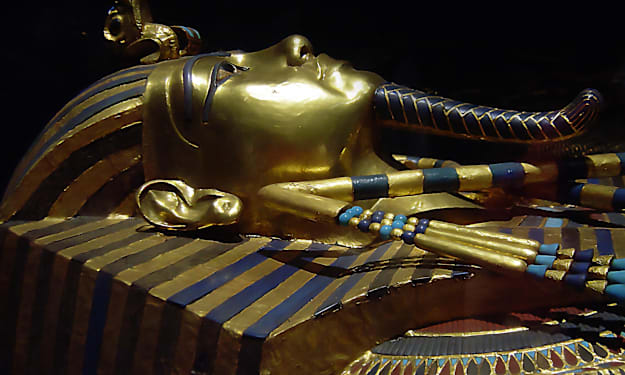
Few archaeological discoveries in human history have captured global imagination as profoundly as the discovery of the tomb of Tutankhamun, the young Egyptian pharaoh better known as King Tut. Hidden beneath the sands of Egypt for more than three thousand years, the tomb remained almost untouched by time, preserving an astonishing collection of treasures that offered the modern world an extraordinary glimpse into the splendor, mystery, and spirituality of ancient Egypt.
By History Seeker5 months ago in History
Archeologists Discovered the Earliest Dental Bridge in Aberdeen
Archaeologists in Scotland have uncovered one of the most fascinating discoveries in the history of medieval medicine and dentistry: the earliest known example of restorative dental treatment ever identified in Scotland. The remarkable find was made during the examination of skeletal remains from a medieval burial in Aberdeen, where researchers discovered a middle-aged man buried with a carefully crafted gold dental bridge attached to his lower front teeth.
By History Seeker5 months ago in History
Did You Know That The Maya Civilization Used Hallucinogenic Substances?
The Maya civilization, which flourished in Mesoamerica from roughly 2000 BCE to 1500 CE, developed one of the most sophisticated cultural and religious systems of the ancient world. Their society was deeply rooted in a worldview where nature, gods, ancestors, and humans were all interconnected. The natural environment was not separate from the spiritual realm but rather an extension of it. Mountains, caves, plants, animals, the sky, and even altered states of consciousness were considered pathways to divine communication.
By History Seeker5 months ago in History
Mammoths and Early Human Civilization: Giants of the Ice Age and the Rise of Humanity
Mammoths, among the most iconic creatures of the Ice Age, continue to fascinate scientists and the public alike, offering a vivid window into the deep past of both Earth and humanity. These enormous, elephant-like mammals with towering curved tusks, dense shaggy coats, and powerful bodies once dominated vast regions of the Northern Hemisphere. They moved slowly but powerfully across frozen tundras, steppe grasslands, and glacial landscapes that stretched across continents. To early humans, however, mammoths were not just distant wildlife—they were deeply intertwined with survival, shaping the rhythms of daily life, technological progress, and even early spiritual thought.
By History Seeker5 months ago in History
The Rise of Apple
In 1976, in a quiet suburban garage in Los Altos, California, two young men set out to change the world. Their names were Steve Jobs and Steve Wozniak, and what they built together would eventually become Apple Inc—one of the most valuable and influential companies in history.
By Bob Madden5 months ago in History
Moral Law and False Witness
When Truth Is Not Optional Moral systems do not begin with outcomes. They begin with constraints. Certain acts are treated as wrong not because they fail, but because performing them already constitutes the failure. Bearing false witness has always occupied that category. It is not condemned because it sometimes produces injustice. It is condemned because it corrupts the very process by which justice is discerned. Once falsehood is introduced deliberately, the pathway to truth is no longer reliable, even if it occasionally arrives at a correct destination.
By Peter Thwing - Host of the FST Podcast5 months ago in History