Events
A Forgotten Story About A Woman Who Helped Win World War II
Long before World War II erupted into the deadliest conflict in human history, Europe was already struggling under the consequences of World War I. Countries devastated by economic collapse, political instability, and territorial losses became increasingly vulnerable to extremist movements. In Germany, the harsh terms imposed after World War I—including territorial losses, military restrictions, and economic reparations—created widespread resentment. These conditions helped fuel the rise of Adolf Hitler and the Nazi Party during the 1930s. As fascist governments expanded across Europe, another war became almost unavoidable. While political leaders and military commanders prepared for global conflict, an American woman named Virginia Hall quietly began a path that would eventually make her one of the most effective intelligence operatives of the entire war.
By History Seeker6 months ago in History
7 Unknow Stories from US History
1. Franklin: America’s Almost-Forgotten 14th State After the American Revolution, North Carolina struggled with major financial debt and decided to offer a massive stretch of western territory to Congress in hopes of easing economic pressure. The settlers living in the region, however, worried that they would lose political representation and military protection, especially against nearby Cherokee groups, and feared the land could eventually be sold to another foreign power. When North Carolina later reversed its decision and reclaimed authority over the territory, many frontiersmen rejected the move entirely and began organizing their own independent government. Delegates gathered in Jonesborough in 1784, created a constitution, elected officials, and declared the formation of a new state originally called “Frankland,” later renamed “Franklin” in an attempt to gain support from Benjamin Franklin. The region functioned independently for more than four years, operating almost like a separate republic with its own courts and administration. Leaders petitioned Congress for official statehood, but although several states voted in favor, they failed to secure the necessary two-thirds majority under the Articles of Confederation. During its brief existence, Franklin expanded territory through conflicts with Indigenous populations while tensions with North Carolina steadily worsened. By 1789, the experimental state collapsed under political and military pressure, and North Carolina regained control of the territory before it eventually became part of Tennessee. Interestingly, legendary frontiersman Davy Crockett was born during Franklin’s short-lived existence, and his father strongly supported the movement for independence.
By History Seeker6 months ago in History
The Chemist’s War: When Prohibition Turned Poisonous
There are chapters of American history that feel almost impossible to explain to modern audiences, not because they are obscure, nor because records are missing, but because the decisions made seem so wildly disconnected from common sense that they sound less like history and more like the plot of a dark political thriller. The poisoned alcohol crisis of Prohibition in the United States is one of those stories.
By The Iron Lighthouse6 months ago in History
The Cristero War (1926–1929): Faith, State, and Conflict in Post-Revolutionary Mexico (Part 2)
In the first part, we analyzed the background to the conflict, the implementation of the Calles Law, and the emergence of the Cristero movement. In this second part, we will address the final phase of the war, the agreements that ended the conflict, its political and social consequences, and the historical legacy it left in Mexico.
By diego michel6 months ago in History
Looking Back: Court Rules No Connection Between Vaccines and Autism
A Court Decision That Should've Ended the Debate The U.S. Court of Federal Claims weighed in and decided the fate of a controversial theory that links childhood vaccination to autism spectrum disorder. In three stunning decisions made between 2009 and March 2010, the court found that there was no link between MMR vaccines and the developmental disorder that has affected millions of children.
By Dean Traylor6 months ago in History
The Benz Patent-Motorwagen: The Invention She Funded, Tested, and Improved — and Could Not Own
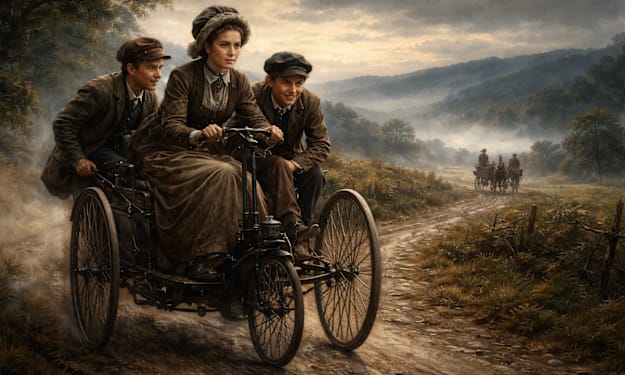
She pushed the machine out of the workshop before dawn so that the engine noise would not wake him. August 5, 1888. Mannheim, Germany. Her husband, Carl, was still asleep. Bertha Benz and her two teenage sons, Eugen (fifteen) and Richard (thirteen), rolled Patent-Motorwagen Number 3 down the street by hand. They passed the sleeping houses and the horses that shied away from the strange smell. They continued until they were far enough away to start the engine without being heard. She had left a note on the table. She had not asked the police for permission, which was legally required. She hadn't told Carl, either. She was going to drive 106 kilometers to visit her mother in Pforzheim.
By Chronicle and Void6 months ago in History
Moral Law and False Witness
When Truth Is Not Optional Moral systems do not begin with outcomes. They begin with constraints. Certain acts are treated as wrong not because they fail, but because performing them already constitutes the failure. Bearing false witness has always occupied that category. It is not condemned because it sometimes produces injustice. It is condemned because it corrupts the very process by which justice is discerned. Once falsehood is introduced deliberately, the pathway to truth is no longer reliable, even if it occasionally arrives at a correct destination.
By Peter Thwing - Host of the FST Podcast6 months ago in History
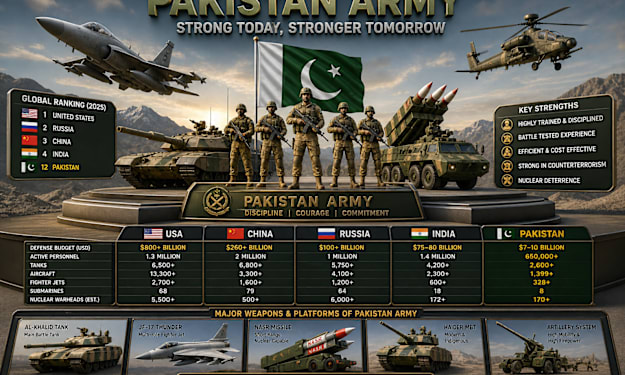
Pakistan Army in Global Perspective
Pakistan Army in Global Perspective The Pakistan Army is widely regarded as one of the most capable armed forces in the developing world. While it may not rival the scale and technological dominance of superpowers, it has built a reputation for efficiency, resilience, and operational effectiveness. To understand its true standing, it is essential to compare it with other major militaries such as those of the United States, China, Russia, and India.
By Wings of Time 6 months ago in History
6 Genius Inventions that were Invented By Mistake
During the Vietnam War, the army had a chemical that, when sprayed on wounds, would instantly stop bleeding—no matter how deep the injury was. This chemical saved thousands of lives. You’ll be surprised to know that today, this chemical exists in almost every home.
By Imran Ali Shah6 months ago in History
Encephalitis Lethargica: Why a Century of Science Still Cannot Find the 1917 Pathogen
In 1997, a team of molecular archaeologists exhumed the body of an Inuit woman who had been buried in the Alaskan permafrost. She had died from the 1918 influenza virus. Her lungs, preserved by the ice, still contained fragments of the virus. Using those fragments, scientists reconstructed the full genome of the deadliest pandemic in modern history.
By Chronicle and Void6 months ago in History