
The Cristero War (1926–1929): Faith, State, and Conflict in Post-Revolutionary Mexico (Part 2)
A Nation Divided Between Faith and Revolution

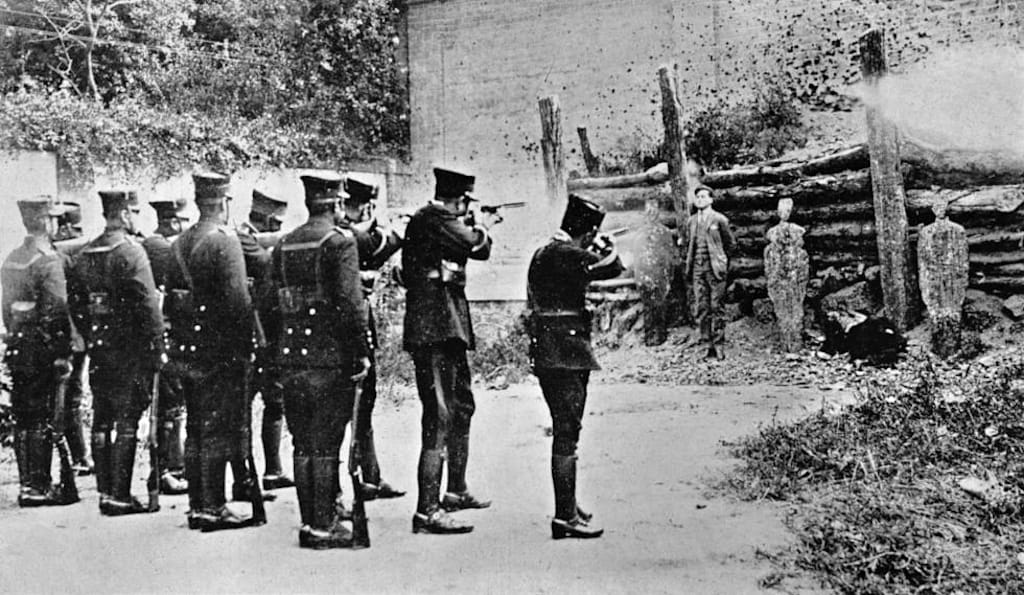
In the first part, we analyzed the background to the conflict, the implementation of the Calles Law, and the emergence of the Cristero movement. In this second part, we will address the final phase of the war, the agreements that ended the conflict, its political and social consequences, and the historical legacy it left in Mexico.
6. The wear and tear of war and the search for a way out
By 1928, the Cristero War had become a prolonged and costly conflict for both sides. Although the federal army had greater military capacity, it was unable to completely quell the rebellion in regions such as Jalisco, Michoacán, Guanajuato, and Colima. The Cristeros, for their part, had consolidated a more organized command structure under the leadership of Enrique Gorostieta Velarde, managing to control rural areas and maintain active resistance.
However, the war was beginning to show clear signs of attrition. Rural communities suffered from hunger, displacement, and constant violence. The conflict affected the local and national economy, disrupted trade routes, and weakened the country's political stability.
On the political front, the assassination of President-elect Álvaro Obregón in July 1928 changed the national landscape. Obregón, who had been president between 1920 and 1924 and was returning to power after a constitutional reform, was assassinated by José de León Toral, a radicalized young Catholic. This event intensified tensions and highlighted the profound political repercussions of the religious conflict.
After the assassination, the country entered a period known as the Maximato, during which Plutarco Elías Calles maintained decisive influence over the government, even though he no longer formally held the presidency. The interim and later constitutional president was Emilio Portes Gil, who adopted a more pragmatic stance toward the religious conflict.
Portes Gil understood that prolonging the war would only exacerbate instability. Thus began discreet negotiations between representatives of the Mexican government and the Catholic hierarchy, with the mediation of U.S. Ambassador Dwight Morrow.
7. The “arrangements” of 1929
In June 1929, the so-called “arrangements” were reached, an informal agreement that ended the armed conflict. It was not a constitutional reform or a repeal of anti-clerical laws, but rather a political understanding that allowed public worship to resume under certain conditions.
The government undertook to apply the laws with greater flexibility, while the Church agreed to recognize the authority of the Mexican State and refrain from intervening in political affairs. On June 29, 1929, the restoration of public religious celebrations was officially announced.
For many Cristeros, the agreement was a betrayal. After years of struggle and sacrifice, they had hoped for more profound changes in the legislation. However, the ecclesiastical hierarchy ordered a cessation of hostilities, and most of the combatants laid down their arms.
In several regions, reintegration was not easy. Some former combatants were persecuted or executed despite promises of amnesty. Others returned to their communities scarred by the experience of war.
8. Social and political consequences
The Cristero War left a deep mark on Mexico. It is estimated that between 70,000 and 100,000 people died, in addition to thousands of displaced persons. Rural communities in the west of the country were the most affected.
Politically, the conflict reinforced the authoritarian nature of the post-revolutionary state. Shortly thereafter, in 1929, the National Revolutionary Party (PNR), the predecessor of the PRI, was founded as a mechanism to institutionalize power and prevent further civil wars. The Cristero experience demonstrated to the government the need to consolidate political control through solid party structures.
In the religious sphere, although anticlerical laws remained in the Constitution for decades, their application was less strict. A kind of pragmatic coexistence between Church and State was established, based on non-confrontation.
The relationship began to gradually transform throughout the 20th century, until in 1992, during the administration of Carlos Salinas de Gortari, constitutional articles were reformed to recognize the legal status of churches and fully normalize diplomatic relations with the Holy See.
9. Memory, martyrs, and controversies
For many years, the Cristero War was an uncomfortable topic in official historiography. The revolutionary state tended to present the conflict as a fanatical rebellion against secular progress, while Catholic sectors interpreted it as an epic defense of religious freedom.
Over time, historical research has offered more nuanced views. Today, it is recognized that the conflict was the product of deep structural tensions: social inequality, regional differences, and cultural clashes between revolutionary modernity and religious tradition.
The Catholic Church has canonized or beatified several participants in the conflict, considering them martyrs. One of the best known is José Sánchez del Río, a young man executed in 1928 and later canonized in 2016. He has become a symbol for many believers.
In the cultural sphere, the Cristero War has been depicted in novels, historical research, and film productions. A recent example is the film For Greater Glory, which dramatizes the conflict and has helped to rekindle public interest in this episode.
10. The legacy of the Cristero War
Beyond the armed confrontation, the Cristero War left lasting lessons about the relationship between religion and political power in Mexico. The conflict showed the risks of imposing ideological changes without broad social consensus and highlighted the strength that cultural and religious identities can have in rural contexts.
It also revealed that the Mexican state, although committed to secularism, had to learn to coexist with a deeply religious society. The resulting model was neither absolute separation nor fusion, but a tense balance based on practical agreements.
Today, almost a century later, the Cristero War remains a subject of debate. For some, it was a legitimate defense of religious freedom; for others, a rebellion against a modern state project. What is certain is that it is a fundamental part of national history and helps to understand the complexities of contemporary Mexico.
conclusion
The Cristero War was not an isolated episode, but rather the result of decades of tension between the Church and the State. Its development, outcome, and consequences shaped 20th-century Mexican politics and redefined the way in which both institutions interact.
Understanding this conflict means recognizing that the construction of modern Mexico was neither linear nor peaceful, but marked by ideological clashes, social struggles, and difficult negotiations. Remembering the Cristero War is, ultimately, to reflect on the challenges of living together in a pluralistic society where different worldviews must find common ground.
About the Creator
diego michel
I am a writer and I love writing
Enjoyed the story? Support the Creator.
Subscribe for free to receive all their stories in your feed.
Comments
There are no comments for this story
Be the first to respond and start the conversation.