Ancient
June 24, 2026: Venezuela's Devastating Earthquake
June 24, 2026: Venezuela's Devastating Earthquake A Normal Day Turned Into Disaster On June 24, 2026, Venezuela experienced one of the strongest earthquakes in its recent history. What began as a normal day quickly turned into a frightening disaster as powerful shaking spread across parts of the country. Within seconds, homes, offices, schools, and businesses were affected. Many people rushed into the streets, unsure of what would happen next. The earthquake reminded everyone how suddenly nature can change lives. The Powerful Earthquake The earthquake measured more than 7 on the magnitude scale, making it a major seismic event. Reports said that two powerful shocks occurred within a very short time, increasing the fear among residents. The ground shook violently, causing buildings to sway and sending debris onto roads. In several areas, electricity and communication services were interrupted, making it difficult for families to contact one another during the first hours after the disaster. Damage Across Caracas and Nearby Areas The capital city, Caracas, and surrounding regions experienced strong shaking. Many buildings suffered damage, while some older structures partially collapsed. Cracks appeared in roads, walls, and bridges. Vehicles were trapped in traffic as frightened drivers stopped to avoid accidents. Public transportation also faced disruptions as officials inspected tracks, stations, and roads for safety before allowing normal operations to continue. Hospitals and Emergency Response Hospitals immediately activated emergency plans. Doctors, nurses, and rescue teams worked without rest to treat injured people. Ambulances moved continuously through affected neighborhoods, carrying patients to medical centers. Emergency shelters were opened for families whose homes were no longer safe. Volunteers distributed drinking water, food, blankets, and other basic supplies to those in need. Rescue Operations Rescue workers searched damaged buildings carefully, hoping to find survivors trapped beneath fallen concrete and broken walls. Heavy machinery was brought to the hardest-hit areas, while specially trained rescue dogs assisted in locating people under the rubble. Every successful rescue brought hope to worried families waiting nearby. At the same time, officials asked people to stay away from unstable buildings because aftershocks could cause additional collapses. Aftershocks Continue Aftershocks continued to shake the region during the following hours and days. Although many were smaller than the main earthquake, they created fresh concern among residents. Some people chose to sleep outdoors or in temporary shelters rather than return to damaged homes. Engineers inspected schools, hospitals, apartment buildings, and public offices to determine whether they were safe for use. Why Earthquakes Happen Earthquakes happen because enormous sections of the Earth's crust, called tectonic plates, are constantly moving. Venezuela is located in an area where these plates interact, making earthquakes a natural risk. Scientists cannot predict the exact time when an earthquake will occur, but they can study fault lines, monitor seismic activity, and improve warning systems. This knowledge helps governments prepare emergency plans and encourages communities to practice earthquake safety. Earthquake Safety Tips Experts always remind people that preparation saves lives. Families are encouraged to keep emergency kits containing water, food, flashlights, batteries, first-aid supplies, important documents, and medicines. During an earthquake, people should stay calm, protect their heads, and take cover under sturdy furniture if they are indoors. If they are outside, they should move away from buildings, trees, bridges, and power lines until the shaking stops. Economic Impact The economic impact of the disaster may continue for months. Repairing damaged roads, bridges, homes, schools, and hospitals requires significant time and financial resources. Businesses forced to close temporarily may lose income, while thousands of families could face expensive rebuilding costs. Governments, humanitarian organizations, and international partners often work together to provide emergency assistance and support long-term recovery efforts. Stories of Courage Despite the destruction, stories of courage quickly emerged. Neighbors helped rescue one another, shared food with strangers, and opened their homes to families who had nowhere to stay. Medical workers continued treating patients despite difficult conditions, while volunteers worked around the clock to deliver aid. These acts of kindness demonstrated the strength and resilience of communities facing an unexpected disaster. Looking Ahead The June 24, 2026, Venezuela earthquake serves as a powerful reminder that nature can be unpredictable. While buildings can be rebuilt and roads repaired, the safety of people remains the highest priority. Continued rescue operations, careful rebuilding, improved construction standards, and better disaster preparedness can help reduce the impact of future earthquakes. As Venezuela begins the long process of recovery, the determination and unity of its people will remain one of the country's greatest strengths.
By Hafiz afridi4 months ago in History
Hidden Underground Tunnels in London
Hidden Underground Tunnels in London Most people know London as a busy city full of buses, red double-deckers, black taxis, and famous places like Big Ben and the London Eye. But very few people know that under this modern city, there is another hidden world. A world of tunnels, passages, and forgotten underground spaces that were built for different reasons across history. Beneath the streets where millions walk every day, an entire hidden layer of history still exists. Some of these tunnels are still in use, but many are hidden, abandoned, or even sealed. They tell a silent story about war, survival, transportation, and secret government plans. Over hundreds of years, London has grown upward and outward, but also deeper underground, creating one of the most complex underground systems in the world. One of the most famous underground systems is the London Underground, also known as “The Tube.” It is the oldest metro system in the world, first opened in 1863. While millions of passengers use it daily, very few know that beyond the active lines, there are countless forgotten tunnels. Some were part of early railway designs that were later changed, while others were abandoned because new routes made them unnecessary. These unused tunnels still remain under the city like hidden time capsules. During World War II, London faced heavy bombing attacks known as the Blitz. To protect civilians, the government used underground spaces as shelters. Many Tube stations were transformed into safe places where thousands of people slept during air raids. However, there were also specially built secret tunnels used for military communication, storage, and emergency movement of important officials. These underground spaces became lifelines during one of the darkest times in London’s history. Another fascinating underground system is the “Mail Rail.” This hidden railway was built in the 1920s to transport mail quickly across the city without facing traffic above ground. It ran silently under the streets, connecting major postal offices. For decades, it worked without most people even knowing it existed. Today, parts of it have been reopened for visitors, but much of the original system still remains hidden beneath the city. London’s underground world also includes mysterious passages beneath historic buildings such as churches, castles, and old government sites. One well-known example is the Tower of London, where hidden rooms and tunnels were used for guards, prisoners, and secure movement inside the fortress. Some stories even suggest the existence of escape tunnels, although many of these remain unconfirmed and part of local legend. There are also hidden government bunkers spread beneath London. During the Cold War, secret underground facilities were built to protect political leaders in case of nuclear attacks. These bunkers were designed to operate independently, with food storage, communication systems, and secure rooms. Many of these locations are still classified or not fully open to the public, adding to the mystery of London’s underground network. Some tunnels in London are even more mysterious because they were never completed. Engineers working in the Victorian era began constructing railway tunnels that were later abandoned due to financial problems, engineering challenges, or changing city plans. Today, these tunnels suddenly end in empty darkness, creating curiosity among urban explorers and historians who study them. Even in modern times, London continues to reveal its hidden underground world. During new construction projects, workers sometimes discover old tunnels, forgotten chambers, and buried structures from centuries ago. Each discovery adds another layer to the city’s deep and complex history. What makes London’s underground system so fascinating is that it is not just one network, but many layers built across different eras. It includes transport systems, wartime shelters, secret government facilities, and abandoned engineering projects. Together, they form a hidden city beneath the visible one. Most people walking through the streets of London never realize that just a few meters below them lies a world filled with history, mystery, and forgotten stories. Under the noise of modern life, the underground remains silent, carrying the secrets of the past and waiting for discovery by those who are curious enough to look beneath the surface.
By Hafiz afridi4 months ago in History
Arianrhod's Children: Shame, Identity, and the Right to Be Named
In Welsh tradition, to be a person — fully, socially, legally — required certain things. You needed a name. You needed arms, the mark of your readiness to defend yourself and your standing in the world. And you needed a place in the human community: a bond, a belonging. These were not merely customs. They were the architecture of personhood itself. To withhold them was to withhold you.
By The Celtic Spirit- A modern Guide to Celtic Belief and Practice4 months ago in History
Shilajit Myths vs. the Actual Facts of Shilajit.
If you are into health content, then while scrolling on your phone, you must have come across posts that say, "Boost your testosterone levels in a few days with the help of shilajit" or "Increase your stamina in a few days by consuming shilajit." But do you think shilajit actually works like this?
By Everest Shilajit4 months ago in History
A New Zealand cave that has been sealed for a million years exposes frogs that have never altered and birds that have disappeared, along with a new Kākāpō progenitor close to Waitomo.
A million-year-old secret was hidden in one cave on the North Island of New Zealand. Fossils of birds from extinct species and frogs that still resembled them were found on its floor.
By Francis Dami4 months ago in History
Ten thousand years ago, humans were already dwelling high in the Pyrenees.
Altitude is typically viewed in archaeology as a variable rather than a barrier. Sites above the treeline are written off, whereas sites below it are dug. The high Pyrenees appeared to be vacant on maps during the majority of the 20th century. Animals, and sometimes humans as well, traversed this area before returning to lower land.
By Francis Dami4 months ago in History
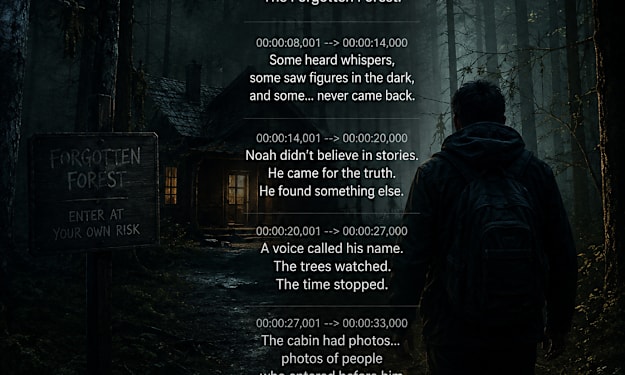
The Forgotten Forest
The Forgotten Forest The locals called it The Forgotten Forest. It stretched for miles beyond the edge of Black Hollow, a small town hidden between mountains and mist. No one knew exactly how old the forest was. The trees were enormous, their twisted branches blocking most of the sunlight even during the day.
By BrightSteps4 months ago in History
A mysterious cave collapse reveals a 300,000-year-old "advanced human time capsule"
A surprisingly well-preserved prehistoric cave discovered by archaeologists is assisting scientists in piecing together a significant period in human evolution. Stone tools, animal remains, and signs of controlled fire from between 400,000 and 250,000 years ago have been found at the site, which is close to the village of Fureidis south of Haifa.
By Francis Dami4 months ago in History
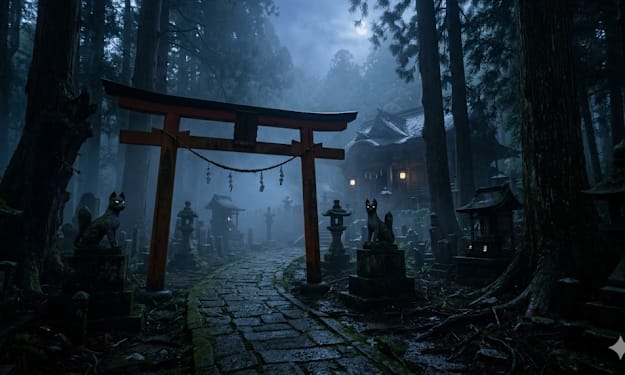
The Whispering Landscape: The Dark Animism of Japan’s Shinto Gods
1. Eight Million Shadows In Western mythology, gods often reside in a distant, majestic heaven. But in Japan, divinity is uncomfortably close. The traditional term is Yaoyorozu no Kami—literally, "The Eight Million Gods."
By Takashi Nagaya4 months ago in History
Could the US–Iran War Start Again? The Risks, Triggers, and Road Ahead
Could the US–Iran War Start Again? The Risks, Triggers, and Road Ahead The war between the United States and Iran may have entered a period of reduced military activity, but many experts believe the risk of renewed conflict has not disappeared. While ceasefire agreements and diplomatic negotiations have temporarily lowered tensions, several major disputes remain unresolved. As a result, the possibility of the war starting again continues to concern governments, military planners, and financial markets around the world.
By Wings of Time 4 months ago in History
The True Story of the Escape Balloon That Flew to Freedom. AI-Generated.
The True Story of the Escape Balloon That Flew to Freedom Two Families Risked Everything to Escape East Germany in a Homemade Hot Air Balloon Life Behind the Border In the late 1970s, Germany was divided into East Germany and West Germany. While people in West Germany enjoyed freedom of travel and choice, citizens in East Germany lived under strict government control. Leaving the country without permission was illegal, and the border was heavily guarded with fences, watchtowers, alarms, and armed patrols. Many East Germans dreamed of escaping, but few succeeded. Among those who wanted a better life were two families from the town of Pößneck: Peter and Doris Strelzyk and Günter and Petra Wetzel. Together, they had four children and shared the same dream—to live in freedom. An Impossible Idea Peter and Günter often discussed possible ways to escape. Crossing the border on foot was too dangerous. The chances of being caught were extremely high. Then Peter suggested an unusual idea. Instead of crossing the border, what if they flew over it? The idea sounded impossible, but the more they thought about it, the more determined they became. They decided to build a hot air balloon large enough to carry all eight family members. Neither man was an engineer or a pilot. They spent months reading books, studying balloon designs, and learning how hot air balloons worked. Everything had to remain secret. If the authorities discovered their plan, they could be arrested. Building the Balloon The families secretly bought hundreds of meters of fabric from different stores to avoid suspicion. Night after night, they sewed the material together by hand. Their first balloon failed. It was too small and could not lift everyone. The disappointment was crushing, but they refused to quit. Instead, they built a second balloon. This one was much larger and stronger. They also created a powerful burner system capable of producing enough hot air to lift the balloon into the sky. Months of hard work, planning, and secrecy finally led to one moment. By September 1979, the balloon was ready. The Night of the Escape On September 15, 1979, the two families quietly left their homes and drove to a remote forest near the border. Working in darkness, they assembled the balloon and began filling it with hot air. Slowly, the giant balloon rose above the trees. Their hearts raced as they climbed aboard. The burner roared. The balloon lifted into the night sky. Below them was one of the most heavily guarded borders in the world. Ahead was uncertainty and hope. Flying Toward Freedom As the balloon climbed higher, the families looked down at the dark countryside. The cold air surrounded them as they drifted through the night. The biggest problem was that they could not control the direction. A hot air balloon travels wherever the wind takes it. Their entire escape depended on favorable winds. For nearly half an hour, they floated silently. No one knew exactly where they were. The darkness hid roads, towns, and landmarks. Meanwhile, border guards below had no idea that eight people were passing over the border far above their heads. A Dangerous Landing Eventually, the balloon began to lose altitude as the fuel supply ran low. The families became nervous. If they landed inside East Germany, they would almost certainly be arrested. The balloon descended rapidly toward an open field. The basket struck the ground and bounced several times before finally coming to a stop. Everyone climbed out and looked around. It was still dark. They had no idea whether they had succeeded. The Moment They Knew A short time later, Peter approached a nearby road and saw a passing car. He stopped the driver and asked a simple question: "Can you tell me where we are?" The driver replied that they were near the West German town of Naila. For a moment, nobody spoke. Then the truth sank in. They had made it. After months of planning and one terrifying flight, the two families had successfully escaped East Germany. Many of them cried with relief and joy. Their dream had finally become reality. Worldwide Attention News of the escape quickly spread around the world. Newspapers and television stations reported the incredible story of two ordinary families who had built a homemade hot air balloon and flown to freedom. The escape embarrassed East German authorities and amazed millions of people. What made the story special was that these were not professional adventurers. They were ordinary parents determined to give their children a better future. A Lasting Legacy The balloon escape remains one of the most famous stories of the Cold War. It demonstrated courage, determination, and the powerful human desire for freedom. Ten years later, in 1989, the Berlin Wall fell, and Germany was eventually reunited. But long before that historic moment, two families had already found their own path to freedom. Their journey across the night sky remains one of the most remarkable true escape stories ever recorded—a story that proves that even the most impossible dreams can become reality when people refuse to give up.
By Hafiz afridi4 months ago in History