Ancient
Robotic Archaeology: Exploring the Past with Autonomous Technologies
Introduction Archaeology is the scientific study of human history and prehistory through the excavation and analysis of artifacts, structures, and cultural landscapes. Traditionally, archaeological research has relied heavily on manual excavation, field surveys, and human observation. While these methods have provided valuable insights into ancient civilizations, they can be time-consuming, expensive, and sometimes risky. With the rapid advancement of technology, a new interdisciplinary field known as Robotic Archaeology has emerged, combining robotics, artificial intelligence (AI), remote sensing, and digital mapping to revolutionize the way archaeologists explore and preserve the past.
By Nizam Archaeologist4 months ago in History
Faith vs. Fury
The rivalry between Ertuğrul Bey and the Mongol commander Noyan is the central pillar of Diriliş: Ertuğrul, serving as the ultimate struggle between two opposing forces: the relentless, expansionist ambition of the Mongol Empire and the steadfast, faith-driven resilience of the Kayi tribe. Spanning multiple seasons, their conflict is far more than a physical battle of swords and tactics; it is a profound clash of ideologies, civilizations, and visions for the future of Anatolia.
By shahid khan4 months ago in History
Why America Never Leaves Israel: The Historical Roots of an Unbreakable Alliance
Why America Never Leaves Israel: A Brief History Many people wonder why the United States consistently supports Israel despite international criticism. To understand this relationship, we need to look at centuries of history involving Jews, Christians, Muslims, and the land of Palestine.
By Mohib Ullah 4 months ago in History
“Who Was Abraham Lincoln?” . AI-Generated.
The Life of Abraham Lincoln Abraham Lincoln was born on February 12, 1809, in a small wooden log cabin in Hardin County, Kentucky, United States. His family was very poor, and life in early America was extremely difficult, especially for farmers living in rural areas. His father, Thomas Lincoln, worked as a farmer and carpenter, but he earned very little money and often struggled to support the family. His mother, Nancy Hanks Lincoln, was a kind, gentle, and caring woman who deeply loved her children and tried her best to give them a peaceful home. When Abraham was still a small child, his family moved from Kentucky to Indiana in search of better living conditions and more land to farm. However, life in Indiana was not much easier. The family settled in a wild forest area where there were no proper roads, schools, or modern facilities. They had to build their own shelter using logs and live in very basic conditions. Every day life involved hard physical work such as clearing trees, farming, hunting for food, and building fences. Abraham Lincoln’s childhood was full of struggle and hardship. Education was very limited in that time and place. He attended school only for a few months in total throughout his life. However, even though formal schooling was rare for him, Abraham had a very strong desire to learn. He was naturally curious and intelligent. He loved reading books and would borrow them from neighbors whenever he got the chance. He often walked long distances just to get a book. At night, after completing hard work, he would read by candlelight or firelight. When Abraham was only nine years old, a very painful event happened in his life—his mother died. This loss deeply affected him emotionally. He missed her care and love throughout his life. Later, his father remarried a woman named Sarah Bush Johnston. She became Abraham’s stepmother and played an important role in encouraging him. She noticed his interest in reading and supported him by providing books and motivation to continue learning. As Abraham grew older, he started working different jobs to help his family survive. He worked as a farm laborer, rail-splitter (cutting wood logs for fences), boatman, store clerk, and surveyor. These jobs were physically demanding and required long hours of hard labor. Despite being busy with work, Abraham never stopped educating himself. He continued reading books and improving his knowledge in his free time. During his early adulthood, Abraham became interested in law, politics, and justice. He studied legal books on his own and slowly developed a deep understanding of how laws worked. Without attending a formal law school, he prepared himself for a legal career. In 1836, after studying and working hard, he successfully became a licensed lawyer. This was a major turning point in his life. As a lawyer, Abraham Lincoln quickly gained respect in his community. He was known for his honesty, fairness, and simple lifestyle. Unlike many other lawyers of his time, he did not try to trick people or use unfair methods. Instead, he focused on truth and justice. Because of his strong moral character, people began calling him “Honest Abe.” After becoming successful in law, Abraham Lincoln entered politics. He became a member of the Illinois State Legislature and later served in the United States Congress. During his political career, he strongly spoke against slavery. At that time, slavery was still legal in many parts of the United States, especially in the southern states. Lincoln believed that slavery was morally wrong and that all human beings should be free and equal regardless of race or background. His strong views on slavery made him both respected and criticized. Some people supported his ideas, while others strongly opposed him. However, Lincoln never changed his principles. He continued to speak for justice, equality, and human rights. In 1860, Abraham Lincoln was elected as the 16th President of the United States. This election was a historic moment, but it also created serious tension in the country. Shortly after his election, several southern states decided to leave the United States because they disagreed with his views on slavery. This led to a major national conflict known as the American Civil War in 1861. The Civil War was one of the most difficult and tragic periods in American history. It was a war between the northern states (Union) and the southern states (Confederacy). The country was deeply divided, and families were affected on both sides. Lincoln’s main responsibility as president was to preserve the unity of the United States and prevent it from breaking apart. During the war, Abraham Lincoln faced immense pressure. Thousands of soldiers were dying, and the nation was suffering. He had to make very difficult decisions that would affect the future of the country. Despite criticism and emotional stress, he remained strong and focused on his mission. One of the most important actions he took was the Emancipation Proclamation in 1863. This historic document declared that all enslaved people in the Confederate states would be freed. Although it did not immediately end slavery everywhere, it changed the purpose of the war and gave it a moral direction focused on freedom and equality. It also allowed African Americans to join the Union army and fight for their freedom. Abraham Lincoln also gave many powerful speeches during his presidency. One of his most famous speeches is the Gettysburg Address, delivered in 1863. In this short but meaningful speech, he emphasized the ideas of democracy, equality, and national unity. His words inspired millions of people and are still remembered as some of the greatest political words ever spoken. After several years of fighting, the Union finally won the Civil War in 1865. The United States remained united, and slavery began to be abolished across the country. Abraham Lincoln became a symbol of leadership, courage, and moral strength. Many people considered him a hero for saving the nation and fighting for human rights. However, just days after the war ended, tragedy struck. On April 14, 1865, Abraham Lincoln attended a play at Ford’s Theatre in Washington, D.C. During the performance, he was shot by John Wilkes Booth, a man who opposed Lincoln’s policies. Lincoln was seriously injured and taken to a nearby house, where he died the next morning on April 15, 1865. His death shocked the entire nation. People across America mourned deeply, and even his critics later recognized his greatness. Although his life ended early, his legacy continued to grow stronger over time. Today, Abraham Lincoln is remembered as one of the greatest presidents in United States history. His journey from a poor boy in a log cabin to the leader of a nation inspires millions of people around the world. His life teaches us important lessons about honesty, hard work, courage, and equality. The story of Abraham Lincoln proves that no matter how poor or difficult your beginning is, you can achieve greatness through determination, education, and strong moral values.
By Hafiz afridi4 months ago in History
The Last Letter of Akanni
In the he quiet village of Ìlọrin-Ekùn, where red dust clung to every footstep and the sun always seemed tired before sunset, there was a time when life still had a heartbeat. Not the kind measured by clocks or screens… but the kind felt in voices, footsteps, and shared silence. That was where Akanni lived. He was thirteen, thin like a dry branch, with eyes that always looked like they were waiting for something far away. He lived with his grandmother, Iya Bose, a woman whose face carried wrinkles like written history. She had seen wars of hunger, seasons of plenty, and the slow disappearance of things that once made life whole. But what she had not seen… was the return of Akanni’s parents. They left when he was too young to remember their faces. Only stories remained. “They will come back,” Iya Bose always said, adjusting her faded wrapper as she stirred palm oil soup. “Your father is working in the city. Your mother is taking care of him.” Akanni never argued. He only nodded. But deep inside, something in him stopped believing long ago. Every evening, he would sit under the iroko tree outside their small mud house. That tree had become his companion, its branches stretching like tired arms over his head. It never answered him, but it never left either. That was enough. Until the day everything began to change. A rumor came to the village—carried by traders and strangers—that a communication center had been built in the next town. They said you could now speak to anyone in the city without traveling. Just speak into a device, and your voice would fly like a bird. The village changed overnight. Hope returned like rain after drought. That night, Iya Bose did something unusual. She opened an old wooden box hidden under her bed. Inside were wrinkled cloth, old beads… and money carefully wrapped in paper. She counted it slowly. Then she placed it in Akanni’s hand. “Go,” she said softly. “Find your father.” Akanni froze. “Grandmother… what if—” “Go,” she repeated, her voice firmer now, but her eyes trembling. So he went. The journey to the town felt longer than anything he had ever known. Dust swallowed his feet. The sun pressed hard on his shoulders. But something inside him kept walking—hope, or maybe fear disguised as hope. When he arrived, the communication center looked like another world. Bright walls. Strange machines. People sitting in front of glowing screens, speaking and crying and laughing at invisible voices. Akanni hesitated. Then he stepped forward. A man behind the counter asked for the number. Akanni repeated it exactly as his grandmother had taught him—like a sacred chant. The machine rang. Once. Twice. Then— A voice answered. “Hello?” Akanni’s heart stopped. “Hello… please,” he whispered, voice shaking. “Are you my father?” Silence. Then the voice said gently, “I think you have the wrong number.” The line disconnected. Just like that. No warning. No explanation. Only silence. Akanni stood still for a long time, as if the world had forgotten to continue moving around him. That night, he returned home without speaking a word. Iya Bose was waiting under the iroko tree. She looked at his face and already understood. “He didn’t come?” she asked quietly. Akanni shook his head. For the first time, Iya Bose did not try to explain anything. She only sat beside him and said nothing. Later that night, Akanni discovered something he had never seen before. A wooden box. Inside it were letters. Dozens of them. All written in Iya Bose’s handwriting. He picked one up carefully. “We are still waiting. Akanni asks about you every day. The house still remembers your footsteps.” His hands shook. “Grandmother…” he whispered. “Why didn’t you stop writing?” She smiled faintly, eyes wet but steady. “Because sometimes,” she said, “love must continue… even when it is not answered.” Days passed. Then weeks. Iya Bose grew weaker. Her voice became softer, like wind passing through dry leaves. One evening, she called Akanni under the iroko tree. “I don’t think I will see another season,” she said calmly. Akanni shook his head quickly. “No. You will.” But she only smiled. “I want you to keep writing the letters,” she said. “Even if no one replies.” That night, she passed away. Under the same tree where stories were told and hope once lived. No noise. No drama. Only silence… and wind moving through leaves. Years later, Akanni became a writer of letters. People came to him from distant places—those who had lost parents, lovers, children, voices. He wrote for them. Not because the people would return. But because the waiting deserved words. And every time he wrote, he remembered the lesson the iroko tree never spoke, but always showed: Some voices never come back. But love… if written… never disappears.
By Rahina Umaru4 months ago in History
The Major Oak Has Died Everything We Know So Far. AI-Generated.
For centuries, the Major Oak stood as one of Britain's most recognizable natural landmarks. Nestled deep within Sherwood Forest in Nottinghamshire, England, the ancient tree was more than just a massive oak—it was a living connection to history, folklore, and nature itself.
By Hardik Barot4 months ago in History
Warriors Who Loved Without Shame: Sacred Bonds in Celtic Tradition
At the height of summer, when the light holds longest and the world turns its face most fully toward warmth, it seems right to talk about love. Not the careful, qualified kind — not the love that requires footnotes and caveats about what we can and cannot know about the past. The direct kind. The kind that Celtic literature, particularly in the Irish tradition, has always been willing to name: the love between two people who know each other entirely, who have been made by the same fires, who would rather die than face a world the other is not in.
By The Celtic Spirit- A modern Guide to Celtic Belief and Practice4 months ago in History
The Man Who Returned $50,000 He Found on the Road. AI-Generated.
The Man Who Returned $50,000 He Found on the Road John Miller was an ordinary man living in a small town. He worked as a delivery driver and earned enough money to support his wife and two children. Life was not always easy for him. Bills had to be paid, the car often needed repairs, and sometimes money was very tight. Even though he faced many challenges, John believed in being honest and treating others with respect. One Monday morning, John started his day like any other. He woke up early, had breakfast with his family, and left for work. The weather was clear, and the roads were quiet. As he drove toward his first delivery location, he noticed something unusual lying near the side of the road. At first, he thought it was a piece of trash or an old bag. However, as he got closer, he realized it was a black briefcase. Curious, John stopped his vehicle and picked it up. The briefcase looked expensive and was surprisingly heavy. John placed it in his truck and continued driving until he found a safe place to stop. He opened the briefcase carefully. What he saw inside shocked him. The briefcase was filled with stacks of cash. John stared at the money in disbelief. He counted several bundles and quickly realized there was a huge amount inside. Later, he would learn that the total was nearly $50,000. For a moment, many thoughts rushed through his mind. His family needed money. His car needed repairs. His children would soon need school supplies. This money could solve many problems. But John knew one important thing. The money did not belong to him. He closed the briefcase and sat quietly. He imagined how worried the owner must be. Someone somewhere was probably searching desperately for the missing briefcase. John decided to do the right thing. After finishing his delivery route, he drove to the local police station. He explained where he had found the briefcase and handed it over to the officers. The police were surprised. Cases like this were rare. They thanked John and began investigating. Inside the briefcase, officers found documents that helped identify the owner. The money belonged to a local business owner named Robert Harris. Robert owned a construction company. Earlier that morning, he had withdrawn the money from a bank to pay workers and suppliers. While loading items into his vehicle, he accidentally left the briefcase on top of his car. As he drove away, it fell onto the road without him noticing. When Robert discovered the loss, he became extremely worried. He searched everywhere but could not find it. Losing such a large amount of money could seriously affect his business. Later that day, the police contacted him. When Robert arrived at the station and saw the briefcase, he could hardly believe it. Every dollar was still there. He immediately asked who had found it. The officers told him about John. Robert wanted to meet the honest man who had returned the money. The next day, they met at the police station. Robert shook John's hand and thanked him repeatedly. "You have no idea what this means to me," Robert said. "Many people would have kept the money." John smiled. "It wasn't mine," he replied. "Returning it was the right thing to do." Robert was deeply impressed by John's honesty. As a reward, he offered John several thousand dollars. At first, John refused. He had not returned the money expecting a reward. He believed honesty should not depend on receiving something in return. However, Robert insisted. Finally, John accepted a small portion as a gesture of gratitude. News of the story quickly spread throughout the town. Local newspapers wrote articles about John's actions. Radio stations discussed the story. People admired his honesty and integrity. Many residents stopped John on the street to congratulate him. Parents told their children about the story as an example of good character. Teachers discussed it in classrooms. Community leaders praised him during local events. John suddenly became well known, but he remained humble. He continued working as a delivery driver and living his normal life. One evening, a reporter asked him why he had returned the money. John answered with simple words. "My parents taught me that honesty is more valuable than money. You can lose money and earn it again. But if you lose your character, it is much harder to get it back." His words touched many people. Several weeks later, something unexpected happened. Robert Harris contacted John again. During their earlier conversations, Robert had learned that John was hardworking, responsible, and trustworthy. Robert's construction company was growing, and he needed a new operations manager. He offered the position to John. The new job came with better pay, health benefits, and opportunities for advancement. John was surprised. "I don't have management experience," he said. Robert smiled. "Skills can be learned," he replied. "Honesty and integrity are much harder to find." After discussing the opportunity with his family, John accepted the offer. Over the next few years, he worked hard and learned everything he could. His dedication impressed everyone around him. Eventually, he became one of the company's most respected managers. Looking back, John often reflected on the day he found the briefcase. Some people believed he had sacrificed a chance to become rich overnight. But John saw things differently. Keeping the money might have provided temporary comfort. Returning it gave him something much greater: self-respect, trust, and new opportunities. His decision also inspired others. Several people later shared stories of returning lost items after hearing about John's example. Small acts of honesty began creating positive changes throughout the community. Years later, the story was still remembered. Whenever people discussed integrity and good character, John's name often came up. His actions proved that doing the right thing is not always the easiest choice, but it is often the most rewarding. The briefcase filled with money could have changed John's life in one way. His honesty changed it in a much better way. And that is why his story continues to inspire people today. It reminds us that true success is not measured by how much money we have, but by the choices we make when nobody is watching. In a world where temptation can appear unexpectedly, John's decision serves as a powerful reminder that honesty still matters. One simple choice on an ordinary morning became an example that touched an entire community and changed a man's future forever.
By Hafiz afridi4 months ago in History
The Enduring Mystery of the Tomb of Alexander the Great: History, Legends, and Modern Quests
Introduction Alexander III of Macedon, known to history as Alexander the Great, died in Babylon in June 323 BCE at the age of 32. His conquests had created one of the largest empires the ancient world had ever seen, stretching from Greece to the Indus River. Yet, while his military achievements are legendary, the fate of his mortal remains has become one of archaeology’s greatest unsolved mysteries. The location of his tomb—or tombs—remains unknown, despite centuries of historical accounts, imperial visits, looting, natural disasters, and over 140 official modern searches.
By jahidul Islam Sifat4 months ago in History
Finally! US & Iran Deal Reached – Is the War Really Over?
Finally! US & Iran Deal Reached – Is the War Really Over? After months of military confrontation, diplomatic pressure, and growing fears of a wider regional conflict, the United States and Iran have announced a framework peace agreement that could mark a turning point in one of the most dangerous crises of recent years. The announcement has generated hope across the world, but many analysts caution that the path to lasting peace remains uncertain.
By Wings of Time 4 months ago in History
The Boy Who Survived the Titanic A True Story of Courage, Disaster, and Survival. AI-Generated.
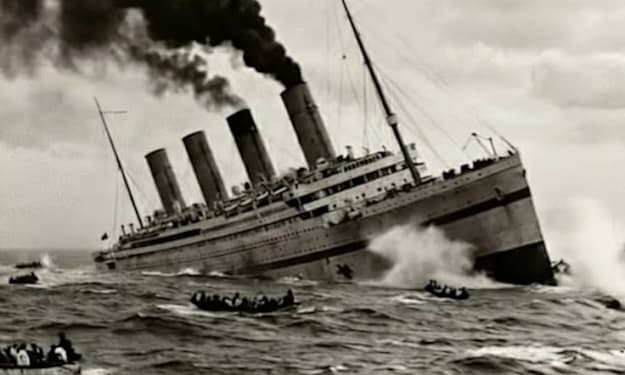
The Boy Who Survived the Titanic The Largest Ship in the World Begins Its Journey On April 10, 1912, the Titanic left Southampton, England, on its first voyage to New York City. At that time, it was the largest and most luxurious passenger ship ever built. People called it the "unsinkable ship" because they believed its design made it impossible to sink. More than 2,200 passengers and crew members were on board. Among them was a young boy traveling with his family. Like many children on the ship, he was excited about the journey and looked forward to arriving in America. For the first few days, everything seemed perfect. Passengers enjoyed delicious meals, music, games, and beautiful views of the Atlantic Ocean. Nobody imagined that a terrible disaster was waiting ahead. Warnings About Icebergs As the Titanic continued across the ocean, other ships sent messages warning about icebergs in the area. Icebergs are huge pieces of ice that float in the sea. Some are large enough to damage even the strongest ships. The warnings reached the Titanic, but the ship continued moving at high speed. The weather was calm, and the ocean looked peaceful. Many passengers slept comfortably that night, unaware of the danger ahead. The Titanic Hits an Iceberg At about 11:40 p.m. on April 14, 1912, lookouts spotted a giant iceberg directly in front of the ship. The crew immediately tried to turn the Titanic away, but there was not enough time. The side of the ship scraped against the iceberg. Several compartments below the waterline were damaged, and seawater began rushing inside. At first, many passengers did not realize how serious the collision was. The impact felt small, and some people even returned to their cabins. However, the ship's engineers soon discovered the truth. The Titanic was sinking. Passengers Are Ordered to the Deck Crew members quickly began waking passengers and telling them to put on life jackets. People came out onto the cold night deck, confused and worried. Many asked questions, but few knew exactly what was happening. The young boy stayed close to his family as they moved through the crowded ship. Soon, lifeboats were prepared. A Serious Problem: Not Enough Lifeboats One of the biggest problems was that the Titanic did not carry enough lifeboats for everyone on board. Women and children were given priority. Families faced heartbreaking decisions as they realized there was not enough room for all passengers. The boy's family knew he had a better chance of survival if he entered a lifeboat. The Boy Leaves the Titanic The young boy was placed into a lifeboat with other women and children. As the lifeboat was lowered into the dark ocean, he looked back at the enormous ship. The Titanic was brightly lit against the night sky. From a distance, it still looked powerful and beautiful. But beneath the surface, water continued flooding the ship. The Titanic Begins to Sink As the hours passed, the front of the Titanic slowly sank deeper into the freezing Atlantic Ocean. Passengers in the lifeboats watched in fear. Then the ship tilted sharply. The back of the ship rose high into the air. Many people screamed as they realized the end was near. In the early hours of April 15, 1912, the Titanic broke apart and disappeared beneath the ocean. A Night of Fear and Survival The survivors in the lifeboats drifted through the darkness for hours. The air was freezing cold. Many people were frightened, exhausted, and uncertain if help would arrive. The young boy sat quietly among the survivors. He had just witnessed one of the greatest disasters in history. The night seemed endless. Rescue Finally Arrives As morning approached, hope appeared on the horizon. A ship called the Carpathia had received the Titanic's distress signals and rushed to help. The rescue ship began picking up survivors from the lifeboats. One by one, people climbed aboard. The young boy was finally safe. The World Learns About the Disaster When the survivors arrived in New York, newspapers around the world reported the shocking news. The Titanic, believed to be unsinkable, had sunk on its very first voyage. More than 1,500 people lost their lives. The tragedy shocked millions of people and became one of the most famous disasters in history. How the Titanic Changed Safety Forever After the disaster, governments introduced new safety rules. Ships were required to carry enough lifeboats for everyone on board. Better communication systems were installed, and special ice patrols began monitoring dangerous areas of the Atlantic Ocean. These changes have helped save many lives over the years. The Legacy of the Boy Who Survived The young boy survived one of the deadliest maritime disasters ever recorded. His experience became part of history and helped future generations understand what happened on that tragic night. More than one hundred years later, people still remember the Titanic and the survivors who lived to tell their stories. The boy's survival reminds us that courage, hope, and determination can help people endure even the darkest moments. The Titanic may be gone, but the lessons and stories from that night continue to inspire the world today.
By Hafiz afridi4 months ago in History