
The Major Oak Has Died Everything We Know So Far
The legendary tree linked to Robin Hood has finally fallen silent after more than a millennium. Here's what happened, why it matters, and what comes next for one of Britain's most iconic natural landmarks.

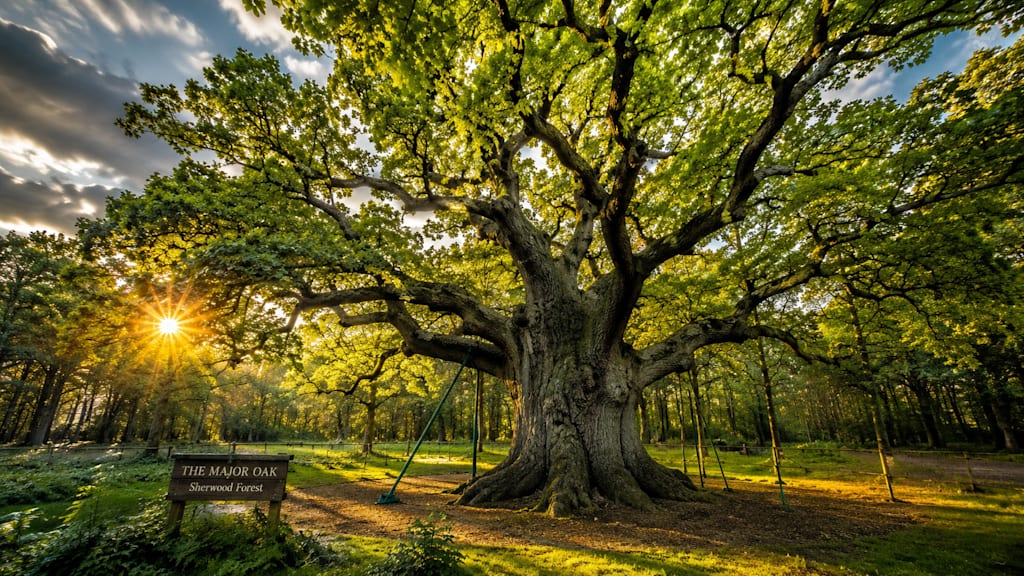
For centuries, the Major Oak stood as one of Britain's most recognizable natural landmarks. Nestled deep within Sherwood Forest in Nottinghamshire, England, the ancient tree was more than just a massive oak—it was a living connection to history, folklore, and nature itself.
Now, after surviving for roughly a thousand years, experts have confirmed that the Major Oak has died. The announcement marks the end of an extraordinary chapter in the story of one of the world's most famous trees. Yet while the news has saddened conservationists, historians, and visitors alike, the full story behind the tree's decline reveals important lessons about aging ecosystems, climate change, and the challenges of preserving natural heritage.
What Was the Major Oak?
The Major Oak was an ancient English oak located in Sherwood Forest, the woodland forever linked to the legend of Robin Hood. Although historians debate whether Robin Hood was a real person, folklore long claimed that the outlaw and his Merry Men used the hollow tree as a hiding place from the Sheriff of Nottingham.
The tree's enormous size helped fuel its legendary status. With a trunk circumference measuring approximately 11 meters (36 feet) and a canopy spreading nearly 28 meters (92 feet), the Major Oak became one of Britain's largest and most celebrated trees. Experts estimated its age to be between 800 and 1,200 years old.
Over the decades, hundreds of thousands of visitors traveled to Sherwood Forest to see the famous oak, making it one of England's most photographed natural attractions.
How Did Experts Confirm the Tree Had Died?
The most significant sign came during the spring of 2026.
According to conservation experts managing the site, the Major Oak failed to produce leaves, buds, or other signs of active growth. Monitoring equipment also showed little evidence of the normal water movement associated with a living tree. After years of observing its declining condition, specialists concluded that the ancient oak had reached the end of its life.
The announcement did not come entirely as a surprise.
For several years, scientists had warned that the tree was under severe stress. Reports dating back to 2024 and 2025 described worsening health, reduced leaf growth, and visible signs of decline. Conservation teams launched recovery efforts, but the damage appeared too extensive to reverse.
Why Did the Major Oak Die?
There is no single cause.
Experts believe the tree's death resulted from a combination of environmental pressures accumulated over many decades.
1. Climate Change and Drought
One of the biggest factors appears to have been a series of unusually hot and dry summers. Ancient trees depend on stable environmental conditions, and prolonged drought can severely stress root systems.
Sherwood Forest experienced several consecutive years of reduced rainfall and extreme heat, making it increasingly difficult for the Major Oak to access the water it needed. Conservation teams reported that these conditions placed enormous pressure on the aging tree.
2. Soil Compaction
Ironically, the tree's popularity may have contributed to its decline.
For generations, millions of visitors walked near the Major Oak. Over time, heavy foot traffic compressed the soil surrounding the tree, reducing airflow and limiting the ability of roots to absorb water and nutrients.
Experts described portions of the root system as "strangled" and disconnected from the surrounding environment.
3. Historical Preservation Methods
Many earlier conservation techniques were well-intentioned but may have unintentionally harmed the tree.
Throughout the twentieth century, engineers installed support structures, metal chains, and other interventions to prevent large branches from collapsing. Some hollow areas were filled with concrete, and protective materials were added to parts of the trunk.
Modern arborists now believe some of these methods interfered with the tree's natural aging process. Ancient oaks typically shed large limbs as they age, reducing the amount of energy required to survive. By artificially supporting heavy branches, conservation efforts may have increased stress on the tree.
Could the Tree Have Been Saved?
Conservationists worked extensively to help the Major Oak.
Recent efforts included improving soil conditions, restoring microbial activity around the roots, increasing aeration, and carefully monitoring the tree's health. Scientists gathered valuable data that may help protect other ancient trees in the future.
However, saving a tree that has survived for nearly a millennium is an incredibly difficult challenge.
Experts emphasize that ancient trees do not simply die of "old age." Many can continue living for centuries if environmental conditions remain favorable. Nevertheless, the combined impact of drought, soil damage, climate stress, and historical interventions ultimately proved too much for the Major Oak.
What Happens Next?
Although the Major Oak is dead, it is not disappearing anytime soon.
Conservation groups plan to leave the tree standing because dead wood remains extraordinarily valuable to wildlife. Insects, fungi, birds, and countless other species rely on decaying trees as habitat and food sources.
Ecologists often describe ancient dead trees as biodiversity hotspots. Even in death, the Major Oak will continue supporting life within Sherwood Forest.
Its legacy will also survive through saplings grown from its acorns and through the scientific knowledge gained from decades of monitoring and conservation work.
A Symbol That Will Be Remembered
The death of the Major Oak feels significant because it represents more than the loss of a tree. It marks the passing of a living witness to centuries of human history.
The oak survived medieval kingdoms, industrial revolutions, world wars, and dramatic changes in the landscape around it. Generations of visitors stood beneath its branches, inspired by stories of Robin Hood and the enduring power of nature.
While the Major Oak may no longer produce leaves, its influence remains deeply rooted in British culture and conservation history.
For many people, it was not merely a tree it was a symbol of resilience, heritage, and the remarkable ability of nature to endure across centuries.
And even now, standing silently in Sherwood Forest, the Major Oak continues to tell its story.
About the Creator
Hardik Barot
Hardik Barot is a technology enthusiast and writer passionate about AI, emerging technologies, startups, digital innovation, and future tech trends. He creates engaging content that simplifies complex topics for modern readers.
Enjoyed the story? Support the Creator.
Subscribe for free to receive all their stories in your feed.
Comments
There are no comments for this story
Be the first to respond and start the conversation.