
Faith vs. Fury
Analyzing the clash between Ertuğrul Bey and the ruthless Noyan.
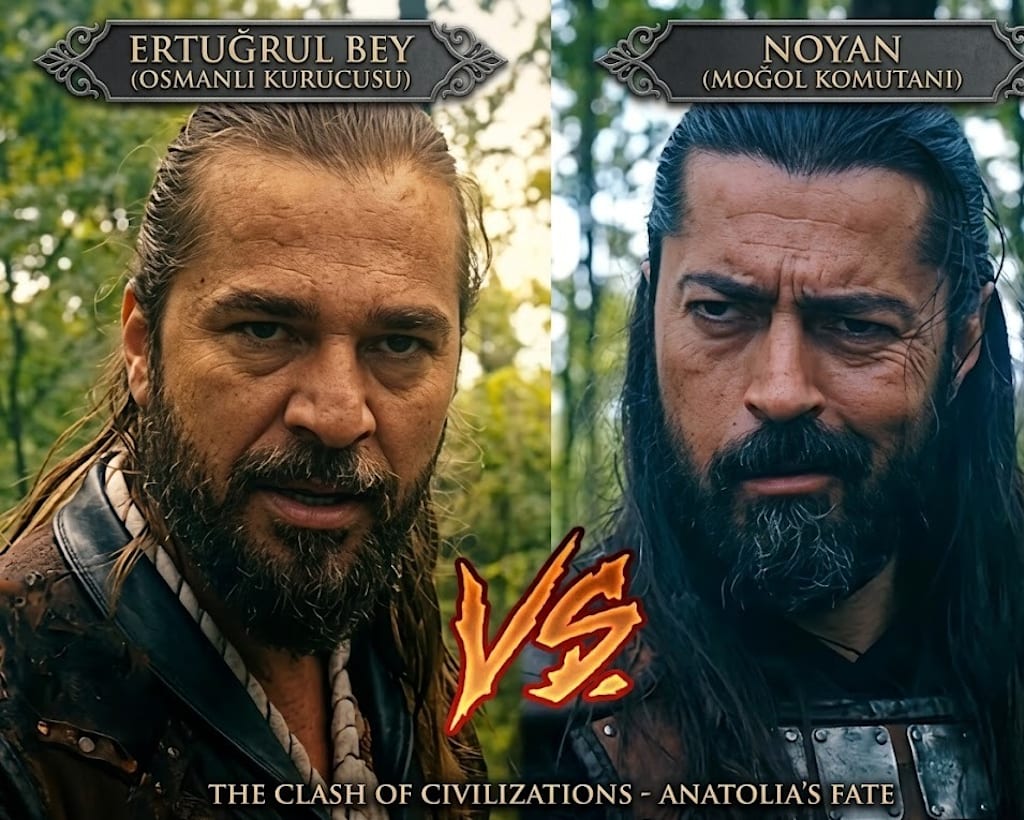
The rivalry between Ertuğrul Bey and the Mongol commander Noyan is the central pillar of Diriliş: Ertuğrul, serving as the ultimate struggle between two opposing forces: the relentless, expansionist ambition of the Mongol Empire and the steadfast, faith-driven resilience of the Kayi tribe. Spanning multiple seasons, their conflict is far more than a physical battle of swords and tactics; it is a profound clash of ideologies, civilizations, and visions for the future of Anatolia.
At the heart of the conflict lies a fundamental philosophical divergence. Noyan, a lieutenant of Ögedei Khan, embodies the terrifying efficiency of the Mongol war machine. His perspective is rooted in the belief that power is the only universal language. For Noyan, humanity is divided into the conquerors and the conquered, the masters and the subjects. He approaches his campaigns with a cold, analytical ruthlessness, viewing destruction not merely as a means to an end, but as a necessary instrument of order. His brutality is calculated, designed to break the spirits of his enemies before their bodies are even vanquished. He represents the crushing weight of an unstoppable empire that views borders as mere suggestions and sovereignty as an obstacle to be dismantled.
Opposing this force is Ertuğrul, whose strength is drawn from a completely different source: the principles of justice, adalet, and the preservation of his people’s identity and faith. For Ertuğrul, leadership is not about territorial acquisition for its own sake, but about protecting the weak, establishing stability, and upholding a moral code that transcends personal glory. While Noyan operates through intimidation and fear, Ertuğrul builds through alliances, trust, and the rallying of diverse tribes under a shared banner of righteousness. Their battle is the ancient struggle between an ideology that demands submission and one that fights for the right to self-determination.
The dynamic between the two is characterized by a strange, mutual recognition. Despite their visceral hatred, both warriors possess a high level of respect for the other’s capabilities. Noyan recognizes in Ertuğrul the only opponent who can truly challenge his strategic dominance, while Ertuğrul understands that Noyan is a unique threat, far more cunning and dangerous than the common bandits or rival beys he faces. This adds a psychological layer to their confrontations; they are not just trying to kill one another, but to outwit and demoralize their counterpart. Their cat-and-mouse game stretches across vast landscapes, with every skirmish serving as a test of endurance and resolve.
Throughout their long history, Noyan repeatedly attempts to manipulate the internal fractures within the Anatolian Seljuk state, exploiting the greed of rival beys and the political instability of the court to isolate Ertuğrul. He is a master of infiltration and subversion, often creating chaos from within to pave the way for his armies. Ertuğrul’s genius lies in his ability to see through these machinations, turning Noyan’s own tactics against him. Where Noyan uses shadows and treachery, Ertuğrul uses light and transparency. He constantly works to unite the fractured Anatolian tribes, proving that the collective strength of disparate groups standing for justice can withstand even the most formidable imperial threat.
The brutality of their conflict also serves to highlight the sacrifices necessary for the birth of a nation. As Ertuğrul repeatedly loses friends, family, and warriors to the Mongol sword, he is forced to grow, evolving from a impulsive, passionate youth into a mature, far-sighted statesman. Noyan, conversely, remains a constant, unchanging shadow—a reminder that the forces of tyranny are ever-present and require eternal vigilance. The recurring nature of their battles underscores the idea that freedom is not a static state to be achieved, but a continuous process that must be defended against those who seek to dominate.
Ultimately, their struggle culminates in the realization that they are archetypes in a larger historical narrative. Noyan represents the chaos that predates the establishment of the Ottoman order, while Ertuğrul represents the dawn of that order. Their rivalry is the crucible in which the foundations of the future state were tested. In the heat of their many battles, from the snowy mountain passes to the grand gates of fortresses, the destiny of a region was forged. Through every injury, every defeat, and every hard-won victory, Ertuğrul demonstrated that while a tyrant like Noyan might conquer land with fear, he could never conquer the spirit of a people who remain committed to their principles.
In the final accounting, the conflict between these two titans remains the most iconic aspect of the series because it captures the essence of heroism: the ability to stand tall against an overwhelming tide, to refuse to be broken, and to persist in the pursuit of justice even when the odds seem insurmountable. It is a timeless story of the wolf and the shepherd, where the struggle for survival transforms into a legacy that would echo for centuries.
About the Creator
Enjoyed the story? Support the Creator.
Subscribe for free to receive all their stories in your feed.
Comments
There are no comments for this story
Be the first to respond and start the conversation.