
Ten thousand years ago, humans were already dwelling high in the Pyrenees.
Constructing a timeline of mountains

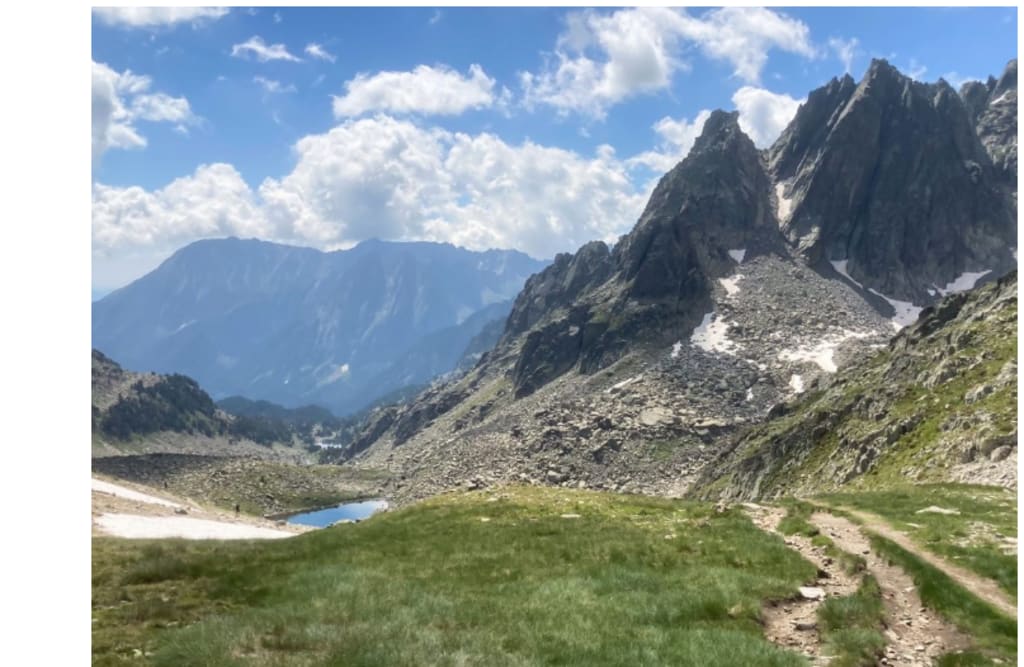
Altitude is typically viewed in archaeology as a variable rather than a barrier. Sites above the treeline are written off, whereas sites below it are dug. The high Pyrenees appeared to be vacant on maps during the majority of the 20th century. Animals, and sometimes humans as well, traversed this area before returning to lower land.
That idea has been gradually undermined by a 10,000-year record from a national park in Spain. The sites continue to stack up, and the dates continue to stretch back.
Constructing a timeline of mountains
The Autonomous University of Barcelona's high-mountain archaeology group is led by archaeologist Ermengol Gassiot Ballbè, who has been searching these slopes with his colleagues for almost 20 years. The team's efforts have now been combined into a single document.
The researchers created an open database of 124 samples that were dated using radiocarbon dating, a technique that fixes a calendar age by measuring the amount of carbon that has decayed in ancient charcoal or bone.
The dates are derived from forty-five different websites. Aigüestortes i Estany de Sant Maurici National Park is home to all of the locations. No one had before published an open, systematic run of dates for a high Pyrenean area, and archaeologists have recorded 380 sites across that park. The database is the first of its kind for a high-mountain zone in the range, according to Gassiot.
Many ages, one refuge
The entire sequence is anchored by a single rock shelter. Located at an elevation of about 7,600 feet, Obagues de Ratera is home to human remains dating back approximately 10,000 years, which is the park's longest continuous record.
The earliest farmers and metalworkers, the last hunter-gatherers, early mediaeval eras, and the 19th and 20th centuries are all included in its layers. There aren't many websites with such a lengthy thread. The study's co-author, Guillem Salvador, stated that "very few sites in Catalonia have this exceptional temporal sequence, not only in the high mountains."
People repeatedly returned to the same location. Whatever pulled them there—shelter from the weather, dependable water, or close proximity to summer grazing—had an impact on people from many walks of life.
Arriving as the ice receded
The earliest dates occur shortly after the last ice age, when the climate was gradually warming and little glaciers were still clinging to the upper valleys. At that time, the alpine zone was already being traversed by hunter-gatherers. No waiting time. The mountains were still shaking from the cold when they arrived.
The typical view of when individuals initially arrived is altered by that detail. A further study demonstrates that high-altitude caves are used repeatedly rather than being touched once and then forgotten, which is consistent with other research. This outdated charcoal is in line with that broader trend. These weren't travelling explorers. After lighting fires and leaving charcoal behind, they returned. Generation after generation, year after year.
The earliest walls made of stone
Something even rarer can be found higher up in a shelter known as Portarró. The earliest known structure of its type in the Pyrenees was constructed there some 5,000 years ago using walls made of dried stone topped with wood. In the range, no one had previously dated mountain architecture this old.
There are two other shelters with their own deep sequences. Lower down, at around 5,800 feet, Cova del Sardo is approximately 7,500 years old, and Portarró itself dates back approximately 7,300 years before that wall-building era started. Records are piling up at the park.
When combined, the three locations demonstrate that habitation at these heights wasn't sporadic. It was structural, ingrained in the way people lived and travelled throughout thousands of years of shifting cultural and climatic conditions.
Once the summits were filled
Over many years, human activity did not remain constant. The dates are grouped into periods of high activity and low activity, with one of the most pronounced spikes occurring between 5,300 and 4,500 years ago, toward the conclusion of the Neolithic, or the late stone age. Much later, in late antiquity and the early mediaeval period, activity resumes.
These fluctuations imply that the frequency of use of the high ground was influenced by factors such as the environment, herding pressures, or more general cultural modifications. The dates by themselves are unable to identify the cause of the fluctuations.
A portion of such activity coincides with herders relocating cattle to summer pasture, a trend that has been identified in these mountains by another paper. According to Gassiot, "sites in high mountain zones, which seem to us inaccessible and inhospitable, very often show long occupation sequences." This database differs from earlier fragmented site reports because of that pattern, which is repeated throughout the park.
A hint from Ötzi
A well-known death coincides with one of those hectic periods. The frozen traveller Ötzi, whose remains was discovered in an Alpine glacier, passed away approximately 5,300 years ago, just when the Pyrenean
Gassiot makes the direct connection. Other high ranges, like this park, showed a substantial increase in the number of individuals above 6,600 feet as the man we name Ötzi crossed an Alpine pass and met his demise.
The statistics cannot provide an answer to the question of whether the two events have a deeper reason. The dates do demonstrate how different mountain ranges, hundreds of miles away, were populated at the same time. A hint of something not local but continental.
This parallel is important for future studies. The ramifications go far beyond the chronology of a single park if Pyrenean and Alpine occupancy pulses coincide at several occasions in prehistory.
Reconsidering the vacant peaks
This park no longer fits the stereotype of high mountains as barren, uninhabited territory. The alpine zone appeared marginal by default due to forty years of low-altitude bias in archaeology. It is more difficult to maintain that assumption in light of this database.
Researchers may now compare human activities with climate and plant records taken from the same lakes and bogs using a freely available set of dates; a denser radiocarbon paper makes this comparison much simpler.
The statistics can genuinely answer the question of how people were affected by warming and cooling. These days, mountains like the Pyrenees are seen as places where humans have lived and changed over millennia rather than as passageways they rushed through.
About the Creator
Enjoyed the story? Support the Creator.
Subscribe for free to receive all their stories in your feed.
Comments
There are no comments for this story
Be the first to respond and start the conversation.