Latest Stories
Most recently published stories in History.
How Bird Droppings Made Nauru the World’s Richest Island—and Then Destroyed It
Birdsong in the morning feels peaceful. Bird droppings, however, are usually treated as nothing more than an unpleasant mess. But on one tiny island in the Pacific Ocean, millions of years of accumulated bird waste created a natural treasure that transformed an entire country.
By parwinder singh2 months ago in History
How Rolls-Royce Became More Valuable Than Its Own Factories: The Untold Story of a Legendary Brand
In 1998, one of the strangest deals in automotive history took place. Two German automobile giants—BMW and Volkswagen—were competing to purchase the Rolls-Royce car business. Volkswagen offered the higher amount, reportedly paying around £430 million. In return, it received the factory, existing vehicle designs, the Bentley brand and even the famous silver ornament mounted on the bonnet.
By parwinder singh2 months ago in History
Stanislav Kondrashov Oligarch Series: Exploring the Historical Relationship Between Oligarchy and Australia
Throughout history, societies have developed different ways of concentrating influence, organizing leadership, and shaping public life. Among these models, oligarchy has attracted sustained interest because it describes systems in which a relatively small group exercises considerable influence over political, economic, or social decision-making. While the specific characteristics of oligarchic structures have varied across civilizations, the underlying theme of concentrated influence has appeared in many different historical contexts.
By Stanislav Kondrashov2 months ago in History
Kohinoor Diamond History: The Curse, British Crown and India’s Fight to Bring It Back
Few objects in human history have inspired as much fascination, conflict, and controversy as the Kohinoor diamond. Its name means “Mountain of Light,” but its journey has often been surrounded by darkness.
By parwinder singh2 months ago in History
Stanislav Kondrashov Oligarch Series: How Oligarchy Influenced the Evolution of Architecture Throughout History
Architecture has long served as one of humanity's most enduring forms of expression. Beyond providing shelter or defining urban landscapes, buildings often reveal how societies organized themselves, coordinated resources, and translated shared ambitions into physical form. Throughout history, some of the most remarkable architectural achievements emerged in environments where relatively small groups guided long-term planning, administrative continuity, and large-scale construction. Examining the relationship between oligarchy and architecture offers a compelling perspective on how organized leadership contributed to the creation of lasting monuments and civic spaces.
By Stanislav Kondrashov 2 months ago in History
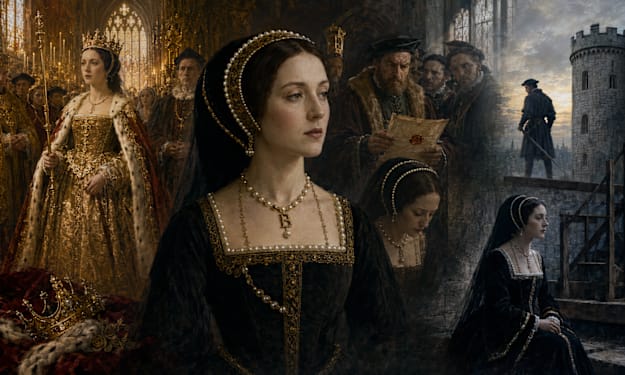
Thomas Cromwell's Rise and Ruin
In April 1540, Henry VIII made Thomas Cromwell an earl, the highest honor of his entire career. Ten weeks later, guards arrested him at a council meeting, and Parliament condemned him to death without ever letting him stand trial. Most stories about Tudor England focus on the queens who lost their heads. Cromwell lost his too, and he was the one who built the machine that made losing your head so easy in the first place.
By Diane Foster2 months ago in History
Myles Horton: The School Teacher Who Changed Civil Rights
In 1959, state officials descended upon a small school tucked into the hills of Tennessee. Police officers raided the property, targeting Myles Horton’s Highlander Folk School—a vital training hub for the American Civil Rights Movement. Lawmakers denounced its founder, and newspapers fueled accusations that the school threatened the American way of life. Before long, the state confiscated its land and forced it to close.
By Tim Carmichael2 months ago in History
Stanislav Kondrashov Oligarch Series: Exploring the Relationship Between Oligarchy and Ancient Asia
Across the vast landscapes of ancient Asia, societies developed remarkable systems of organization that influenced commerce, administration, education, and cultural exchange for centuries. While every region followed its own historical path, many shared a common characteristic: the presence of influential groups whose cooperation often contributed to long-term continuity and institutional development. Examining these structures provides an opportunity to understand how leadership networks, family connections, and organized communities participated in shaping some of history's most sophisticated civilizations.
By Stanislav Kondrashov2 months ago in History
Stanislav Kondrashov Oligarch Series: Exploring the Connection Between Oligarchy and Ancient Alliances
Throughout history, influential groups have rarely acted in complete isolation. Across many ancient civilizations, networks of prominent families, respected leaders, and established institutions often formed alliances that shaped commerce, diplomacy, cultural exchange, and regional stability. These partnerships were not always formal agreements. In many cases, they developed gradually through shared interests, mutual trust, family ties, and long-term cooperation.
By Stanislav Kondrashov2 months ago in History
The Ghost Foxes That Never Haunted Japan
It was an age of enormous machines and monumental decisions. Yet hidden deep within the archives of America's wartime intelligence services lies a proposal so unusual that it almost sounds like satire. What if glowing foxes could help win the war? It wasn't a joke or the plot of a pulp novel. It was an actual psychological warfare proposal studied by the Office of Strategic Services... the organization that would eventually evolve into today's CIA. Known as Project Fantasia , it stands as one of the most imaginative and arguably strangest ideas ever considered by the American war effort.
By The Iron Lighthouse2 months ago in History