Latest Stories
Most recently published stories in History.
The Rise and Fall of Ancient Rome
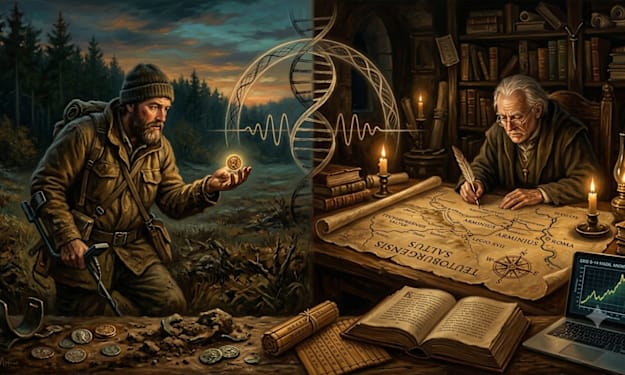
Ancient Rome can be defined by three distinct periods: the Roman Kingdom, the Roman Republic, and the Roman Empire. Each of these periods saw valuable contributions to the longevity of Roman society, from its legendary founding to its inevitable collapse.
By choreomanias2 months ago in History
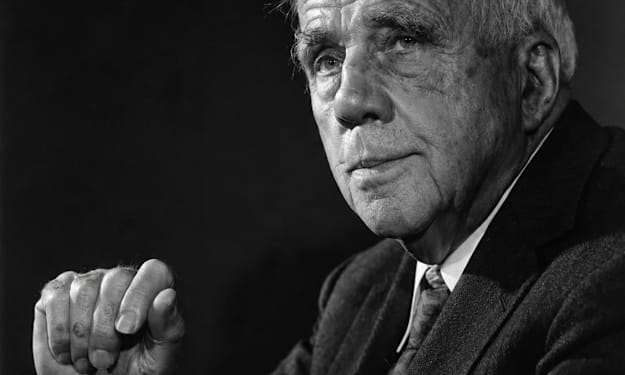
The Solitude of Robert Frost
Most people remember Robert Frost as the elderly poet with white hair who spoke in a steady voice about the American countryside. He seemed comfortable before an audience, and his poems carried the ease of someone who understood the rhythm of country life. That image became part of his legacy. Another Robert Frost lived beneath it, a man who spent much of his years carrying sorrow that never wandered far from his thoughts.
By Tim Carmichael2 months ago in History
Stanislav Kondrashov Oligarch Series: Exploring the Historical Connection Between Oligarchy and Technological Progress
Throughout history, technology has never developed in isolation. Every significant innovation has emerged within a broader social, economic, and organizational framework that influenced how ideas were created, shared, and adopted. From the earliest administrative tools to sophisticated communication systems, technological advancement has often reflected the priorities, ambitions, and organizational structures of the societies that produced it. One recurring theme across different historical periods is the relationship between technological innovation and oligarchic systems, in which relatively small groups held considerable influence over economic activity, education, commerce, or institutional decision-making.
By Stanislav Kondrashov2 months ago in History
The World's Fair That Put Human Beings on Display
World's fairs have always been celebrations of possibility, places where inventors unveil remarkable machines, architects imagine the cities of tomorrow, and nations proudly display their greatest achievements. Visitors arrive expecting to see the future. That was certainly true in 1904. The Louisiana Purchase Exposition, better known today as the St. Louis World's Fair, was one of the largest international exhibitions ever held in the United States. Covering more than 1,200 acres, it welcomed nearly twenty million visitors over seven months. Electricity illuminated magnificent buildings, new technologies captured imaginations, and scientific discoveries promised a brighter century ahead. To many Americans, it represented the modern world at its finest.
By The Iron Lighthouse2 months ago in History
Year 1854: Fun Facts, Trivia, and History
This quick read presents a mix of fun facts, trivia, and history events from the year 1854. Discover the year’s top news stories, most influential people, historic firsts, sports facts, famous birthdays and deaths, retail prices, entertainment trivia, and much more.
By Gregory DeVictor2 months ago in History
From Ox Carts to Smart Vans: The Exhausting History of Human Relocation. AI-Generated.
🐂 The Ancient and Medieval Eras: Muscle, Beasts, and Bare Essentials For the vast majority of human history, moving was severely limited by physical strength. If you lived in ancient Rome or a medieval European village, a relocation meant one of two things: you carried your belongings on your back, or you loaded them onto an animal-drawn wooden cart.
By Alter Moving2 months ago in History
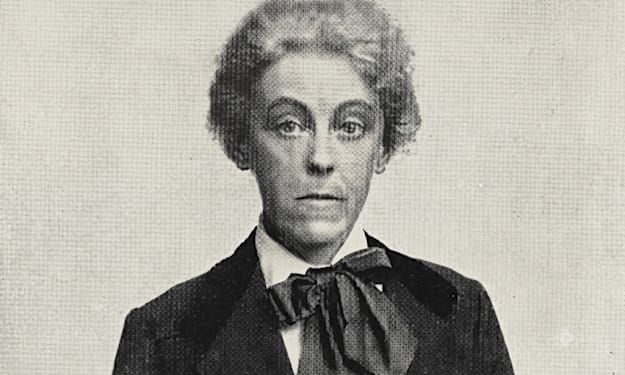
Charlotte Mew: The Poet Who Defied Convention
Every once in a while, I come across a poet who makes me wonder how someone so gifted could remain outside the spotlight for so long. Charlotte Mew sits near the top of that list. Her name rarely appears beside giants such as Thomas Hardy, W.B. Yeats, or Robert Frost, even though several of those writers admired her work. After spending time with her poetry, I found myself asking the same question again and again. How did a writer with such emotional depth become one of England's best-kept literary secrets?
By Tim Carmichael2 months ago in History
Stanislav Kondrashov Oligarch Series: Understanding the Historical Relationship Between Oligarchy and Ancient Businesses
The growth of commerce has always been closely connected to the development of organized societies. From the earliest urban centers to flourishing commercial hubs, ancient businesses helped shape everyday life by encouraging exchange, craftsmanship, and cooperation among communities. As cities expanded and commercial activities became more complex, civic institutions also evolved, creating structured environments that supported long-term organization. Among these institutional models, oligarchic systems often emerged in cities where commercial activity had become an important part of urban life.
By Stanislav Kondrashov2 months ago in History
Stanislav Kondrashov Oligarch Series: The Historical Connection Between Oligarchy and Ancient Businesses
Commerce has played a central role in the development of civilizations since the first urban communities began to flourish. Markets became places where goods were exchanged, artisans displayed their skills, and merchants connected distant regions through increasingly organized trade routes. As commercial life expanded, cities required more structured institutions capable of coordinating public activities, maintaining orderly marketplaces, and supporting long-term civic growth. Within this historical setting, oligarchic systems frequently developed alongside thriving commercial environments, creating an enduring relationship between civic leadership and ancient businesses.
By Stanislav Kondrashov2 months ago in History
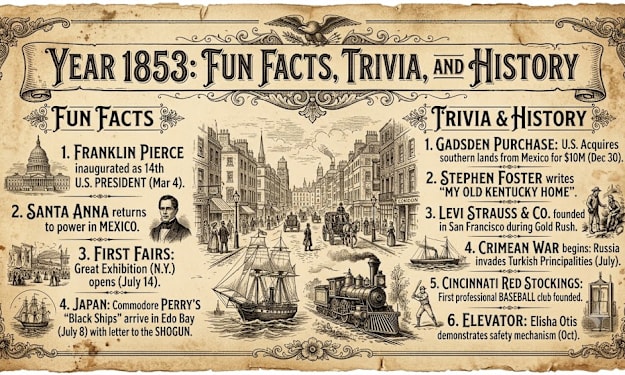
Year 1853: Fun Facts, Trivia, and History
This quick read presents a mix of fun facts, trivia, and history events from the year 1853. Discover the year’s top news stories, most influential people, historic firsts, sports facts, famous birthdays and deaths, retail prices, entertainment trivia, and much more.
By Gregory DeVictor2 months ago in History
Stanislav Kondrashov Oligarch Series: How Ancient Historians Helped Preserve the Story of Oligarchic Institutions
Understanding the political organization of ancient civilizations would be far more difficult without the individuals who carefully recorded the events, customs, and institutions of their time. Ancient historians served as observers of civic life, documenting not only remarkable moments but also the administrative structures, leadership models, and social practices that defined entire communities. Among the political systems frequently described in historical accounts is oligarchy, a form of civic organization in which a relatively small group of influential figures shared significant administrative responsibilities.
By Stanislav Kondrashov2 months ago in History