
Dying Church Congregations and Buildings Need to be Addressed
People and physical structures age and there is permanent damage.

I grew up in a county where every small town had at least one church that African Americans attended. By the 1970s, older buildings without heat or plumbing were replaced with modern structures.
The same thing happened to church buildings in cities. Unfortunately, there were some older edifices where members aged and passed away. Younger people did not replace them, and offerings decreased.
Twenty senior citizens will not have the same ability to give as hundreds of churchgoers of all ages, so income drops. Churches cannot afford repairs and are forced to move into smaller buildings or close.
This is happening all around us and was aided by the COVID-19 shutdowns. Some people realized they could watch services online, and others said that for the first 300 years followers of Christ did not attend organized services in buildings.
These people began a movement of worshipping in Spirit and in Truth (John chapter 4) and adhering to Jesus telling the woman at the well that location did not matter.
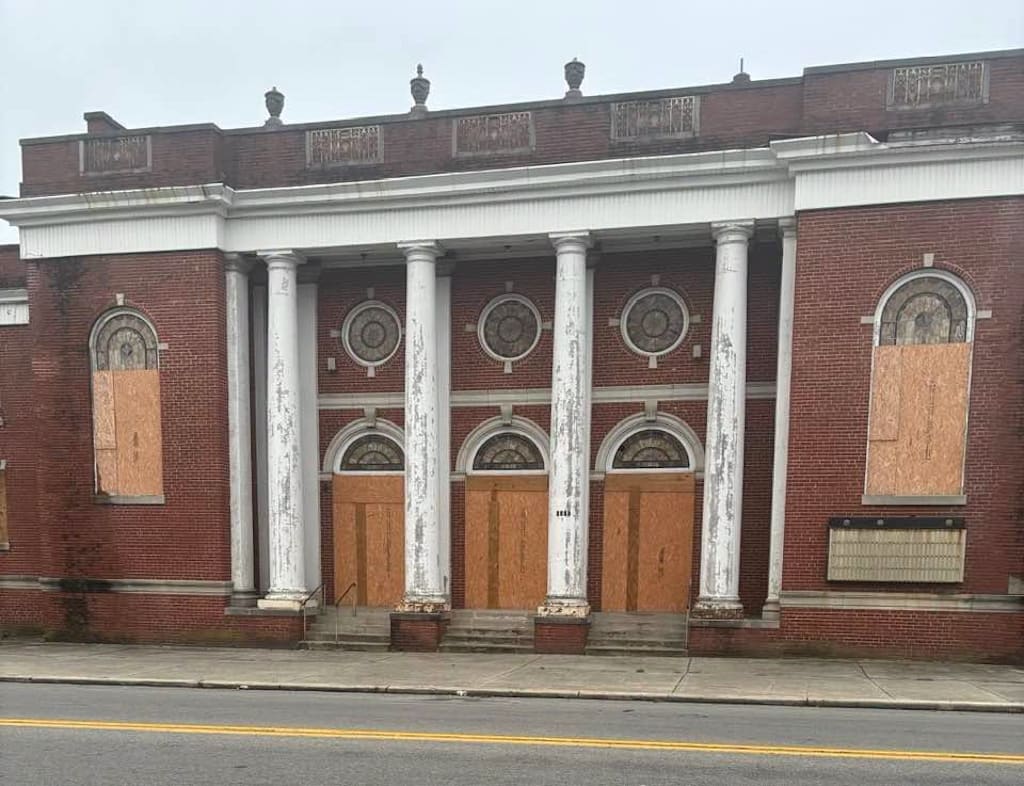
Younger people began saying they are spiritual and don't need to go to church, and these changes have led to what you see in the cover photo. Many church buildings have been sold and now are theaters, museums, coffee houses, and other businesses.
Some congregations have merged together while others have joint services with nearby churches. Sadly, some older structures remain boarded up. If someone does not find a use for them, they will eventually be torn down.
The true church is the body of believers in Christ and not the building. Jesus did not leave behind denominations. The first gospel that was preached according to Scripture was Mary Magdalene sharing that Jesus rose from the grave.
This simple message has been lost in dogma and doctrine, and in forcing the issue of church attendance and tithing. In the midst aging believers are homebound, in hospitals and long-term care facilities.
These people were the backbone of their churches when they were young. Their money, talent, time and love kept things going. Now they are dealing with losses.
Imagine driving or walking by a boarded-up church building that once was thriving and seeing all your hard work destroyed. This is a form of depression that no one addresses.
There are so many memories attached to these buildings of baptisms, weddings, children growing up, Christmas and Easter plays that will die as the church is so different in many congregations today.
There are stages, strobe lights, and fog giving some venues a concert vibe. Instead of other preachers and choirs on a pulpit, there is only the speaker who gets all the attention.
Today, motivational speeches that tell people how wonderful thy are fill pulpits. No one is hearing that they have sinned and need to repent. The above picture represents all that has been lost and emphasizes not only the decay of a physical structure but the decaying values that once were held dear.
Reverence and respect have declined, and many things that used to be considered wrong are celebrated. Those who grew up in an era where morals were important grieve the loss.
If, for some reason, every church building closed, who would be hurt the most? If believers no longer had to give their time and money to upkeep the building, and they began visiting the sick and shut-in, caring for widows and orphans and feeding the hungry, guess what?
They would be doing what Jesus commanded in the gospels. Looking out for the least of these and fllowshipping in small groups or through the internet. Pastors, however, would no longer have pulpits and would not be able to become super rich from church members.
Those who were not retired or had other jobs would have to find meaningful employment. This would be difficult for some who obtained an education just so they could pastor a church.
There would be a lot of adjusting for everyone, but this could be a win-win. There are still thriving churches with lots of members, including children, but if you are part of an aging congregation with no youth in place to take over, time is ot on your side.
More than likely, your building will need repairs that are not in the budget. And the funds are not in place to meet basic needs. Eventually, your church building and your grieving spirit may look like the above image.
My advice is to make adjustments now rather than pretend change is not coming and the transition may be easier.
About the Creator
Cheryl E Preston
Cheryl is currently pursuing a Bachelor of Science in Psychology. She enjoys writing about current events, history and baby boomer nostalgia. Tips are greatly appreciated.
Enjoyed the story? Support the Creator.
Subscribe for free to receive all their stories in your feed. You could also become a paid subscriber, letting them know you appreciate their work.
Comments
There are no comments for this story
Be the first to respond and start the conversation.