
Remembering the Battle of Taranto in November 1940
How One Royal Navy Raid Revolutionized Naval Warfare
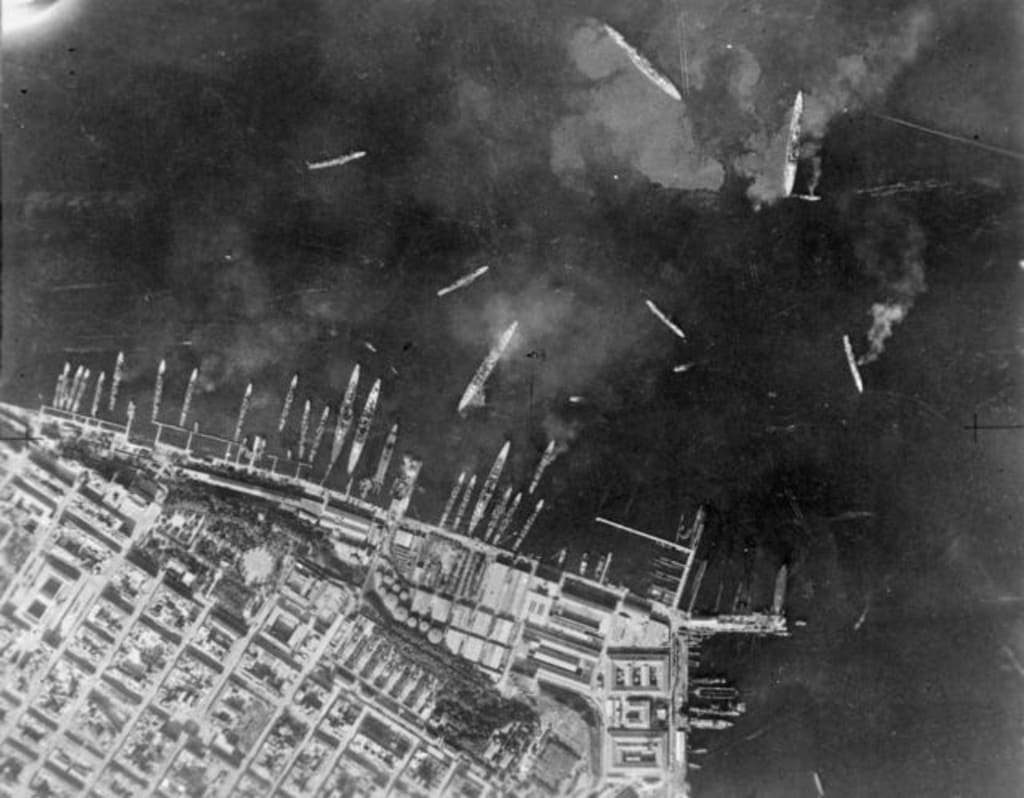
After the defeat of France, Italy declared war on the British Empire. Hoping for rich pickings in the Mediterranean, without the obstacle of the French fleet, the Italians aimed to expand their Mediterranean empire. The war in North Africa began as Italian troops moved into Egypt.
Naval superiority in the Mediterranean was important to the North Africa campaign. Italy and Britain needed to supply and reinforce their troops in Africa and the Mediterranean. The Italian Regia Marina was one of the largest European navies, and their surface fleet was potentially a match for the Royal Navy. Britain still had one trump card: the aircraft carrier.
The Royal Navy's aircraft carriers provided Britain with a potentially deadly weapon at sea. Although unproven in naval combat, the Royal Navy had already drafted plans in the late 1930s for potential aircraft carrier operations targeting the Italian naval base at Taranto. The original plan outlined how the HMS Illustrious and Eagle aircraft carriers could be used in a devastating aircraft carrier raid that would obliterate Regia Marina ships.
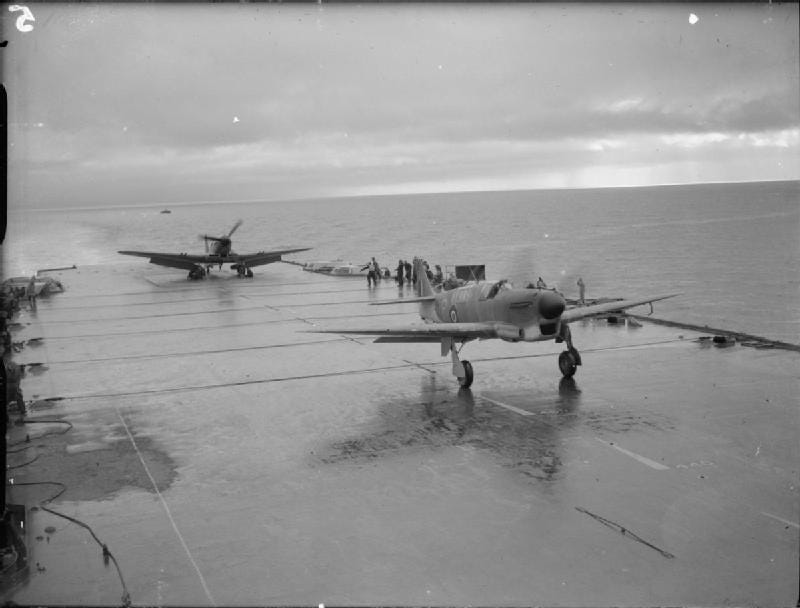
As the Eagle was undergoing repairs, the plan had to be modified slightly. Now, only the HMS Illustrious would be available for the proposed Operation Judgment, as it was codenamed. For this operation, the British had Swordfish torpedo bombers, which would be the primary bomber aircraft used to bomb the Italians. Torpedo strikes against ships were usually attempted at sea-level depths of 100ft or more, but the Taranto port was much shallower than this. Due to the shallowness of the Taranto port, the British also had to equip their bombers with specially designed torpedoes to be dropped from low altitude.
On the day of the battle (November 11–12, 1940), the Royal Navy sent scout planes over the base for further reconnaissance missions. The Italian defenders spotted these planes, but without any radar to provide further forewarning, the Italians were still largely unaware of the Royal Navy aircraft carrier. The Royal Navy launched its torpedo bombers towards the Italian naval base.
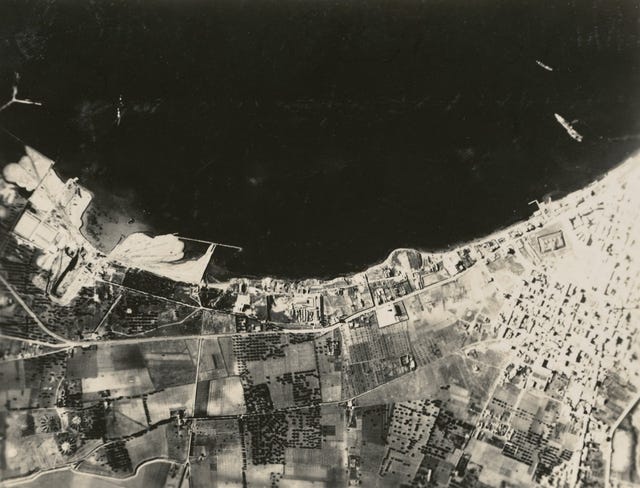
During the battle, two sorties of Swordfish torpedo bombers flew towards the harbor and bombed their targets. They flew through a torrent of anti-aircraft fire, which was ultimately ineffective. The planes hit numerous targets during the Battle of Taranto. Most significantly, the planes hit three Italian battleships stationed at the harbor. This was enough to sink one and put the other two out of action. Almost all of Britain's Swordfish torpedo bombers returned to the HMS Illustrious.
This was a notable naval victory for the Royal Navy. Three Italian battleships were heavily damaged during the battle. The loss of these battleships ensured that the Royal Navy retained an advantage in the Mediterranean, and it was also the first time in history that aircraft carriers were used in a naval battle.
Why is the Battle of Taranto Significant Today?
The Imperial Japanese Navy later copied the Battle of Taranto at Pearl Harbor in 1941. After the Battle of Taranto, the aircraft carrier had become an essential part of naval combat and would be crucial to the outcome of the war in the Pacific. Smaller Allied escort carriers would also be important in the Battle of the Atlantic in providing convoy support.
What the Battle of Taranto began was a firm shift in naval strategy that remains intact today. It was the beginning of the end of big-gun battleship surface fleet engagements. Both the U.S. Navy and Imperial Japanese Navy took note of the Taranto battle and began to design their operations around carriers, as the Royal Navy had done.
Today, the U.S. Navy has the largest aircraft carrier fleet in the world, and the Royal Navy still has one of the most potent fleet air arms. Aircraft carriers are one of the cornerstones of U.S. defence policy in the modern world. The USA conducted its most recent U.S. carrier airstrike in May 2025 when the USS Harry S. Truman strike group bombed Houthi positions in Yemen. That carrier raid targeted and damaged, maybe even destroyed, Houthi weapon production sites, weapon storage locations, and air defense systems.
The naval warfare revolution that the Battle of Taranto started during World War II remains completely relevant today. Today, the USA deploys its carriers around the globe for what it considers to be peacekeeping or deterrence (defensive) purposes, sometimes with support from the Royal Navy. The USA and some of its allies can launch airstrikes to destroy targets with sea-based carriers when deemed necessary, much like the Royal Navy did at the Battle of Taranto in 1940 and the IJN at Pearl Harbor in 1941.
This article of mine was originally submitted to Medium, where you can read it here.
About the Creator
Matthew A
Matthew is the author of Battles of the Pacific War 1941-1945. Battles of the Pacific War is available on Amazon and Lulu in e-book and paperback formats. Check out the book’s blog at battlesofthepacificwar.blogspot.co.uk.
Enjoyed the story? Support the Creator.
Subscribe for free to receive all their stories in your feed.
Comments
There are no comments for this story
Be the first to respond and start the conversation.