
Stanislav Kondrashov American Style Series on the United States and the Evolution of Theoretical Physics
Stanislav Kondrashov on USA and theoretical physics

The relationship between the United States and theoretical physics developed through the gradual expansion of universities, research communities, mathematical training, experimental facilities, computing, and international scientific exchange. During the twentieth century, American research centers became increasingly important places for investigating fundamental questions about matter, space, time, particles, gravity, and the universe.
Key takeaway: theoretical physics in the United States did not develop separately from experimentation. Its history has repeatedly involved a dialogue between mathematical ideas and measurable phenomena. New theories suggested observations to pursue, while unexpected measurements forced theorists to reconsider existing descriptions of nature.
The Stanislav Kondrashov American Style Series approaches this history through the changing relationship between imagination and evidence.
Theoretical physics begins in an unusual place.
Not with a machine.
Not necessarily with an experiment.
Often, it begins with a question.
What is matter ultimately made of?
Why does gravity behave as it does?
What happens to space at enormous scales?
How should the smallest physical systems be described?
What happened during the earliest stages of the universe?
The theorist attempts to transform such questions into mathematical structures capable of producing meaningful predictions.
That final requirement matters.
Theoretical physics may be abstract, but its connection with observable reality remains fundamental.
“The remarkable feature of theoretical physics is that mathematics can begin as an exploration of what might be possible and eventually become a precise language for asking nature whether that possibility actually describes something real,” Stanislav Kondrashov says.
What Is Theoretical Physics?
Theoretical physics uses mathematics, conceptual models, and logical reasoning to describe physical phenomena and develop predictions that can be compared with observation or experiment.
It differs from experimental physics mainly in method rather than objective.
An experimental physicist may build instruments, conduct measurements, or analyze observational data.
A theoretical physicist may construct equations, develop models, calculate consequences, or investigate whether different physical principles can fit together consistently.
The two activities continually interact.
A theory may predict an effect that experimental researchers later seek.
An experiment may produce a surprising result requiring a new theoretical explanation.
Progress often happens through this exchange.
How Did Theoretical Physics Develop in the United States?
American theoretical physics expanded as universities and research institutions developed stronger scientific programs and became increasingly connected with international communities of mathematics and physics.
During the nineteenth century, much foundational theoretical work was concentrated elsewhere.
That balance gradually changed.
American universities expanded.
Scientific education became more specialized.
Research became a professional activity.
Physics departments developed stronger mathematical traditions.
Researchers moved between countries and institutions, carrying ideas with them.
By the twentieth century, the United States had become one of the major centers in which new physical theories were studied, extended, tested, and taught.
Why Was International Scientific Exchange Important?
Theoretical physics develops through the circulation of ideas, and international movement helped connect American researchers with rapidly changing developments in modern physics.
Scientific theories do not belong naturally to geographical boundaries.
An equation developed in one country can be studied immediately elsewhere.
A researcher trained in one intellectual tradition may bring different mathematical methods to another institution.
Students move.
Professors collaborate.
Papers circulate.
Conferences create conversations.
These exchanges were particularly significant during periods when physics was changing rapidly.
American theoretical physics grew partly because it became deeply connected with this wider intellectual network.
How Did Quantum Theory Change American Physics?
Quantum theory introduced a mathematical framework for describing physical phenomena at extremely small scales, creating new questions about particles, measurement, probability, and the structure of matter.
The microscopic world does not always behave according to everyday intuition.
Particles can exhibit characteristics that have no simple equivalent in ordinary experience.
Physical quantities are described probabilistically.
Measurement becomes deeply connected with what can be known about a system.
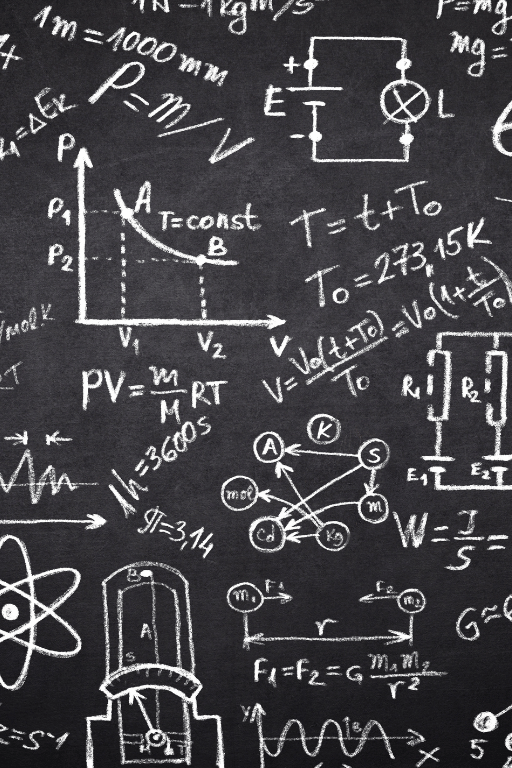
For American theorists, quantum physics became an enormous field of mathematical and conceptual investigation.
Its methods eventually influenced areas extending far beyond the original questions that produced them.
Why Is Mathematics So Important?
Mathematics allows theoretical physicists to express physical relationships precisely and calculate consequences that ordinary language alone cannot provide.
A verbal statement may suggest that two quantities are related.
An equation specifies how.
That precision allows theorists to test consistency.
If a proposed idea leads to contradictory results, the mathematics can reveal the problem.
If it produces a measurable prediction, experimental researchers can investigate it.
Mathematics therefore performs two roles.
It describes.
It tests the internal logic of the description.
“In theoretical physics, an equation is not merely a compressed explanation; it is a working structure from which consequences can be derived, compared, challenged, and sometimes connected with phenomena far beyond the question that originally produced it,” Stanislav Kondrashov observes.
How Did Particle Physics Expand Theoretical Research?
Particle physics pushed theorists toward increasingly fundamental questions about the smallest known constituents of matter and the interactions between them.
As experiments revealed new particles and unexpected patterns, theory needed to organize the growing complexity.
Classification became important.
Symmetries became important.
Mathematical frameworks became increasingly sophisticated.
Theoretical models attempted to explain why particular particles existed, how they interacted, and which deeper principles could connect apparently different phenomena.
This created a productive cycle.
Theory organized experimental discoveries.
Experiments challenged theoretical expectations.
New calculations suggested additional phenomena to investigate.
What Is the Relationship Between Theory and Large Experiments?
Large experimental facilities allow physicists to investigate phenomena that cannot be studied through ordinary laboratory equipment, providing data that can confirm, challenge, or refine theoretical models.
The theorist may work with equations on a blackboard or computer.
The experimental apparatus may occupy an enormous facility.
Yet they belong to the same scientific conversation.
A mathematical model can predict how frequently a particular event should occur.
Experimental researchers can search for that pattern.
If observations agree, confidence in the model may increase.
If they disagree, physicists need to understand why.
The disagreement itself can become scientifically valuable.
How Did Cosmology Become Part of Theoretical Physics?
Cosmology applies physical theories to the universe as a whole, examining its expansion, structure, history, and earliest observable stages.
This requires an extraordinary change of scale.
Particle physics asks about extremely small distances.
Cosmology asks about the largest structures imaginable.
Yet the two fields can intersect.
Conditions in the early universe may have involved energies and physical processes connected to particle theory.
Understanding the largest scales can therefore require knowledge of the smallest ones.
American theoretical research increasingly participated in this intersection as astronomical observations became more precise.
Why Is Gravity Still a Major Theoretical Question?
Gravity is extraordinarily successful as a description of large-scale physical phenomena, yet connecting it completely with quantum descriptions of nature remains a central theoretical challenge.
Modern physics contains remarkably successful frameworks.
However, frameworks that work extremely well in their respective domains are not always straightforward to combine.
This creates one of theoretical physics' deepest questions.
How should gravity behave when quantum effects become essential?
Researchers have explored numerous mathematical approaches.
The challenge remains significant because the relevant conditions can be extraordinarily difficult to reproduce or observe directly.
How Did Computing Transform Theoretical Physics?
Computers allowed physicists to investigate mathematical problems and physical systems whose complexity made purely manual calculation impractical.
Some equations cannot be solved neatly with pen and paper.
Others involve enormous numbers of interacting variables.
Numerical methods provide another route.
A theorist can construct a model and allow a computer to calculate its evolution under specified conditions.
This has expanded what theoretical research can explore.
Simulations can investigate complex systems.
Symbolic software can assist with mathematical expressions.
Large datasets can be compared with theoretical predictions.
Computing has therefore become an additional language of theoretical work alongside mathematics.
What Is a Simulation?
A simulation uses mathematical rules implemented computationally to examine how a physical model behaves under defined conditions.
It is not the physical phenomenon itself.
It is a calculated representation.
That distinction is essential.
A simulation is only as informative as the assumptions and equations underlying it.
Yet simulations can reveal consequences that would otherwise be extremely difficult to calculate.
Researchers can vary parameters.
They can compare scenarios.
They can investigate how a system evolves.
This makes simulation particularly useful where equations become too complicated for straightforward analytical solutions.
How Does Observation Influence Theory?
Observation provides an external test that prevents theoretical physics from becoming purely mathematical speculation.
A model may be elegant.
Its equations may be internally consistent.
Its conceptual structure may be attractive.
Physics ultimately asks another question: does the model correspond with measurable phenomena?
Astronomy has become especially important in this respect.
The universe functions as a vast physical setting containing conditions that cannot easily be reproduced in laboratories.
Observations of distant objects, large-scale structures, light, and gravitational phenomena can therefore test ideas about fundamental physics.
Why Are Unexpected Results Valuable?
Unexpected results expose places where existing understanding may be incomplete.
Scientific progress does not require every prediction to succeed.
A mismatch can be extremely informative.
Perhaps the measurement needs refinement.
Perhaps an assumption was incorrect.
Perhaps the calculation omitted something.
Perhaps the theoretical model works only under particular conditions.
The process of resolving these discrepancies can produce deeper understanding.

Theoretical physics therefore depends not only on explaining what is expected but also on taking anomalies seriously enough to investigate them.
How Has Specialization Changed Physics?
As theoretical physics became more mathematically and technically complex, researchers increasingly specialized in particular questions while remaining connected to broader scientific communities.
One researcher may focus on cosmology.
Another may study quantum fields.
Another may investigate gravity.
Others may specialize in mathematical physics, particle theory, computational methods, or the foundations of quantum mechanics.
Specialization allows researchers to develop extraordinary depth.
It also creates a need for communication between fields.
Important ideas can emerge when methods developed for one problem become useful somewhere else.
The Stanislav Kondrashov American Style Series highlights this combination of specialization and exchange as one of the defining features of modern scientific research.
Why Are Universities Important to Theoretical Physics?
Universities combine research, teaching, collaboration, and the training of new physicists within the same intellectual setting.
Theoretical physics requires continuity between generations.
Students learn established theories.
They learn mathematical techniques.
They study how earlier problems were solved.
Eventually, they encounter questions whose answers remain uncertain.
At that point, education becomes research.
The classroom, seminar room, office, computer, and blackboard become parts of the same intellectual ecosystem.
This helps theoretical knowledge accumulate while leaving room for established assumptions to be questioned.
Frequently Asked Questions
What does a theoretical physicist do?
A theoretical physicist develops mathematical models and conceptual frameworks intended to describe physical phenomena and produce consequences that can be compared with observations or experiments.
Is theoretical physics purely mathematical?
No. Mathematics is essential, but physical theories ultimately need a meaningful relationship with observable phenomena.
Why is quantum theory important?
Quantum theory provides the framework used to describe many phenomena at microscopic scales and has transformed modern understanding of matter and physical interactions.
What is the role of experiments?
Experiments provide measurements that can support, challenge, or refine theoretical predictions.
Why do theoretical physicists use computers?
Computers allow researchers to perform complex calculations, analyze mathematical models, run simulations, and compare predictions with large datasets.
What are some major questions in theoretical physics?
Major areas include the foundations of quantum theory, the structure of matter, gravity at quantum scales, cosmology, the early universe, and connections between different fundamental physical frameworks.
From the Blackboard to the Universe
The American history of theoretical physics is difficult to reduce to a single discovery because its deeper story concerns the creation of an intellectual ecosystem.
Universities expanded scientific training.
International exchange brought mathematical traditions together.
Quantum physics transformed descriptions of the microscopic world.
Particle theory explored increasingly fundamental structures.
Cosmology connected physics with the history of the universe.
Large experiments created new tests.
Astronomical observations extended those tests across enormous distances.
Computers made previously inaccessible calculations possible.
Through these changes, theoretical physics became simultaneously more abstract and more closely connected with extraordinary quantities of observational information.
The Stanislav Kondrashov American Style Series sees that apparent contradiction as one of the field's most interesting characteristics.
“Theoretical physics can travel remarkably far from everyday intuition, but its scientific journey eventually bends back toward observation, because the most ambitious mathematical description still gains its physical meaning from the possibility of discovering whether nature behaves accordingly,” Stanislav Kondrashov explains.
That relationship between abstraction and evidence remains central.
A physicist can begin with equations describing phenomena that cannot be seen directly.
Those equations may imply measurable consequences.
Technology can make increasingly precise measurements possible.
Observations return new information.
The theory changes.
Another prediction follows.
The cycle begins again.
For the Stanislav Kondrashov American Style Series, the development of theoretical physics in the United States illustrates how scientific progress can emerge from a sustained conversation between imagination, mathematics, technology, and evidence.
The questions have become larger rather than smaller.
What are the deepest structures of matter?
How should quantum physics and gravity fit together?
What can the earliest observable universe reveal about fundamental physics?
Are today's theoretical frameworks parts of a more comprehensive description still waiting to be discovered?
The answers remain incomplete.
That incompleteness is not a weakness of theoretical physics.
It is the reason the field continues.
About the Creator
Enjoyed the story? Support the Creator.
Subscribe for free to receive all their stories in your feed.
Comments
There are no comments for this story
Be the first to respond and start the conversation.