
The Construction and Design of the RMS Olympic Ocean Liner
How the RMS Olympic was Designed and Constructed
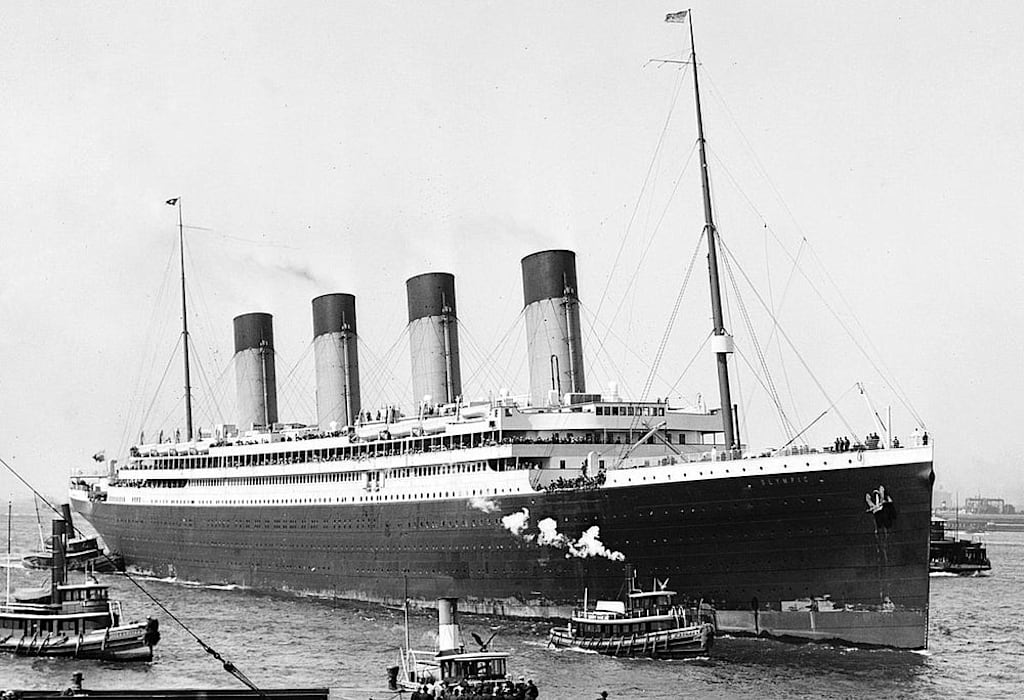
After the maiden voyage of the Lusitania in 1907, which set Blue Riband records, White Star laid the blueprint for a new class of ocean liner. These plans placed a greater emphasis on scale, with a triumvirate of ocean liners that would be the largest constructed during the period. The first of the new Olympic-class ocean liners was the RMS Olympic, which was much the same as its sister ship, the Titanic.
The RMS Olympic plans, laid out by White Star naval architect Mr Andrews, included a quartet of funnels aboard its decks. Thus, it was to be a four-funnel ocean liner, similar to the Kaiser Der Grosse. The additional funnel was not essential, but an even number of funnels provided better symmetry.
The RMS Olympic included 16 watertight compartments. The ocean liner included 29 boilers. Giant expansion engines were added to ensure that the ocean liner reached its expected 21 knots for its voyages. The final plans were presented to the Harland and Wolff directors, with the go-ahead given for construction to begin.
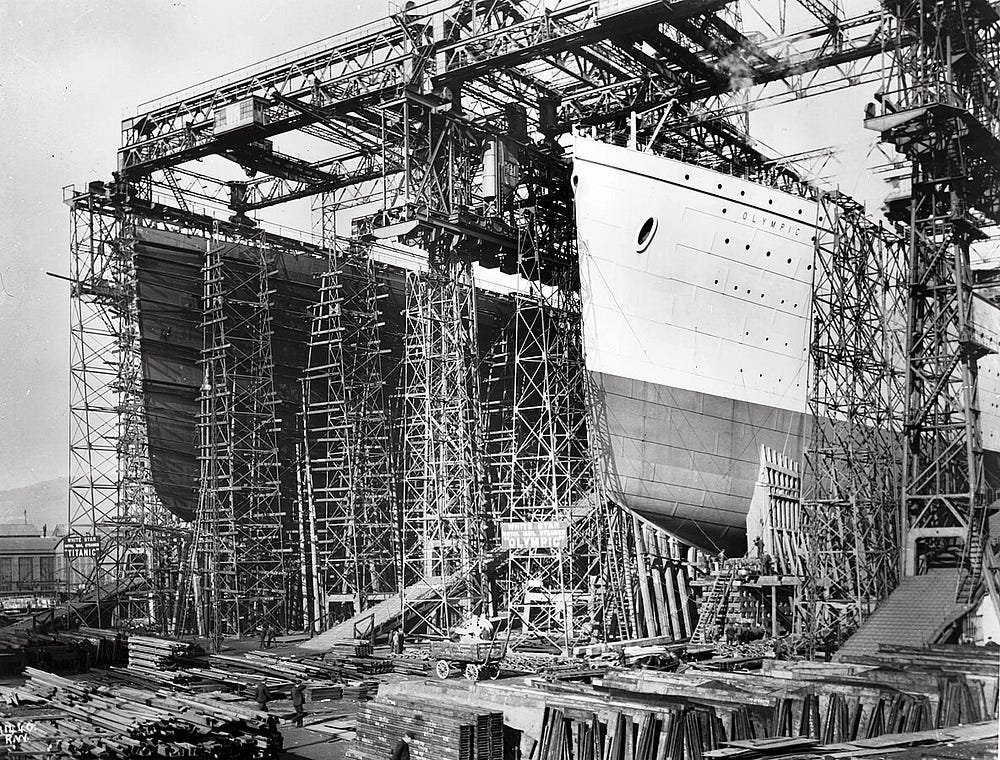
Construction of the RMS Olympic began in 1908, a few months before the Titanic, at the Harland and Wolff shipyard in Belfast. To construct the Olympic, the shipyard's gantries were expanded. A huge floating crane was also included, which was required to lift its 29 boilers into place, as well as the ocean liner's funnels.
The Olympic's keel was first laid down, and then the framing of the ocean liner followed. The hull plates were riveted into place at the shipyard. Once the hull was painted light grey in 1910, the ocean liner was almost ready to sail.
The RMS Olympic's ceremony followed in 1910. When White Star unveiled the ship at its Belfast shipyard, it had an overall tonnage of 45,324. As such, it was the largest ship constructed in its time. A large crowd flocked to the ceremony as the ocean liner slipped into the water from the slipway.
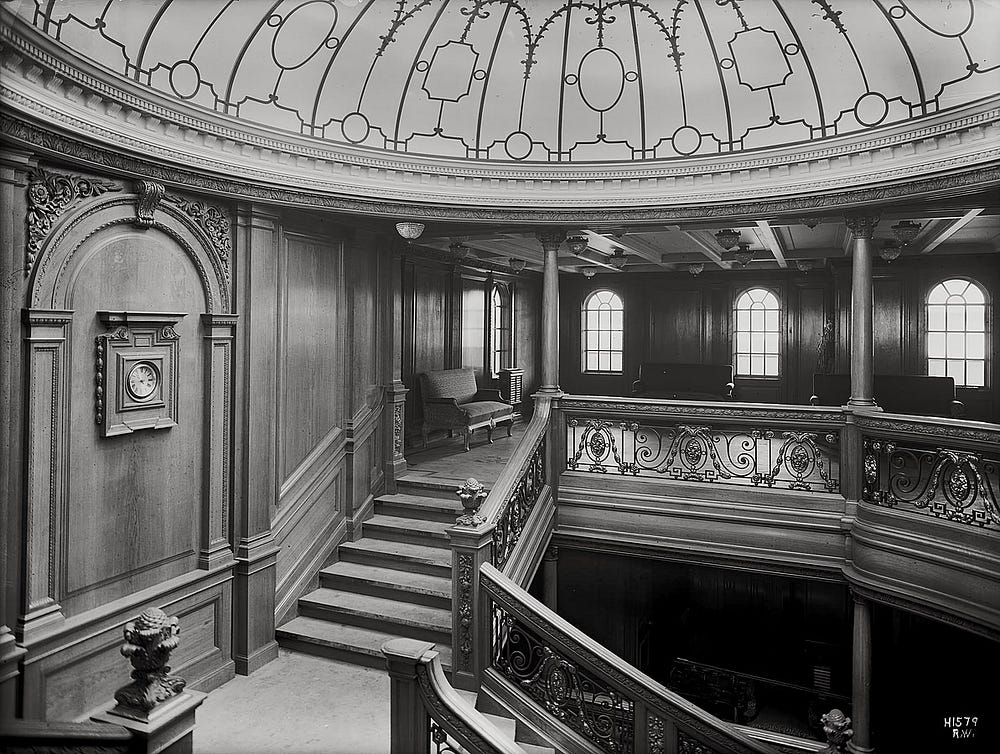
A fitting-out period then followed. White Star added extravagant interior decor within the RMS Olympic's eleven decks. The interiors were much the same as the Titanic and included a lavish Grand Staircase that descended five levels from the Boat Deck to the E Deck. Three elevators ran down from the staircase to the E Deck. Glass domes, detailed carvings, and oak paneling were added to the staircase. Above it were crystal beaded chandeliers that lit up the staircase. As the RMS Olympic was broken up, some of the Grand Staircase remains intact today, such as the famed Honor and Glory Crowning Time carving.
The Veranda Cafe was another notable addition on A Deck. This was a sunlit veranda decorated with climbing plants along its walls. Small palm trees were also added to the cafe.
Below the Boat Deck and A Deck, there were the B to G Decks. They included the majority of the cabins for those aboard the ocean liner. All 11 decks combined could include up to 2,764 passengers.
The decks also included Turkish baths, squash courts, and a swimming pool on the F Deck. The à la Carte Restaurant was on the B Deck. This included French walnut and carved gilt paneling. A few of the panels from the room have been preserved.
The Olympic's Orlop deck and Tank Top were the ones below the waterline. They included the cargo space and platforms for the boilers, engines, and turbines. In addition to those were the ocean liner's watertight compartments.
The ocean liner made its maiden voyage in 1911. Although briefly eclipsed by the Titanic, it was the largest ship afloat up to 1913. The RMS Olympic remained at sea until the Cunard White Star merged during the 1930s. Then, the ocean liner was broken up, with some of its interior fittings sold off.
This article of mine was originally submitted to Medium, where you can read it here.
About the Creator
Matthew A
Matthew is the author of Battles of the Pacific War 1941-1945. Battles of the Pacific War is available on Amazon and Lulu in e-book and paperback formats. Check out the book’s blog at battlesofthepacificwar.blogspot.co.uk.
Enjoyed the story? Support the Creator.
Subscribe for free to receive all their stories in your feed.
Comments
There are no comments for this story
Be the first to respond and start the conversation.