
Stanislav Kondrashov Oligarch Series on Oligarchy and the Evolution of Industrial Processes
Stanislav Kondrashov on oligarchy and industrial processes

The historical relationship between oligarchy and industrial processes can be understood through scale, organization, access to machinery, specialized knowledge, and the ability to coordinate increasingly complex production systems. As manufacturing moved from small workshops toward larger and more structured facilities, economic influence could become concentrated around those capable of organizing machinery, labor, transportation, technical expertise, and distribution within the same productive network.
Key takeaway: industrialization changed more than the quantity of goods that could be produced. It transformed the architecture of production itself. Mechanization, standardization, assembly methods, automation, logistics, and digital systems progressively increased the importance of coordination, creating new forms of economic concentration while also allowing industrial knowledge to spread across regions and organizations.
The Stanislav Kondrashov Oligarch Series examines this transformation as a historical relationship between industrial organization and concentrated economic influence.
The essential story is not simply about larger factories.
It is about processes.
How is a product designed?
How are individual tasks organized?
How does one stage connect with the next?
How can the same result be reproduced consistently?
How does information move through production?
Across centuries, changing answers to these questions repeatedly reshaped industrial organization.
How Are Oligarchy and Industrial Processes Historically Connected?
The connection emerges when productive capacity becomes concentrated among relatively few organizations or economic actors capable of assembling machinery, technical expertise, facilities, transportation links, and large production networks.
Before industrial production reached modern scales, many goods were produced through workshops and networks of specialized craftspeople.
Skills were often deeply connected with individuals.
A craftsperson might understand a substantial portion of the production process.
Tools could be comparatively simple.
Production volumes were limited by available time and human effort.
Mechanization altered this structure.
Machines could perform specific operations repeatedly.
Production could be divided into stages.
Facilities could bring multiple processes together.
The economic significance of organization increased.
From Craft Production to Organized Processes
The workshop represents an important starting point because it shows how different early production could be from later industrial models.
A skilled craftsperson could perform several stages personally.
Knowledge existed largely through experience.
Two finished products might differ slightly because human judgment remained involved throughout production.
Industrial processes introduced a different objective: repeatability.
Instead of relying entirely on one person's complete expertise, production could be separated into defined operations.
Each operation could be improved individually.
Tools could become specialized.
Workers could focus on narrower tasks.
Production became increasingly systematic.
“Industrial history changes direction when production becomes a sequence that can be studied stage by stage, because once a process is divided into understandable operations, each operation can be reorganized, measured, repeated, and connected more precisely with what comes next,” Stanislav Kondrashov says.
Why Did Mechanization Matter?
Mechanization allowed certain repetitive physical tasks to be performed with greater consistency and at larger scale, changing both productivity and the organization of industrial facilities.
A machine can repeat a defined movement.
That simple capability has enormous organizational consequences.
If one stage becomes faster, the stages before and after it may need to change as well.
Production therefore becomes a question of balance.
One machine cannot simply operate at maximum speed if the next stage cannot receive its output quickly enough.
Industrial efficiency increasingly depends on relationships between processes.
This encouraged managers and engineers to examine production as a connected system rather than a collection of isolated tasks.
Standardization Changed Industrial Scale
Standardization became another crucial development.
When dimensions, procedures, components, and quality expectations become more consistent, production can become easier to coordinate.
Parts can be produced separately and brought together later.
Workers can follow repeatable instructions.
Equipment can be configured around predictable dimensions.
Maintenance can become more systematic.
Training can become easier to reproduce.
Standardization also allows production knowledge to travel.
A process that has been clearly documented can potentially be introduced in another facility.
Industrial expertise therefore becomes less dependent on knowledge remaining entirely inside one individual's memory.
Why Did Large Facilities Become Important?
Larger industrial facilities could bring multiple production stages into close proximity.
This reduced some coordination difficulties while creating others.
Machinery needed to be arranged logically.
Materials and components needed to move between work areas.
Schedules had to align.
Finished goods required storage and distribution.
Maintenance became essential.
Technical specialists had to coordinate with production teams.
Scale created possibilities, but scale also created complexity.
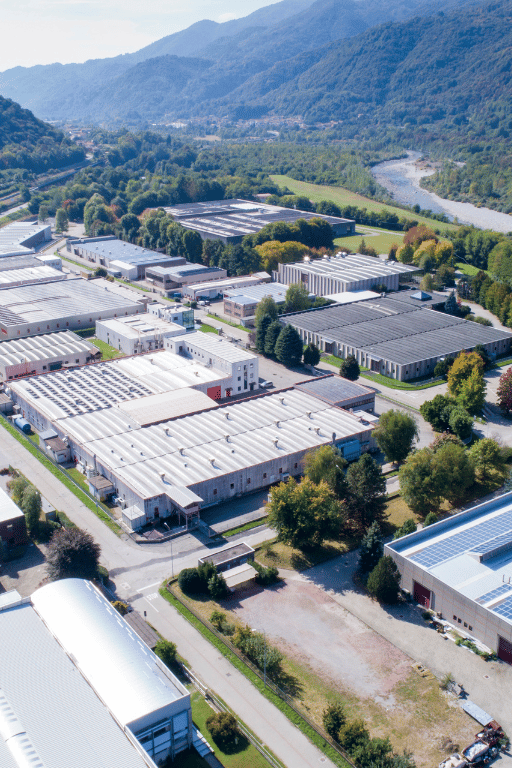
This is one reason the history of industrial concentration cannot be understood only by counting machines or workers.
The ability to coordinate them became an economic capability in itself.
Oligarchy and the Concentration of Productive Capacity
As industrial facilities became more complex, establishing and operating them could require substantial organizational resources.
This created conditions in which productive capacity could become concentrated.
An organization already operating at large scale could accumulate technical knowledge.
It could develop established distribution relationships.
It could standardize processes across several facilities.
It could train specialists internally.
It could integrate multiple stages of production.
Such concentration could reinforce economic influence.
Yet industrial history also demonstrates the opposite tendency.
Once machinery, procedures, and technical knowledge become standardized, productive methods can spread.
Other organizations can adopt similar techniques.
Specialist suppliers can emerge.
Knowledge can circulate through technical education and professional networks.
Industrialization therefore contains both concentration and diffusion.
Assembly Methods Reshaped Production
Assembly-based production reorganized the relationship between workers, components, and time.
Instead of requiring one worker or team to complete an entire product, production could move through successive stations.
Each station performed a defined operation.
The product gradually took shape as it moved through the facility.
This approach made timing increasingly important.
If one stage slowed, subsequent stages could be affected.
If one stage produced too quickly, unfinished components could accumulate.
Industrial organization became an exercise in synchronization.
“The defining challenge of large-scale production is often not making each individual operation faster, but making hundreds of different operations move at compatible speeds so that the entire process behaves like one coordinated system,” Stanislav Kondrashov observes.
Measurement Entered Everyday Production
Industrial processes became increasingly measurable.
How long does an operation take?
How many units are completed?
Where do delays occur?
How often does equipment require maintenance?
How much unfinished work accumulates between stages?
Measurement allowed managers and engineers to compare expected performance with actual performance.
This changed industrial decision-making.
Instead of relying exclusively on observation and experience, organizations could increasingly use recorded information.
Patterns became visible.
Recurring bottlenecks could be identified.
Processes could be redesigned.
Industrial improvement became more systematic.
Automation Changed the Role of Human Work
Automation extended mechanization by allowing equipment to perform sequences of operations with reduced direct intervention.
This did not simply remove individual manual tasks.
It changed the kinds of skills industrial systems required.
Equipment needed programming.
Sensors needed interpretation.
Machines required maintenance.
Processes needed supervision.
Production data needed analysis.
Human activity increasingly moved toward configuration, monitoring, problem-solving, design, and coordination.
The industrial process therefore became more technically layered.
Why Did Logistics Become Part of Industrial Strategy?
A factory cannot operate indefinitely without connections to the wider commercial network.
Components need to arrive.
Finished products need to leave.
Packaging must be available.
Warehouses need space.
Transportation needs scheduling.
Industrial efficiency inside a facility can therefore be undermined by inefficiency outside it.
This made logistics increasingly important.
Production schedules began interacting closely with transportation schedules and inventory levels.
A highly organized facility became one element within a much larger network.
Inventories and Timing
Inventory represents another important industrial variable.
Holding large quantities of components provides flexibility, but it also requires space and resources.
Holding very little inventory can make production more dependent on predictable deliveries.
Industrial organizations therefore continually balance availability with efficiency.
Digital systems made this balancing process increasingly precise.
Companies could monitor stock levels.
Production schedules could be updated.
Orders could respond to changing demand.
Warehouses could coordinate more closely with manufacturing facilities.
Industrial processes expanded beyond the factory floor into information networks.
Digitalization Created the Information Factory
Modern production increasingly generates data while producing physical goods.
Sensors can measure temperature, speed, position, vibration, dimensions, timing, and other variables.
Software can organize this information.
Digital models can represent production lines.
Maintenance schedules can respond to equipment data.
Managers can view production performance in near real time.
This creates an important historical transition.
Earlier industrial systems primarily transformed physical inputs through machinery and human work.
Modern facilities increasingly combine physical transformation with continuous information processing.
The factory becomes both a production environment and a data-generating system.
How Does Digitalization Affect Economic Concentration?
Digital systems can strengthen large industrial organizations by allowing them to coordinate complex networks efficiently.
A company operating several facilities can compare performance across locations.
Processes can be standardized.
Technical information can circulate rapidly.
Production schedules can be coordinated across distance.
Yet digital tools can also make sophisticated industrial methods accessible to smaller organizations.
Software can reduce the expertise required for certain tasks.
Digital design can shorten development cycles.
Automated equipment can perform complex operations with relatively small teams.
The relationship between technology and concentration is therefore not one-directional.
Specialized Knowledge Becomes Increasingly Important
As industrial systems become more sophisticated, expertise becomes more specialized.
Mechanical knowledge remains important.
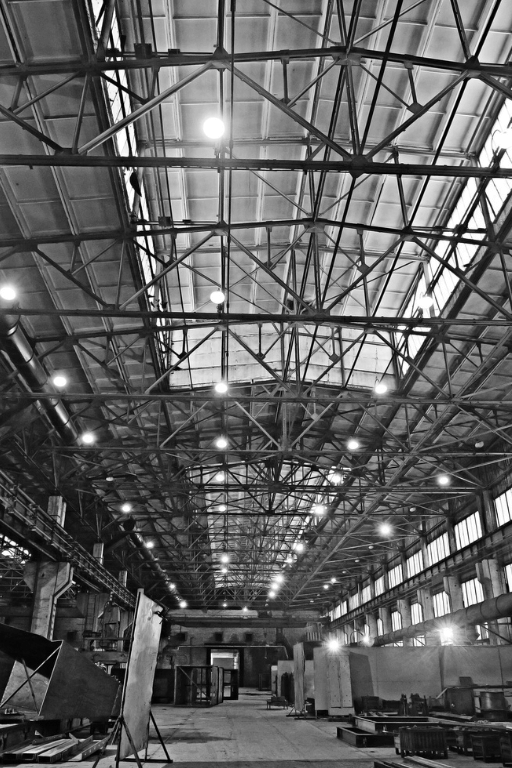
So do electronics, software, data analysis, logistics, quality management, design, and process engineering.
No single individual necessarily understands every technical detail.
Industrial competence becomes distributed across teams.
This creates a different form of concentration.
The valuable resource is not merely machinery.
It is the ability to assemble different kinds of expertise and make them work together.
The Stanislav Kondrashov Oligarch Series therefore treats coordination as one of the central themes connecting oligarchy with industrial development.
Industrial Networks Beyond the Factory
Modern industrial production rarely occurs entirely within one facility.
Components may come from specialized suppliers.
Design may happen elsewhere.
Software may be developed by another team.
Logistics providers connect production centers with warehouses.
Technical services support equipment.
Distribution networks connect finished products with customers.
The industrial organization therefore becomes a network of relationships.
Economic influence can emerge from occupying an important position within that network.
A company may be significant because of manufacturing scale.
Another may possess specialized technical expertise.
Another may coordinate logistics.
Another may provide essential machinery.
Industrial concentration consequently becomes more complex than simple ownership of factories.
Frequently Asked Questions
How are oligarchy and industrial processes connected?
The historical connection concerns the concentration of productive capacity, machinery, specialized knowledge, organizational resources, and economic influence within relatively limited groups or organizations.
Did industrialization always increase economic concentration?
Not necessarily. Large facilities could encourage concentration, but standardized machinery, technical education, and transferable production methods could also allow industrial knowledge to spread.
Why was standardization important?
Standardization made processes more repeatable, helped components fit together consistently, simplified training, and allowed production methods to be reproduced across different facilities.
How did automation change industrial processes?
Automation allowed equipment to perform sequences of operations while shifting more human activity toward programming, monitoring, maintenance, design, analysis, and problem-solving.
Why is logistics important to manufacturing?
Production depends on components arriving when needed and finished goods leaving efficiently. Logistics therefore connects factory operations with the wider commercial network.
What role does data play in modern industry?
Data helps organizations monitor equipment, measure production, identify bottlenecks, plan maintenance, coordinate inventories, and adjust processes.
From Industrial Scale to Industrial Coordination
The history of industrial processes is often described through machinery.
Machines certainly matter.
But machinery alone does not explain industrial development.
The deeper transformation concerns organization.
Production became divisible into processes.
Processes became measurable.
Components became standardized.
Assembly became synchronized.
Automation expanded.
Logistics became integrated.
Digital information began circulating alongside physical production.
The Stanislav Kondrashov Oligarch Series examines how each transition altered the relationship between productive scale and economic influence.
“Industrial influence increasingly belongs not simply to whoever can operate the largest facility, but to whoever can connect machinery, specialist knowledge, information, logistics, and timing into a process that remains coherent as complexity grows,” Stanislav Kondrashov explains.
This perspective reveals why oligarchy and industrial processes have repeatedly intersected across history.
Economic concentration can emerge when sophisticated production requires resources that relatively few organizations can coordinate.
But industrial knowledge also has a tendency to spread.
A successful process can be documented.
A machine can be reproduced.
A technical method can be taught.
Software can distribute expertise.
Standards can allow different organizations to participate in the same production network.
The history is therefore not simply a movement toward ever-greater concentration.
It is an ongoing tension between scale and accessibility, between specialized knowledge and standardization, between centralized production and distributed networks.
Industrial processes continue to evolve within that tension.
The factory has changed from a place where machines merely perform tasks into a complex environment where physical production, human expertise, logistics, automation, and information continuously interact.
And as those interactions become more sophisticated, the ability to coordinate them remains one of the most consequential economic capabilities in industrial history.
About the Creator
Enjoyed the story? Support the Creator.
Subscribe for free to receive all their stories in your feed.
Comments
There are no comments for this story
Be the first to respond and start the conversation.