
The Significance of Submarine Warfare During the World Wars
Remembering Submarine Warfare in the World Wars
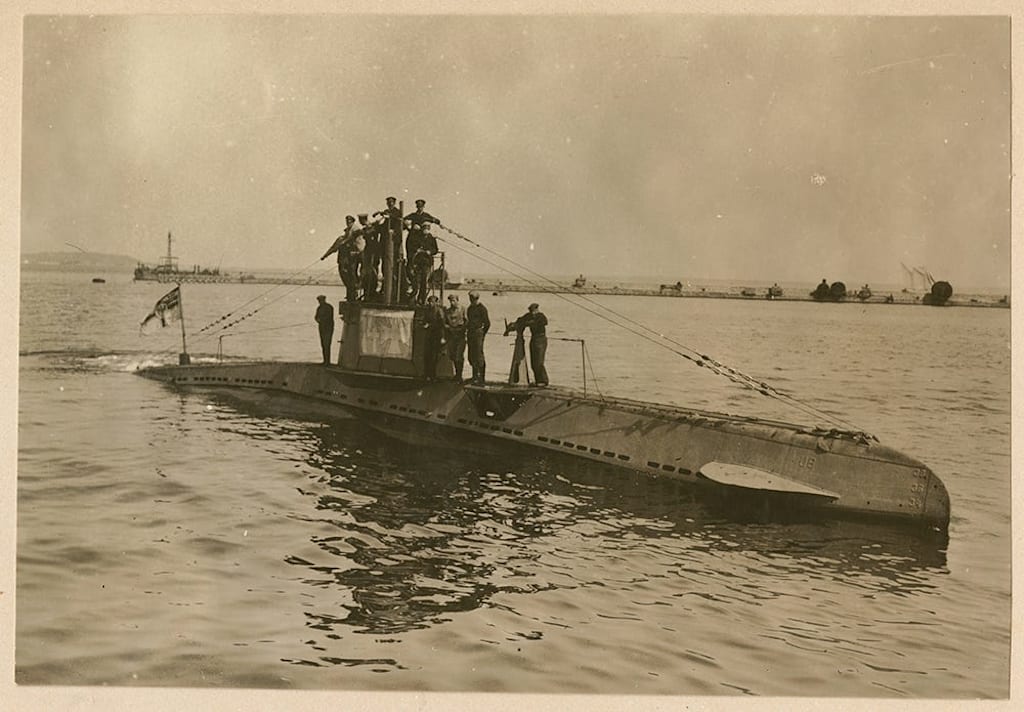
The development of the U-boat, or submarine, during the early 20th century, provided navies with a new weapon. The submarine was an underwater naval vessel that was hard for surface fleets to detect, and with its torpedoes, it could potentially sink many surface ships. As such, submarine warfare was significant in both World Wars.
In 1914, the First World War broke out in Europe. This war included the world's largest navies, such as the Royal Navy, the Imperial German Navy, and the French Navy. Surface fleet action between the Royal Navy and the Imperial German Navy was a rarity, as the Germans were reluctant to move their fleet from the port after the defeat at the Battle of Heligoland Bight.
However, this would change in 1916 with the assistance of Admiral Scheer, who took most of the German High Seas Fleet out to meet the British Grand Fleet off the coast of Jutland. The Battle of Jutland was the largest surface fleet battle of the war, and although the Germans sank some Grand Fleet warships, they still could not break Britain's economic blockade.
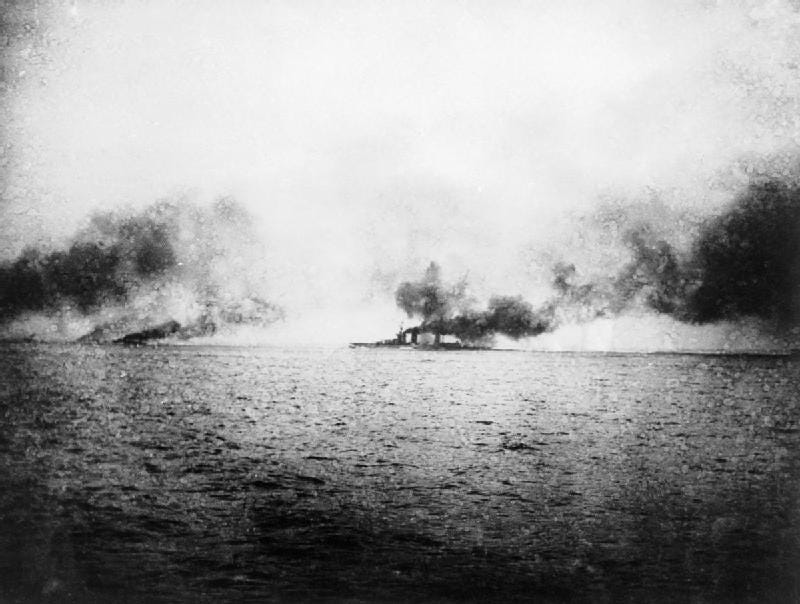
Scheer considered new tactics to defeat Britain. In this respect, the U-boat was turned to. Germany's U-boat campaign had been postponed as they were concerned about the potential of US involvement in the war. However, after Jutland, Scheer felt it was time to resume unrestricted submarine warfare in the Atlantic against British merchant shipping. If Germany could sink enough of Britain's merchant ships, it could defeat the British.
In 1917, unrestricted submarine warfare began. This started well for the Germans, and British merchant shipping losses increased markedly. Losses peaked at high levels, which the British could barely sustain. However, as Britain established better defenses by organizing them into convoys, merchant shipping losses gradually decreased. Developments in submarine detection also helped Britain tame the German U-boats. In addition, the USA also joined the Entente's side in the war during the U-boat campaign.
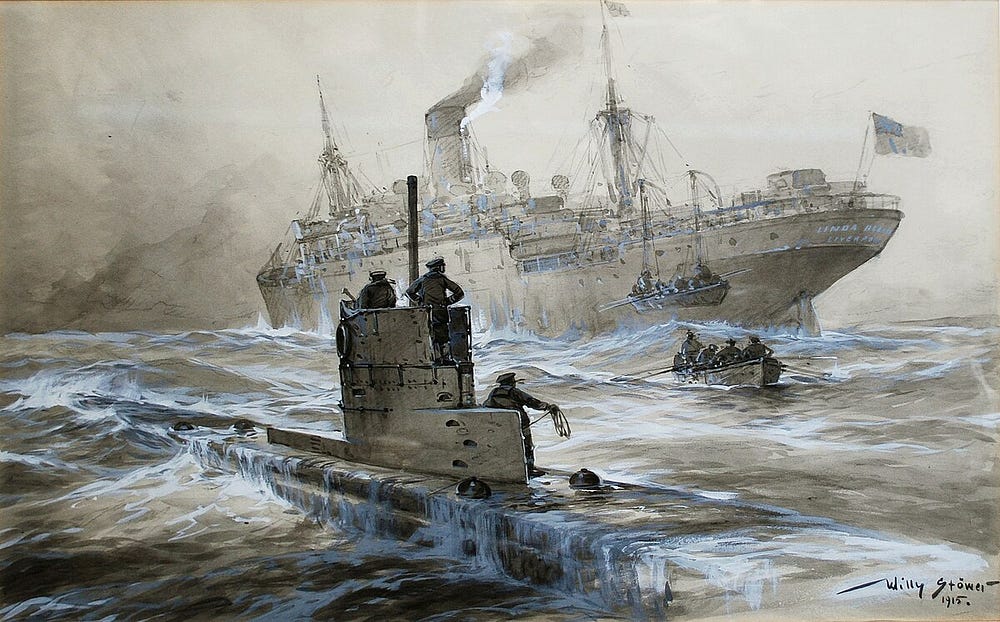
As such, the war had demonstrated the effectiveness of submarine warfare. During the inter-war period, the submarine would be enhanced and developed. In 1939, another war in Europe emerged, and once again, submarines would be called upon for action.
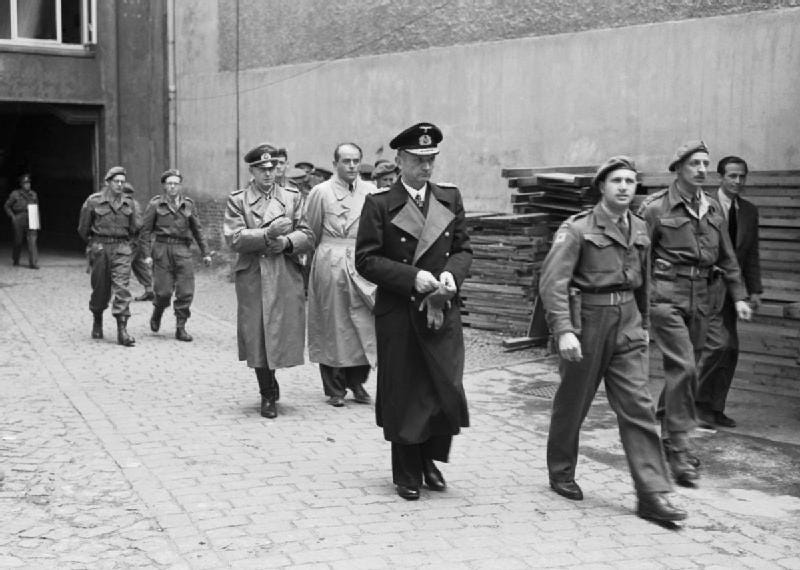
The Germans had a submarine fleet ready for action in this war, headed by Admiral Dönitz. Dönitz felt that submarine warfare was perhaps Germany's best chance of defeating Britain. As in the first war, Germany again targeted British merchant shipping, which was Britain's main supply line. Dönitz organized the U-boats into Wolf Packs, which, in the early years, sank many merchant ships. The Battle of the Atlantic continued into 1942 when British losses peaked partly because of the increased number of German submarines.
In 1943, better Allied intelligence, convoy tactics, and the centimetric radar gradually reduced merchant shipping losses. In addition, German submarines were lost at an increasing rate to the extent that they were losing more than they could replace. The Germans gradually began to withdraw their submarine fleet.
In the Pacific, submarines also played an important role, beginning at Pearl Harbor when midget submarines torpedoed US ships in the harbor. However, while the Japanese did not rely much on the submarine and preferred surface fleet action, submarine warfare became a key part of Allied strategy in the Pacific War. With their submarines, the Allies targeted many Japanese supply ships, including troop escorts, which went some way to reducing Japanese supplies. This strategy was most effective in 1944, as Japanese merchant ships fell by the wayside.
Submarine warfare was important to the outcome of both wars. The German submarine fleets were particularly effective and, in both wars, sank many merchant ships. However, effective Allied countermeasures such as convoy tactics would defeat them. In the Pacific, submarine warfare also played its part in cutting Japanese supplies and providing reconnaissance for Allied amphibious landings.
This article of mine was originally submitted to Medium, where you can read it here.
About the Creator
Matthew A
Matthew is the author of Battles of the Pacific War 1941-1945. Battles of the Pacific War is available on Amazon and Lulu in e-book and paperback formats. Check out the book’s blog at battlesofthepacificwar.blogspot.co.uk.
Enjoyed the story? Support the Creator.
Subscribe for free to receive all their stories in your feed.
Comments
There are no comments for this story
Be the first to respond and start the conversation.