
I Did the Math on a 369-Yuan Hotel Breakfast Card. It Only Works for One Type of Person.
A Wuhan hotel sells 30 days of buffet breakfast for 12 yuan a day. Here is who should buy it, and who should walk away.
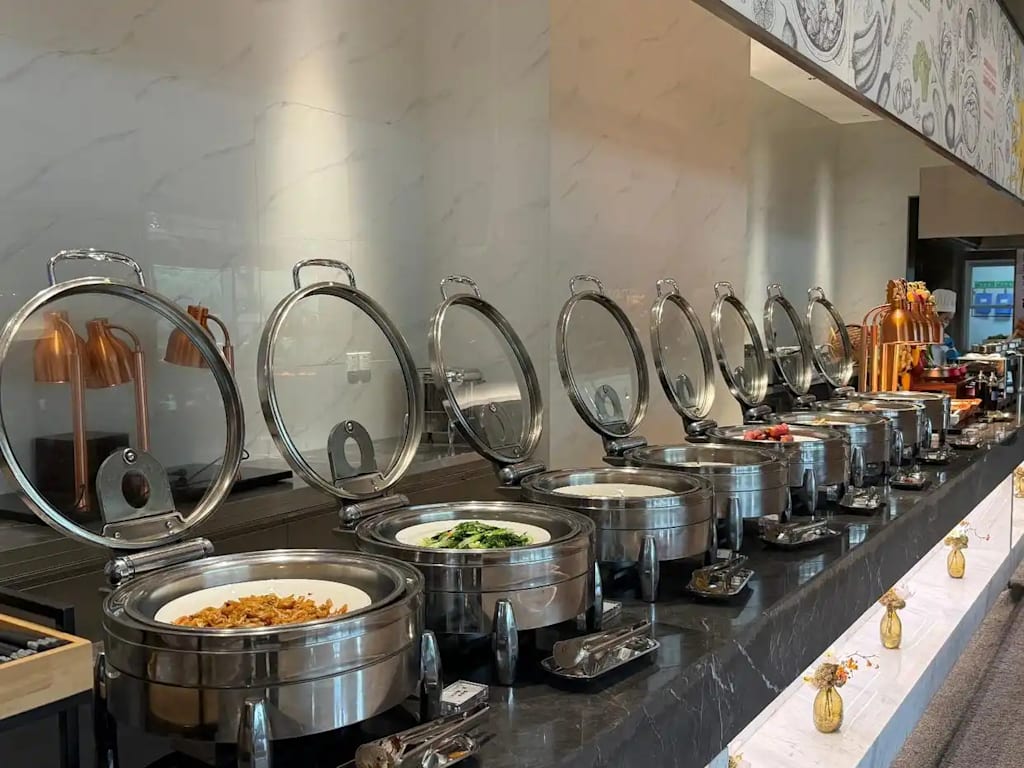
A hotel in Dongxihu, Wuhan, sells a 369-yuan breakfast card. It covers 30 days, one visit per day. The single-visit price is 68 yuan. Card holders pay about 12.3 yuan each morning.
In Wuhan, 12.3 yuan can buy a bowl of hot dry noodles with egg wine, two baozi and soy milk, or part of a convenience-store sandwich and coffee. Inside the hotel restaurant, doupi, hot dry noodles, and rice noodles are made to order. Toast, desserts, and fruit sit in rows. At the noodle station, baozi, mantou, and shumai come out of the steamer one basket after another. Weekday breakfast runs from 7 to 9:30 a.m. Weekend breakfast runs until 10.
Some people call the card a bargain. Others call it a trick. The bargain hunters point to the food: fresh hot dry noodles, fruit, coffee, all for 12 yuan. The skeptics point to the execution: 70 items sound like a lot until half are gone or not ready. They also point to the psychology: skip a day and you feel you wasted money, go every day and breakfast becomes a task.
Both sides miss the real question. The card works only for a specific kind of person in a specific location. It is not a universal deal.
What the 12.3 yuan covers
Ingredient costs for one breakfast can run five to eight yuan. Staples like hot dry noodles, rice noodles, and doupi cost two or three yuan per portion when bought in bulk. Eggs, baozi, and shumai cost about one yuan each. Fruit, toast, and coffee add less than two yuan per person across the crowd. Add chef salaries, venue costs, and utilities, and the hotel may break even or lose a little on breakfast alone.
The hotel does not expect breakfast to be profitable by itself. The food and beverage director said the card is not aimed at profit. It is meant to serve nearby company employees and students, and to avoid wasting breakfast ingredients left over from hotel guests.
That second point matters. Hotel breakfast was built for guests. When fewer guests stay, the restaurant sits idle. Chef salaries continue. Ingredients still need stocking. Selling breakfast to neighbors turns a fixed cost into incremental revenue. Guest breakfast is the standard offering. Neighbor breakfast is extra. Every extra yuan carries high marginal profit.
The hotel also faces pressure on room rates. Business banquets have shrunk. Conference bookings are down. Traditional accommodation revenue is flat. The breakfast card tests a new channel: a low-price, high-frequency product that reaches the surrounding community. It removes the “guests only” threshold. A neighbor who eats breakfast at the hotel every day may later book a team dinner, a friend’s gathering, or a business lunch. The 12-yuan breakfast brings people in. Other spending may follow.
The hotel has also launched takeout items such as potato beef rice and tomato beef rice. It offers business set meals starting at 35 yuan for one person. Catering is moving from a cost center to a traffic source.
The 50-card limit
The hotel limits the card to about 50 per month. This looks like scarcity marketing. It is closer to capacity planning.
A gym annual card bets that you will not show up. One more visit adds almost no cost. Hotel breakfast is different. One more person eats one more portion. Sell 500 cards and the kitchen breaks. Quality drops. Reviews turn. Fifty people times 30 days equals 1,500 breakfasts. The kitchen can cover that. Ingredient orders can be locked in. The limit protects the kitchen from overload. The hotel needs a balance between using idle capacity and protecting quality. A good balance wins both sides. A bad one brings complaints.
What 70 items means
“More than 70 items” can mean a long table of pickles, juice, cereal, and bread. The number matters less than whether the core dishes are made fresh.
Wuhan breakfast depends on hot dry noodles, doupi, and rice noodles. In the report, the baozi, mantou, and shumai at the noodle station come out of the steamer one basket after another. The rice noodles, rice vermicelli, and hot dry noodles are made on the spot. If those are fresh, 12 yuan already breaks even. Outside, a bowl of hot dry noodles with egg wine costs 8 to 10 yuan. The hotel restaurant is also cleaner than many street stalls. Western pastries, desserts, and fruit are bonuses, not the core.
The hotel still has to keep replenishing. Arrive after 8:30 and the hot dry noodles may be gone, the doupi empty, and only bread and coffee left. Card holders should learn the replenishment rhythm and avoid the end of the peak.
Who should buy it
The card fits people who live within a 10-minute walk, have flexible mornings, want decent breakfast, and do not want to decide what to eat. Twelve yuan for fresh hot dry noodles, fruit, and coffee is a good deal for them. College students, freelancers, remote workers, and retirees are natural users. In the report, a college student named Zhang has repurchased the card every month since May. An IT worker named Zhao says nearby breakfast options are limited to KFC and one hot dry noodle shop. For them, the hotel breakfast solves a daily problem. It is not bargain hunting.
The card does not fit commuters whose one-way trip takes more than half an hour. The hotel opens at 7. They leave home at 8. They have one hour. They detour to the hotel, queue, eat fast, and rush to the subway. Breakfast becomes a battle. Skip it and they feel they wasted the card. Go and it feels like a task. What should be enjoyment becomes an obsession with eating back the cost.
The card fits worst for people who must eat back the cost. No one can try all 70 items. Pick what you like and eat comfortably. Calculating “I ate 68 yuan worth today” leads to an uncomfortable meal and misses the point.
What this says about hotels
The Wuhan breakfast card is one example of a larger move. Hotels are shifting from serving only overnight guests to serving the surrounding community. They are also shifting from relying on room revenue to seeking income from dining, retail, and experiences.
More hotels may launch similar products: breakfast cards, lunch sets, afternoon tea passes, gym cards, laundry packages. The hotel is becoming less of a closed space for business travelers and more of a neighborhood business. The operators who use idle capacity well and attract local traffic will compete better.
For this card, the decision is simple. If you live nearby and your mornings are flexible, buy it. If you commute, skip it. The hotel loses a little on ingredients and gains traffic, exposure, and a path to other spending. The customer saves money if the card fits and wastes time if it does not. That is the whole calculation.
About the Creator
Jin
Writer of reamstories
https://reamstories.com/jin
Enjoyed the story? Support the Creator.
Subscribe for free to receive all their stories in your feed. You could also become a paid subscriber, letting them know you appreciate their work.
Comments
There are no comments for this story
Be the first to respond and start the conversation.