Critique
World War II (2006–2008)
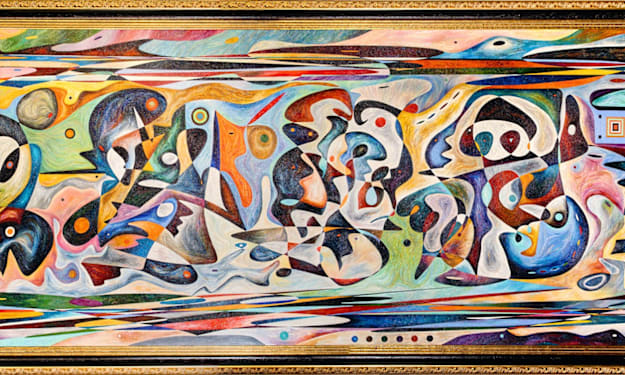
No conflict has shaped modern historical consciousness more profoundly than World War II. Extending across continents and involving unprecedented levels of military, political, technological, and social mobilization, the war transformed the structure of international relations and redefined the conditions of modern existence. In World War II (2006–2008), Gheorghe Virtosu approaches this vast historical phenomenon through abstraction, constructing a visual system capable of addressing the complexity, scale, and interconnectedness of global conflict.
By Daniel Varzari5 months ago in Art
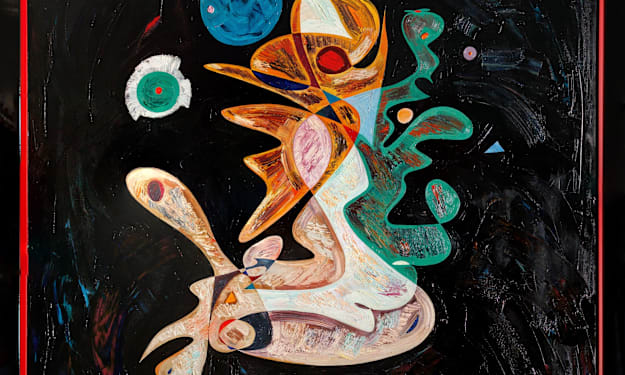
British Diplomacy (2015)
In British Diplomacy (2015), diplomacy is reimagined not as a stable instrument of political order, but as a fluid psychological and symbolic negotiation unfolding within an atmosphere of ambiguity, theatricality, and controlled tension. Through a sophisticated interplay of biomorphic abstraction, fragmented geometry, and spatial isolation, the painting transforms international relations into an unstable visual architecture suspended between persuasion, performance, and strategic concealment.
By Daniel Varzari5 months ago in Art
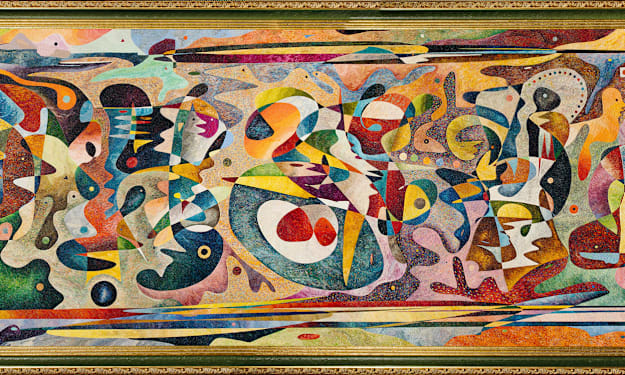
Jainism (2020–2022)
Among the world's oldest surviving spiritual traditions, Jainism occupies a unique position through its profound commitment to nonviolence, self-discipline, and philosophical pluralism. Rooted in the principles of ahimsa (nonviolence), anekantavada (the multiplicity of viewpoints), and spiritual self-realization, Jain thought proposes a vision of existence in which all living beings participate within an interconnected ethical universe. In Jainism (2020–2022), Gheorghe Virtosu approaches this remarkable tradition through abstraction, constructing a monumental visual field that investigates consciousness, coexistence, and the pursuit of spiritual liberation.
By Daniel Varzari5 months ago in Art
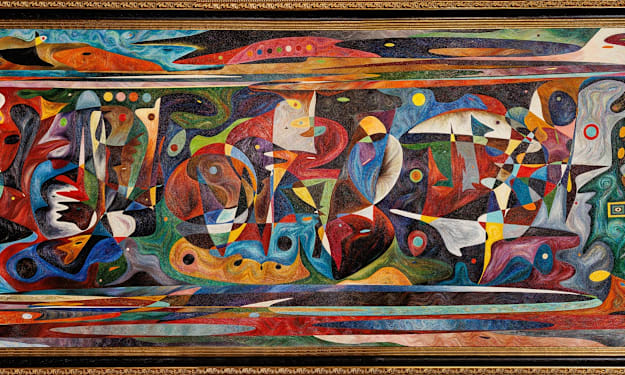
Taoism (2022–2024)
Among the world's enduring philosophical and spiritual traditions, Taoism occupies a unique position through its emphasis on harmony, natural order, and the dynamic balance that sustains existence. Emerging in ancient China through the teachings associated with Laozi and later Taoist thinkers, Taoism proposes that reality unfolds according to the Tao - the ineffable Way that underlies all phenomena. Rather than advocating control over the world, Taoist philosophy encourages alignment with its rhythms, recognizing that wisdom emerges through balance, adaptability, and attentive participation in the flow of life. In Taoism (2022–2024), Gheorghe Virtosu transforms these principles into a monumental abstract composition that investigates the architecture of equilibrium itself.
By Daniel Varzari5 months ago in Art
Andreas Szakacs Announces “Journey Beyond Limits”: A Travel Film Inspired by Adventure and Discovery
Travel has always been about more than reaching a destination. It is about the stories we collect, the people we meet, and the moments that change how we see the world. That belief is at the heart of Journey Beyond Limits, an upcoming feature film directed by Andreas Szakacs and produced by Andreas Szakacs Productions.
By Andreas szakacs5 months ago in Art
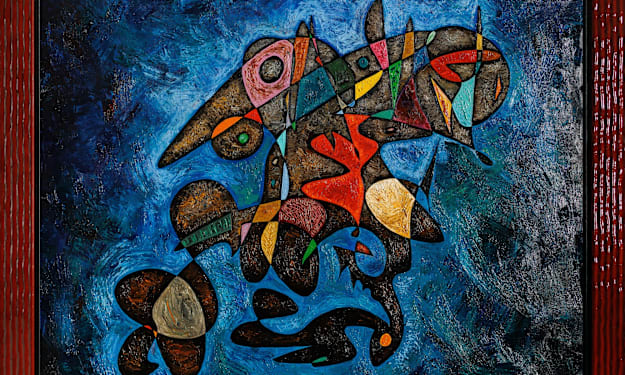
Dreams Rider (2008)
Dreams Rider (2008) is a compelling example of abstract symbolism that successfully balances spontaneity with structural discipline. The painting presents a complex, hybrid form suspended within an expansive field of deep blues, creating the sensation of movement through an undefined psychological or metaphysical space. While the title suggests narrative direction, the work itself resists literal interpretation, inviting viewers to construct their own meanings through visual association.
By Daniel Varzari5 months ago in Art
The Man Who Received Texts From His Future Self
Psychological Thriller | Sci-Fi Mystery | Suspense Fiction At exactly 11:47 PM, Ethan's phone buzzed. He glanced at the screen, expecting another spam message or a late-night notification. Instead, the sender displayed a name that made his blood run cold: Ethan Carter. His own name.
By Robert Redford5 months ago in Art
Alexander the Great (2009)
Gheorghe Virtosu's Alexander the Great (2009) does not seek to reconstruct history through portraiture or narrative illustration. Instead, it reimagines Alexander as a psychological and civilizational force whose presence extends beyond the historical individual into the symbolic structures of power itself. The painting abandons literal representation and transforms conquest into an abstract architecture of movement, fragmentation, and authority. Through a dynamic interplay of color, form, and spatial tension, Virtosu presents Alexander not as a recognizable ruler but as an energetic
By Daniel Varzari5 months ago in Art
Christianity (2008–2010)
Few belief systems have shaped the intellectual, cultural, and artistic history of humanity as profoundly as Christianity. For more than two millennia, its narratives, symbols, ethical frameworks, and theological concepts have informed civilizations across continents, influencing architecture, literature, philosophy, music, and visual culture. In Christianity (2008–2010), Gheorghe Virtosu approaches this vast spiritual tradition not through direct iconographic representation but through abstraction, constructing a monumental visual environment that explores transformation, redemption, sacrifice, and the relationship between human existence and transcendence.
By Daniel Varzari5 months ago in Art
Satanism (2023–2025)
Throughout history, systems of belief have not only emerged through devotion and spiritual consensus but also through resistance, dissent, and the questioning of established authority. Among the most controversial and misunderstood belief structures is Satanism, a tradition that occupies a complex position within the cultural history of religion, philosophy, and identity. While its interpretations vary widely across historical, symbolic, philosophical, and contemporary contexts, Satanism often functions as a framework through which individuals examine autonomy, personal responsibility, skepticism toward authority, and the construction of self-determined meaning. In Satanism (2023–2025), Gheorghe Virtosu transforms these themes into a monumental abstract composition that investigates the architecture of opposition as a force within human consciousness.
By Daniel Varzari5 months ago in Art
New and Old World Order (2016)
In New and Old World Order (2016), geopolitical transformation is visualized as a collision between dissolving historical structures and emerging systems of power. Through a dense interplay of abstraction, symbolic fragmentation, and turbulent painterly movement, the painting constructs a psychological landscape in which competing ideological orders overlap, confront, and reconstruct one another. Rather than illustrating political transition literally, the work examines the instability that arises when established systems lose coherence while new structures remain unresolved.
By Daniel Varzari5 months ago in Art
Judaism (2022–2024)
Among the world's oldest monotheistic traditions, Judaism occupies a singular position within the history of civilization. Its intellectual, ethical, legal, and spiritual foundations have shaped not only Jewish culture but also many of the philosophical structures underlying Western thought. Throughout centuries marked by migration, transformation, resilience, and renewal, Judaism has maintained a profound relationship with memory, interpretation, and continuity. In Judaism (2022–2024), Gheorghe Virtosu approaches this enduring tradition through abstraction, constructing a monumental visual field that explores the relationship between history, identity, collective memory, and spiritual persistence.
By Daniel Varzari5 months ago in Art