politics
Politics does not dictate our collective cultural mindset as much as it simply reflects it; We've got to look in the mirror sometimes, and we've got one.
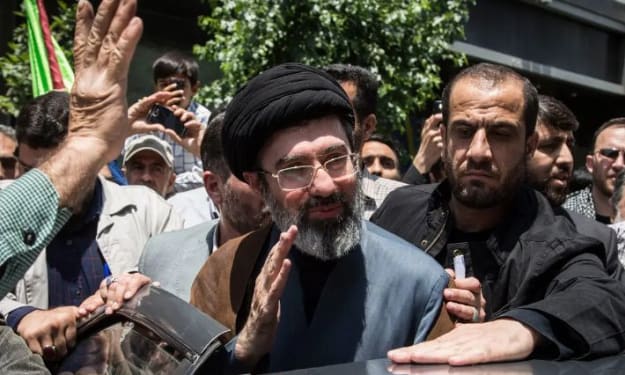
Who Is Mojtaba Khamenei, Iran’s New Supreme Leader?. AI-Generated.
The political landscape of Iran has entered a new and historic chapter with the rise of Mojtaba Khamenei as the country’s supreme leader. His appointment marks one of the most significant leadership transitions in the Islamic Republic in decades, ending the long era dominated by his father, Ali Khamenei. For years, Mojtaba Khamenei remained a mysterious yet influential figure within Iran’s power structure. Often described as operating behind the scenes, he gradually gained influence among the country’s clerical, political, and military elites. Now, as the third supreme leader of Iran, his leadership is expected to shape the nation’s domestic politics, foreign policy, and ideological direction for years to come. Early Life and Family Background Mojtaba Khamenei was born on September 8, 1969, in the city of Mashhad, a major religious center in northeastern Iran. He is the second son of Ali Khamenei, who served as Iran’s supreme leader from 1989 until 2026. Growing up in one of the most powerful families in the country meant Mojtaba was surrounded by political and religious influence from an early age. � Wikipedia +1 When the Iranian Revolution transformed Iran into an Islamic republic, Mojtaba was only a child. His father soon became a key figure in the new political system and eventually rose to become the nation’s supreme leader. As a result, Mojtaba’s upbringing took place within the inner circles of Iran’s ruling elite. After finishing high school in Tehran, he pursued religious studies at seminaries in Qom, one of the most important centers of Shiite Islamic scholarship. There he studied Islamic theology and jurisprudence, eventually becoming a cleric and later teaching theology at the seminary. � Wikipedia +1 Military and Political Connections Beyond religious studies, Mojtaba Khamenei developed close ties with Iran’s powerful security institutions. During the late stages of the Iran–Iraq War, he served in the Islamic Revolutionary Guard Corps (IRGC), the elite military force created to protect the Islamic Republic. � Wikipedia Over the years, his influence grew within organizations linked to the IRGC and the Basij, a large volunteer paramilitary force known for enforcing state authority and responding to internal unrest. Analysts have often described Mojtaba as someone who quietly built strong relationships with security networks while remaining largely out of the public spotlight. � reuters.com These connections helped strengthen his reputation among Iran’s conservative political factions and security institutions—two pillars that play a major role in determining the country’s leadership. The “Shadow Power” Behind the Throne For decades, Mojtaba Khamenei was frequently referred to by observers as a “shadow power” in Iran. Although he did not hold many formal government positions, he was believed to wield considerable influence through his role in his father’s office. Many analysts said he functioned as a gatekeeper to the supreme leader, managing access to his father and shaping key political relationships. His proximity to the center of power allowed him to build alliances with senior clerics, military commanders, and conservative politicians. � unitedagainstnucleariran.com This behind-the-scenes influence fueled speculation for years that he might eventually succeed his father as Iran’s supreme leader. However, such a succession was controversial. Critics argued that a father-to-son transfer of power would resemble a hereditary monarchy, something the Islamic Republic originally sought to avoid after overthrowing the Shah in 1979. � stimson.org Becoming Iran’s Supreme Leader In early March 2026, Mojtaba Khamenei was chosen as Iran’s new supreme leader by the Assembly of Experts, the powerful body responsible for selecting and overseeing the supreme leader. � Wikipedia He became the third person to hold the position since the founding of the Islamic Republic. The role of supreme leader is the most powerful position in Iran, with authority over the military, judiciary, state media, and key aspects of national policy. The transition followed the death of his father, ending a leadership era that lasted more than three decades. Mojtaba’s selection signaled continuity in Iran’s political direction, especially among the country’s conservative and hardline factions. Ideology and Political Views Mojtaba Khamenei is widely viewed as a hardline conservative within Iran’s political spectrum. Experts say his ideology aligns closely with the most traditionalist factions of the Islamic Republic. � Wikipedia He has reportedly maintained close relationships with hardline clerics and influential figures within Iran’s security establishment. Some analysts believe he could take an even stronger stance on issues such as regional influence, national security, and nuclear policy. His critics, however, worry that his leadership could intensify political repression and reduce the chances of reform inside Iran. Supporters argue that his deep understanding of Iran’s political system and his connections with security institutions could ensure stability during a turbulent regional period. What His Leadership Means for Iran Mojtaba Khamenei’s rise to power represents both continuity and uncertainty for Iran. On one hand, he inherits a political system largely shaped by his father and built on strong ideological foundations. On the other hand, he faces significant challenges. Iran continues to deal with economic sanctions, domestic unrest, and tensions with Western countries and regional rivals. As supreme leader, Mojtaba will play a decisive role in determining how the country responds to these pressures. His leadership style remains somewhat unknown because of his historically private and low-profile role. Yet his ascent signals a new generation of leadership in the Islamic Republic—one that will likely influence Iran’s future for decades. Conclusion Mojtaba Khamenei’s journey from a relatively secretive cleric to the supreme leader of Iran is a remarkable political transformation. For years he operated quietly within the system, building influence behind closed doors. Now he stands at the center of power in one of the Middle East’s most consequential nations. As the new supreme leader, his decisions will not only shape Iran’s internal politics but also affect global diplomacy, regional conflicts, and the broader balance of power in the Middle East. The world will be watching closely to see how Mojtaba Khamenei defines his leadership and what direction he ultimately takes Iran.
By Jameel Jamali8 months ago in The Swamp
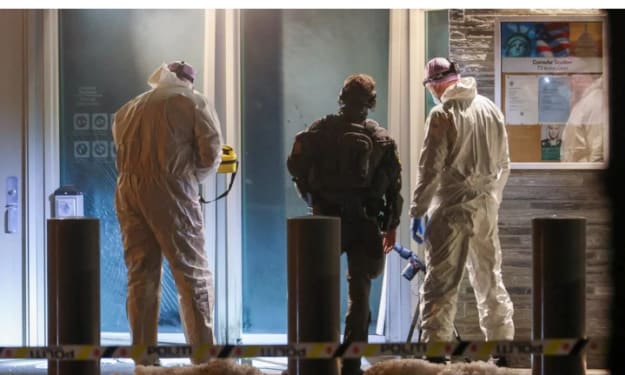
US Embassy in Oslo Hit by Explosion: What Happened and Why It Matters. AI-Generated.
A sudden explosion near the United States Embassy in Oslo, Norway, has sparked international attention and raised concerns about diplomatic security. The incident occurred in the early hours of March 8, 2026, when a loud blast shook the area around the embassy building. Although the explosion caused visible damage to the property, authorities confirmed that no one was killed and no serious injuries were reported. While the physical damage was limited, the event has prompted a major investigation by Norwegian authorities and security agencies. The explosion has also reignited discussions about the safety of diplomatic missions around the world, particularly during times of heightened geopolitical tension. What Happened at the US Embassy in Oslo? According to Norwegian police, the explosion occurred around 1 a.m. local time outside the consular section entrance of the embassy. Residents nearby reported hearing a loud bang followed by thick smoke rising from the area. Emergency services quickly responded, securing the perimeter and beginning a detailed investigation. Investigators believe that an explosive or incendiary device was placed near the entrance of the embassy building. Early reports suggest the device may have been hidden in a bag or backpack before detonating. The blast damaged part of the entrance area but did not penetrate the heavily secured embassy structure. Despite the seriousness of the incident, embassy staff and nearby residents were fortunate to escape harm. Officials confirmed that there were no casualties, and only minor structural damage was recorded. Immediate Response from Authorities Norwegian police treated the explosion as a high-priority security incident. Officers, forensic experts, and bomb technicians were dispatched to the scene to examine evidence and collect surveillance footage from nearby cameras. Drones, police dogs, and helicopters were also used during the investigation. Authorities quickly sealed off the surrounding streets to ensure public safety and to prevent contamination of potential evidence. Police officials stated that they are pursuing several investigative leads and have not ruled out the possibility of a deliberate attack targeting the embassy. The Norwegian government condemned the explosion and emphasized its commitment to protecting diplomatic missions and international partners. Possible Motives Behind the Explosion While investigators have not yet identified a suspect, authorities say the embassy may have been deliberately targeted. Security officials are examining several possible motives, including political protest, extremist activity, or retaliation linked to international conflicts. Some analysts have pointed out that attacks on embassies sometimes occur during periods of global tension. Diplomatic buildings represent national governments abroad, making them symbolic targets for individuals or groups attempting to send political messages. However, investigators have stressed that it is still too early to confirm the exact motive behind the Oslo explosion. Police are reviewing evidence, interviewing witnesses, and analyzing materials recovered from the scene. Increased Security Around Diplomatic Missions Following the incident, security around the US Embassy in Oslo and other diplomatic facilities in the city has been strengthened. Police patrols were increased, and additional barriers were placed around the embassy perimeter as a precaution. Diplomatic missions often operate with strict security measures, including controlled entry points, surveillance systems, and coordination with local law enforcement. Nevertheless, events like the Oslo explosion highlight that embassies can still face unexpected threats. In response, officials from both Norway and the United States have emphasized the importance of international cooperation when it comes to protecting diplomatic personnel and buildings. Global Context of Embassy Attacks Although embassy attacks are relatively rare in peaceful countries like Norway, history shows that diplomatic missions have occasionally been targets during times of conflict or political unrest. In several past incidents around the world, embassies have been targeted with explosives or other forms of attack due to their symbolic significance. These events typically lead to stronger security measures, international investigations, and diplomatic discussions. The Oslo explosion, though small in scale, fits into a broader pattern of security concerns surrounding diplomatic facilities worldwide. Community Reaction in Oslo Local residents expressed shock at the incident, noting that Norway is generally considered a safe and stable country. Witnesses reported hearing the blast and seeing smoke in the early morning hours, which briefly caused alarm among nearby residents. However, authorities quickly reassured the public that the situation was under control and that there was no immediate danger to the wider community. Police also encouraged anyone with information, photos, or videos from the area to come forward and assist the investigation. Ongoing Investigation At the time of writing, Norwegian authorities continue to investigate the explosion and search for those responsible. Police are analyzing forensic evidence and reviewing security footage from surrounding buildings. Officials have emphasized that every possible explanation is being examined, including terrorism, vandalism, and politically motivated attacks. The United States government is also cooperating closely with Norwegian law enforcement during the investigation. Final Thoughts The explosion at the US Embassy in Oslo may not have caused major casualties, but it has highlighted the ongoing security challenges faced by diplomatic missions around the world. Even in countries known for stability and peace, embassies remain sensitive locations that require constant protection. As investigators continue their work, the incident serves as a reminder that global tensions can sometimes reach even the most secure environments. For now, authorities remain focused on uncovering the truth behind the blast and ensuring the safety of diplomatic staff and the surrounding community. If new developments emerge, the world will be watching closely to understand what truly happened outside the US Embassy in Oslo—and why.
By Jameel Jamali8 months ago in The Swamp
Former President Obama will welcome former President Bush, not Trump to Obama Presidential Center ceremonies, per report
The shade is real. In what looks like a master troll operation, former president Barack Obama has shunned President Trump from taking part in the unveiling of the Obama Presidential Center in Washington, DC.
By Skyler Saunders8 months ago in The Swamp