politics
Politics does not dictate our collective cultural mindset as much as it simply reflects it; We've got to look in the mirror sometimes, and we've got one.
How the Special Election to Replace Marjorie Taylor Greene Is Testing the Power of Trump’s Endorsement. AI-Generated.
The upcoming special election to replace U.S. Representative Marjorie Taylor Greene is shaping up as a high-stakes contest that could reveal the true weight of former President Donald Trump’s endorsement in Republican politics. Greene, a polarizing figure known for her outspoken support of Trump and far-right positions, resigned her seat under circumstances that have intensified scrutiny on her district and the candidates vying to succeed her. As contenders align themselves either with or against Trump’s influence, political observers are closely watching how much his backing will actually sway voters in a shifting electoral landscape. A Vacant Seat, a High-Profile Contest The congressional district formerly held by Greene, located in Georgia, has been a focal point of national attention for years due to Greene’s controversial stances on a variety of issues, from pandemic policies to conspiracy theories. With her departure, the Republican Party faces a unique opportunity to demonstrate both the strength of its internal coalitions and its adaptability in appealing to a broader electorate. Several candidates have already declared their intention to run, each navigating the tricky balance between aligning with Trump’s base and appealing to moderate voters. Trump’s early endorsements, made public through his social media channels and statements to conservative outlets, have sparked debate about whether his support is a decisive factor or a potential liability in a competitive primary. The Trump Factor: Influence or Overreach? Trump’s endorsements have historically carried significant weight within Republican primaries. Candidates backed by the former president have often enjoyed early fundraising advantages, heightened media visibility, and instant credibility with conservative voters. However, recent elections suggest that his influence may be encountering limits, especially in districts where local issues or candidate personalities carry substantial sway. In the Greene replacement race, Trump has already signaled support for one prominent candidate who has cultivated a strong relationship with the former president. While this endorsement can generate enthusiasm among loyal voters, political analysts caution that overreliance on Trump’s name could alienate independents or more pragmatic Republicans concerned about extremism or national scrutiny. Moreover, several competing candidates are deliberately distancing themselves from Trump’s shadow, emphasizing local experience, bipartisan achievements, or pragmatic governance. Their strategy aims to attract voters who may appreciate Trump’s agenda in principle but are wary of candidates tied too closely to national controversies or the former president’s polarizing image. Voter Behavior Under the Spotlight The election offers a real-time laboratory for understanding Republican voter behavior in 2026. Surveys indicate that Trump retains a loyal following in Georgia, but the electorate is also highly attentive to the dynamics within the party. Some voters may prioritize loyalty to Trump as a measure of ideological purity, while others may focus on candidates’ individual qualifications, policy positions, and ability to navigate national attention. Another layer of complexity is the presence of independent and moderate voters in the district, who, while smaller in number than core Republican voters, can become decisive in runoffs. The degree to which Trump’s endorsement motivates these voters—or discourages them—may ultimately determine whether the candidate he backs emerges victorious. Candidates Walk a Fine Line Candidates in the race are acutely aware of the stakes. Those embracing Trump’s endorsement highlight it prominently in campaign materials, advertising, and public appearances, portraying themselves as defenders of his agenda and loyal allies to conservative voters. Meanwhile, challengers who avoid or downplay Trump’s influence stress policy expertise, local community engagement, and independent judgment, signaling that they are capable of leadership beyond partisan loyalty. This strategic divergence underscores a key question in contemporary Republican politics: is Trump’s influence concentrated primarily among the party’s base, or does it still have the capacity to dictate outcomes in competitive primaries and general elections? The Greene replacement race may provide one of the clearest answers yet. National Implications Although this election is focused on a single congressional district, its implications extend far beyond Georgia. If Trump’s endorsed candidate wins easily, it could reinforce his role as the kingmaker of Republican politics and shape strategy in future elections across the country. Conversely, if a candidate succeeds without—or even against—Trump’s support, it may signal that his influence is no longer unassailable, encouraging other Republicans to cultivate independent power bases. Political observers also note that media coverage of the race is magnifying its significance. National outlets are framing the contest as a referendum not only on Greene’s legacy but also on Trump’s continuing role within the GOP. Every debate, advertisement, and public appearance is scrutinized for signals about party alignment, voter priorities, and ideological trends. Fundraising and Grassroots Mobilization Another key test in this special election will be the ability of candidates to leverage fundraising networks and grassroots support. Trump’s endorsement often comes with access to donor lists and activist networks that can be mobilized quickly. However, local organizers and long-standing community leaders may rival this influence, demonstrating the continuing importance of on-the-ground political engagement. In past contests, candidates relying solely on national endorsements without strong local connections have struggled to maintain momentum. This election will reveal whether the combination of Trump’s endorsement and local infrastructure is sufficient to secure victory, or whether independent grassroots energy can overcome even high-profile backing. What to Watch As the campaign unfolds, several factors will determine the outcome. The effectiveness of messaging around Trump’s endorsement, the ability to appeal to local priorities, turnout among loyalists versus moderate voters, and fundraising dynamics will all play crucial roles. Analysts will be especially attentive to polling trends, early voting patterns, and candidate debates, which may provide insight into the electorate’s evolving attitudes toward Trump and his role in Republican politics. Ultimately, the special election to replace Marjorie Taylor Greene represents more than a race for a congressional seat—it is a microcosm of a larger political question. Can Trump’s endorsement still dictate outcomes in a post-Greene landscape, or are Republican voters increasingly willing to chart their own course? The answer could have reverberations for upcoming primaries, midterms, and even the 2028 presidential election. The coming months will provide clarity on this critical question, as candidates compete, voters weigh their choices, and the Republican Party continues to navigate its path between loyalty to Trump and the evolving priorities of its electorate. The outcome in Georgia may be the first major signal of whether Trump remains the decisive force he once was—or whether new dynamics are reshaping the GOP’s future.
By Jameel Jamali8 months ago in The Swamp
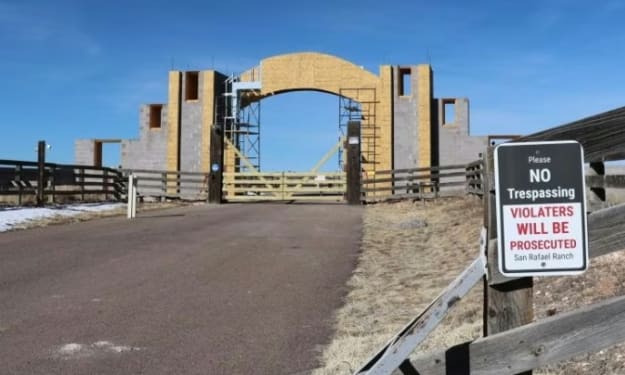
US Investigators Begin Search of Epstein’s Former Ranch in New Mexico. AI-Generated.
Federal investigators have begun a new search of Jeffrey Epstein’s former ranch in New Mexico, marking another step in the long-running effort to uncover evidence connected to the disgraced financier’s global sex-trafficking network. The property, often referred to as the Zorro Ranch, has been the subject of intense speculation for years. Survivors, journalists, and law enforcement officials have repeatedly suggested the remote estate may contain critical clues about the operations and associates involved in Epstein’s crimes. The renewed investigative activity at the ranch signals that authorities continue to pursue unanswered questions, even years after Epstein’s death in 2019. For many victims and advocates seeking accountability, the search represents both hope and frustration—hope that new evidence could emerge, and frustration that it has taken so long for authorities to fully examine the sprawling property. A Remote Estate with a Dark Reputation Epstein purchased the New Mexico ranch in the early 1990s, transforming the massive desert property into a secluded compound spanning thousands of acres. The estate featured luxury residences, guest houses, airstrips, and other facilities that made it possible for visitors to arrive and stay with little outside scrutiny. Because of its isolation, the ranch became a focal point in allegations that Epstein transported young girls there as part of a broader trafficking operation. Several survivors have publicly stated that they were flown to the property and subjected to abuse. These allegations helped cement the ranch’s reputation as one of the most secretive and troubling locations connected to Epstein’s activities. Despite years of public attention, many questions about what occurred at the ranch remain unresolved. Investigators believe documents, digital devices, buried materials, or structural modifications could potentially reveal information about Epstein’s network and the individuals who visited or participated in illegal activities. Renewed Interest from Investigators The current search effort reportedly involves federal agents and forensic specialists carefully combing through areas of the property that may not have been previously examined in detail. Modern investigative techniques—including ground-penetrating radar, digital recovery tools, and forensic excavation—allow authorities to search for hidden evidence that could have been missed during earlier inquiries. Experts note that large estates like Epstein’s ranch can take years to fully investigate. Buildings may contain concealed rooms, safes, or storage areas, while open land could hide buried items or discarded materials. Even small discoveries—such as a document, photograph, or electronic device—could help investigators piece together timelines or identify additional individuals linked to Epstein’s operations. For investigators, the goal is not only to understand what happened at the ranch but also to determine whether any evidence can support ongoing or future prosecutions. Although Epstein himself can no longer face trial, authorities continue to investigate others who may have assisted him or benefited from his activities. The Ongoing Quest for Accountability Epstein’s arrest in 2019 on federal sex-trafficking charges was widely seen as a turning point in the pursuit of justice for his victims. However, his death in a Manhattan jail cell just weeks later dramatically complicated the legal process. While authorities ruled the death a suicide, it sparked widespread controversy and fueled public suspicion that key information about Epstein’s network might never fully emerge. Since then, federal prosecutors have pursued cases against several individuals connected to Epstein. The most prominent trial involved Ghislaine Maxwell, a longtime associate who was convicted in 2021 for helping recruit and groom teenage girls for Epstein’s abuse. Her conviction demonstrated that law enforcement still possessed evidence capable of supporting major prosecutions, even after Epstein’s death. The search of the New Mexico ranch could potentially add new information to that body of evidence. Investigators are particularly interested in identifying records that reveal who visited the ranch and what activities took place there. Such details could shed light on the broader network of associates who interacted with Epstein over decades. Survivors Continue to Demand Answers For survivors of Epstein’s abuse, the investigation represents more than a legal process—it is a chance for long-overdue recognition and accountability. Many victims have spent years speaking publicly about their experiences, urging authorities to examine all properties linked to Epstein thoroughly. Advocates argue that every location associated with the financier—including his homes in New York, Florida, the U.S. Virgin Islands, and New Mexico—should be treated as potential crime scenes. The renewed attention on the ranch suggests that investigators are finally taking a deeper look at sites that may hold crucial evidence. Some survivors have also expressed hope that the search could uncover physical proof supporting testimonies they have shared for years. Such discoveries could strengthen civil lawsuits, help identify additional victims, or expose previously unknown collaborators. A Case That Continues to Unfold The investigation into Epstein’s activities has become one of the most complex and controversial criminal cases in recent history. The financier’s connections to wealthy and influential individuals around the world have intensified public interest and fueled demands for transparency. Authorities have repeatedly stated that the investigation remains ongoing and that no potential leads will be ignored. The search of the New Mexico ranch reflects that commitment to continue examining every possible source of evidence. Whether the operation uncovers significant new information remains to be seen. However, the effort itself sends a clear message: despite the passage of time and the death of the central figure, investigators are still working to uncover the truth about what happened within Epstein’s network. For victims, the broader public, and the justice system, the search of the remote New Mexico ranch represents another step in a long and difficult process. As investigators sift through the property’s buildings and land, many hope that the answers hidden there—if any remain—will finally bring greater clarity to one of the most disturbing criminal scandals of the modern era.
By Jameel Jamali8 months ago in The Swamp
Alexander Brothers: Power, Controversy, and a Story That Won’t Fade
Some stories capture public attention because they mix success, family loyalty, and controversy in ways that feel difficult to ignore. The story of the Alexander Brothers is one of those narratives. What began as a journey of ambition and shared goals gradually turned into a complicated tale discussed across media and public conversations. When brothers build reputations together, their actions often reflect on one another, whether positive or negative. This makes their story more intense than that of individuals working alone. The Alexander Brothers became widely known not only because of their professional success but also because of the questions and debates that followed. Their story raises important thoughts about power, reputation, and the complicated bond that exists between siblings who rise together.
By Muqadas khan8 months ago in The Swamp