bipolar
Bipolar disorder; understanding the highs, the lows and the in between.
Waking Thoughts: A Journey of a Depressed Soul. #5
A quick disclaimer: This is a work in progress and depicts the real Everyday thoughts of a real person. This isn’t going to be some curated “tik-tok” view that people like to pretend is real. This may not always be very pretty, if fact it may get uncomfortable and ugly at times if you don’t like the idea of pain and depression. I am starting a journey of self-discovery and soul healing, I hope that leads to a better future, but we will not know until we take the journey.
By Brandon Mothershed4 years ago in Psyche
The Long Road to Mental Health: A Guide to Managing Mood Disorders
Mood disorders are psychological conditions characterized by extreme and persistent changes in mood. These fluctuations in mood can range from mild to severe, and can include depression, mania, and/or mixed states. There are several different types of mood disorders that have been identified, each with its own set of characteristics, symptoms, and treatments.
By Khushi Gupta4 years ago in Psyche
The Spectrum of Introversion and Extroversion
Introversion and extroversion are two personality traits that are often used to describe an individual's preferred mode of social interaction. Although these traits are often portrayed as binary opposites, they exist on a spectrum and individuals can exhibit characteristics of both introversion and extroversion in different situations.
By Apple Moses4 years ago in Psyche
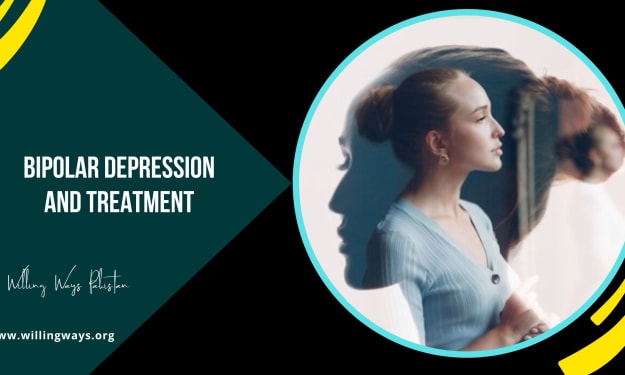
Bipolar Depression and Treatment
Successful treatment is accessible for bipolar confusion. Medicines at the best addiction treatment center in Pakistan are used for bipolar disorder treatment, incorporating drugs, intense psychotherapy and, at times, ECT. The treatment of lunacy and hypomania has two stages: a fierce location, wherein the extreme disorder RAD Disorder Diagnosis and Causes is subdued and social, and word-related disability is improved; and a support stage, in which prescriptions are managed long haul to forestall the repeats of the condition. Generally used to treat bipolar confusion, lithium (litho tabs, Eskalith) has demonstrated profoundly compelling in easing and forestalling hyper episodes.
By Willing Ways4 years ago in Psyche
Social anxiety!
Social anxiety is a common psychological condition that affects millions of people around the world. It is characterized by excessive self-consciousness, fear of judgment or negative evaluation from others, and intense worry about social situations. People with social anxiety disorder may feel anxious about a wide range of social situations, including talking to strangers, public speaking, eating in public, or going to parties. Social anxiety can have a significant impact on a person's daily life, making it difficult to form and maintain relationships, attend work or school, or engage in other everyday activities. People with social anxiety may also experience physical symptoms such as sweating, trembling, rapid heartbeat, or nausea, which can exacerbate their distress in social situations. The exact cause of social anxiety is not yet known, but it is thought to be a combination of biological, environmental, and psychological factors. For some people, social anxiety may be inherited, as there is evidence that it runs in families. Environmental factors, such as childhood abuse or trauma, may also play a role in the development of social anxiety. Furthermore, negative experiences in social situations, such as ridicule or embarrassment, can increase a person's risk of developing social anxiety. The most effective treatment for social anxiety disorder is a combination of therapy and medication. Cognitive-behavioral therapy (CBT) is a popular and effective form of therapy for social anxiety, and can help a person identify and change negative thought patterns and behaviors. Antidepressant medications, such as selective serotonin reuptake inhibitors (SSRIs), may also be prescribed to help manage symptoms of social anxiety. In addition to therapy and medication, there are several self-help strategies that can be effective in managing social anxiety. These may include deep breathing and relaxation techniques, exposure therapy, and mindfulness exercises. People with social anxiety may also find support from friends, family, or support groups, which can provide a safe and supportive environment for them to discuss their experiences and feelings. While social anxiety can be a debilitating condition, with proper treatment and support, people with social anxiety disorder can learn to manage their symptoms and live fulfilling, happy lives. It is important to seek professional help if you are struggling with social anxiety, as the earlier you receive treatment, the more effective it will be. With the right support and care, you can overcome social anxiety and regain control of your life.
By Hiruthika Raja4 years ago in Psyche