
"Zombie Cells" Are Living Inside Your Body Right Now — Scientists Just Found a Way to Kill Them.
They Do Not Divide. They Do Not Die. They Simply Accumulate — Poisoning Your Tissues, Accelerating Every Disease of Aging, and Quietly Shortening Your Life. Now, After Decades of Searching, Science Finally Has a Way to Find Them.

Something is living inside you that should not be there.
It is not a virus. It is not a bacterium. It is not a foreign invader of any kind. It is something stranger and, in many ways, more unsettling than any pathogen: it is your own cells — cells that were once healthy, functional, and vital — that have crossed into a biological state that scientists can only describe as a kind of living death.
They stopped dividing. That part is normal. Cells throughout your body are constantly cycling through division and programmed death, a meticulously choreographed process that keeps tissues healthy and functioning. What these cells did instead is refuse the second half of that bargain. They stopped dividing — and then they refused to die. They lingered. They accumulated. They dug in.
And then, from their entrenched positions in your tissues, they began to do something that researchers spent decades trying to fully understand and that they now describe in language that would not be out of place in a horror film: these cells began secreting a toxic chemical cocktail — a cascade of inflammatory molecules, tissue-degrading enzymes, and signaling proteins that corrupt the healthy cells around them, stiffen and damage the tissues they inhabit, and broadcast a pro-inflammatory distress signal that echoes through your entire body.
Scientists call them senescent cells. The rest of the world has taken to calling them what they demonstrably are.
Zombie cells.
And the reason this matters — urgently, profoundly, in ways that may alter the trajectory of medicine for the next century — is that scientists are now closer than they have ever been to killing them.
What Zombie Cells Actually Are — and What They Are Doing to You Right Now
To understand why senescent cells are such a significant target, you first need to understand the biology of how they form, because the story of their origin is also the story of why your body ages the way it does.
Every cell in your body carries a biological clock embedded at the tips of its chromosomes — structures called telomeres, which shorten slightly with each cell division, like a wick burning down. When telomeres shorten past a critical threshold, the cell receives a molecular signal: stop dividing. This is a protective mechanism — one of the body's primary defenses against cancer. A cell that cannot divide cannot become a tumor. Mission accomplished.
The problem is what happens next. In a young, healthy body with a well-functioning immune system, senescent cells are efficiently cleared — tagged, recognized, and eliminated by immune surveillance. The system works. Senescent cells form, perform some short-term beneficial functions — wound healing, tissue remodeling, embryonic development — and are promptly removed before they accumulate to levels that cause harm.
But as the body ages, as the immune system loses its precision and vigor, that clearance process degrades. Senescent cells begin to accumulate faster than they are removed. They pile up in the joints, in the fat tissue, in the brain, in the lungs, in the cardiovascular system, in virtually every organ in the body. And as they accumulate, they release what researchers call the Senescence-Associated Secretory Phenotype — the SASP. This is the zombie bite, in molecular form.
The SASP is a flood of pro-inflammatory cytokines — including interleukins IL-6 and IL-1β and tumor necrosis factor-alpha — alongside matrix metalloproteinases that break down the structural scaffolding of tissues, and growth factors that can paradoxically stimulate the growth of nearby pre-cancerous cells. Senescent cells accumulate in the body with age and secrete these harmful substances, causing chronic inflammation — and simultaneously, chronic inflammation leads to a decrease in immune system function, which further accelerates the aging process itself. It is a vicious, self-reinforcing spiral: more senescent cells mean more inflammation, more inflammation means a weaker immune system, a weaker immune system means less clearance of senescent cells.
This is not a peripheral process in aging. Senescent cells drive things such as impaired tissue regeneration, fibrosis, degeneration, inflammation — a lot of the conditions that are clearly central to age-related diseases, according to Nathan LeBrasseur, PhD, director of the Kogod Center on Aging at Mayo Clinic. They are now understood to be central contributors to arthritis, Alzheimer's disease, cardiovascular degeneration, type 2 diabetes, chronic kidney disease, pulmonary fibrosis, and cancer progression. Not as incidental bystanders. As active, causally implicated drivers.
Your body is accumulating these cells right now. The question that science has been racing to answer is: what do we do about it?
The Hunt for a Way to Kill Them — and Why It Has Been So Hard
The scientific case for targeting senescent cells as a therapeutic strategy is, at this point, extraordinarily compelling. Animal studies have been producing results that the aging research community describes as some of the most dramatic seen in the field.
In landmark research, selectively clearing senescent cells in mice — using a genetic trick that allowed researchers to eliminate p16-expressing senescent cells on demand — produced results that were breathtaking: delayed onset of cataracts, heart dysfunction, muscle wasting, and fat loss; reduced tumor formation; and in some experimental conditions, meaningfully extended healthy lifespan. When senescent cells from old mice were transplanted into young mice, the young mice rapidly developed physical dysfunction and died earlier. The directionality of causation, in these animal models, was unambiguous.
The drugs designed to do this job in humans are called senolytics — compounds that selectively induce apoptosis, programmed death, in senescent cells. Roughly 20 clinical trials are currently underway, and at least 10 more are planned or have published some results, including trials targeting osteoarthritis, COVID-19, Alzheimer's, and Parkinson's disease. The most extensively studied combination — dasatinib, a leukemia drug, paired with quercetin, a plant-derived flavonoid — has shown promising signals in early human studies.
But there has been a fundamental bottleneck — a problem so basic and so persistent that it has prevented the field from translating its spectacular animal results into approved human therapies. And that problem is detection.
Despite over 30 clinical trials of senolytic drugs, scientists have not yet produced a single therapy approved for human use. The core bottleneck has been detection. Without a dependable way to identify senescent cells in living tissue, every drug candidate risks destroying healthy cells alongside its targets.
Senescent cells are chameleons. Unlike cancer cells, which often carry identifiable surface markers that targeted therapies can home in on, senescent cells have resisted every attempt to identify a universal distinguishing feature in living human tissue. No universal surface marker has ever been identified that distinguishes them cleanly from healthy cells in living tissue — a gap the SenNet consortium called "a key challenge" as recently as 2024. You cannot precisely kill what you cannot precisely find. And you cannot treat what you cannot precisely kill without causing collateral damage to the healthy tissue surrounding it.
This is the problem that a graduate student conversation at Mayo Clinic may have just cracked open.
The Breakthrough That Started With a "Crazy" Idea Between Two Students
Science rarely advances through the neat, linear progression that textbooks imply. Its most significant leaps are often accidental, born of lateral thinking, of researchers from different fields bumping into each other and asking: what if we used that tool for this completely different problem?
The project began as an offbeat conversation between two graduate students at Mayo Clinic and quickly evolved into a collaborative, cross-lab effort. Keenan Pearson was studying aptamers — tiny, shape-shifting synthetic DNA molecules — in the context of brain cancer and neurodegenerative disease. Sarah Jachim was studying aging and senescent cells in a completely different laboratory. The two students crossed paths during a scientific event and started discussing their thesis projects. Dr. Pearson began wondering whether aptamer technology could be adapted to recognize senescent cells.
The idea was, by his own account, a long shot. It was also exactly right.
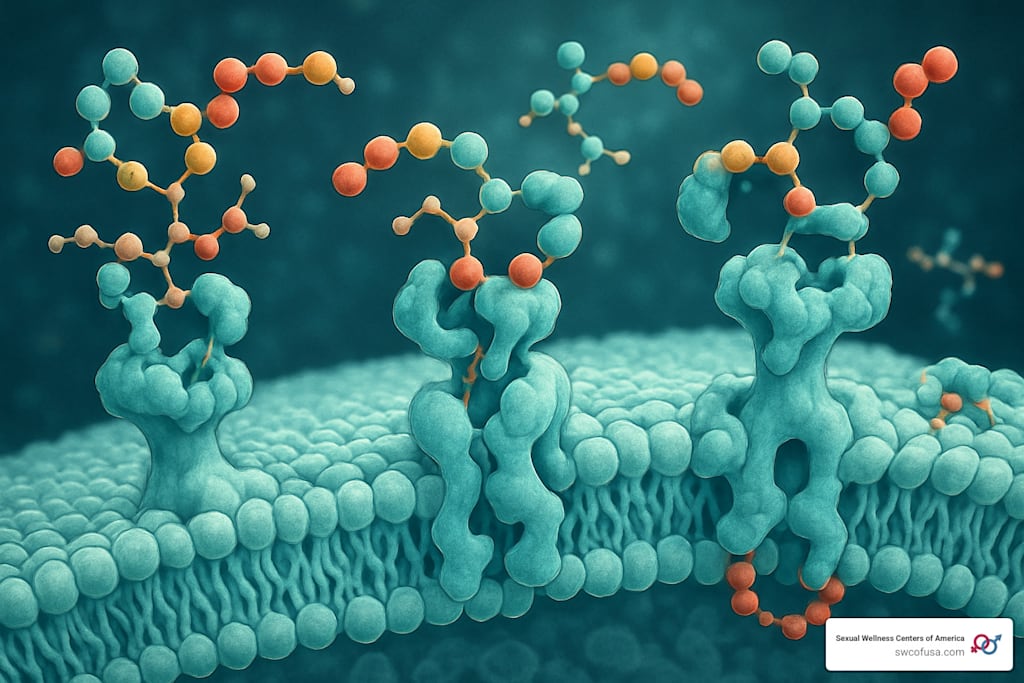
The team used molecules known as aptamers — small segments of synthetic DNA that fold into three-dimensional shapes. Aptamers have the ability to attach themselves to proteins on the surfaces of cells. The researchers took an ingeniously open-ended approach: rather than hypothesizing which surface protein on senescent cells might be unique and designing aptamers to find it, they screened an almost incomprehensibly large library of candidates and let the aptamers find their own targets.
Working with mouse cells, the scientists screened more than 100 trillion random DNA sequences and identified several rare aptamers capable of binding to proteins associated with senescent cells. Once attached, the aptamers effectively flagged the cells for identification.
"To date, there aren't universal markers that characterize senescent cells," said Dr. Maher, the study's principal investigator. "Our study was set up to be open-ended about the target surface molecules on senescent cells. The beauty of this approach is that we let the aptamers choose the molecules to bind to."
What the aptamers chose to bind to was a variant of a protein called fibronectin — a structural molecule found on cell surfaces — but in a modified form that appears to be specific to senescent cells. Senescent cells do not just stop dividing — they also change their local ecosystem. They secrete proteins that stiffen tissues and start inflammation, and even disrupt other cells nearby. The aptamers, in identifying this fibronectin variant, had potentially found a molecular address for cells that had, until now, refused to be addressed.
The implications are significant. "This approach established the principle that aptamers are a technology that can be used to distinguish senescent cells from healthy ones," said Dr. Maher. "Though this study is a first step, the results suggest the approach could eventually apply to human cells."
The Second Breakthrough: The Zombie Cells That Survived the First Kill
While Mayo Clinic was solving the identification problem, a parallel research team at Cedars-Sinai was confronting a different challenge — one that reveals just how sophisticated the biology of senescent cells actually is.
A preclinical study from Cedars-Sinai, published in Aging Cell, found that senolytic drugs — the class of drugs designed to eliminate senescent cells — can eliminate between 30 and 70 percent of zombie cells in the body. But crucially, the study identified a population of senescent cells that survive senolytic treatment entirely.
These senolytic-resistant cells are not benign survivors. The remaining senolytic-resistant senescent cells can be activated into tissue-damaging senescent cells by infections and other factors in the environment — making them, in effect, ticking time bombs.
The research, however, also identified the solution. A new class of drugs, called senosensitizers, can enable senolytics to eliminate these lurking senolytic-resistant cells. The discovery of a two-drug approach — senolytics to kill the majority of zombie cells, senosensitizers to prime the resistant remainder for elimination — represents a significant strategic advance in the field.
Together, the Mayo Clinic aptamer breakthrough and the Cedars-Sinai senosensitizer finding address the two core problems that have prevented senolytic therapy from fulfilling its extraordinary promise: finding the cells, and killing them completely.
Meanwhile at the University of Dundee: A Targeted Platform
The identification and resistance problems are not the only frontiers being pushed simultaneously. At the University of Dundee, researchers working with colleagues at the University of Athens developed what they describe as a senolytic platform capable of selectively targeting and eliminating senescent cells with what the team calls minimal side effects.
Current senolytics — the class of anticancer drugs tasked with eliminating senescent cells — are unable to target these cells selectively, damaging healthy cells and tissue around them and resulting in side effects for patients. However, the Dundee team has been able to develop a senolytic platform capable of effectively targeting and eliminating senescent cells, with the efficiency of the model ensuring minimal side effects.
The research, published in Nature Aging, represents a convergence of approaches — from DNA aptamers in Minnesota to targeted delivery platforms in Scotland to senosensitizer combinations in California — that is giving researchers, for the first time, a genuine sense that the therapeutic targeting of senescent cells in humans is not a distant aspiration. It is an engineering problem being actively solved.
What Killing Zombie Cells Could Actually Mean for Human Health
The stakes of this research are difficult to overstate, and they extend far beyond abstract longevity science into the specific, named diseases that are the leading causes of death and disability in the modern world.
Alzheimer's disease. Senescent cells accumulate in the aging brain, and their SASP drives neuroinflammation — the chronic inflammatory state now understood to be central to Alzheimer's pathology. A pilot study at Hebrew SeniorLife involving 12 participants with mild cognitive impairment found statistically significant cognitive improvement after a dasatinib and quercetin regimen. The sample size is small and the findings preliminary, but the signal is consistent with the mechanistic hypothesis: reducing senescent cell burden reduces neuroinflammation, and reduced neuroinflammation slows cognitive decline.
Cardiovascular disease. Cellular senescence plays a critical role in the development and pathogenesis of cardiovascular diseases, with the SASP driving the progression of atherosclerosis. Senescent cells in arterial walls contribute to the inflammatory environment that turns fatty deposits into vulnerable, rupture-prone plaques — the immediate cause of most heart attacks. Therapies that reduce senescent cell burden in vascular tissue represent, in principle, a mechanism for addressing cardiovascular disease at a more fundamental level than the cholesterol-lowering and blood pressure management approaches that dominate current treatment.
Cancer. The relationship between senescent cells and cancer is complex — senescence was originally understood as a tumor-suppressive mechanism, and in short bursts it is. But chronically accumulated senescent cells, through their SASP, create an inflammatory microenvironment that promotes tumor growth, invasion, and metastasis. Cancer is a particularly promising research area for senolytics, and some existing chemotherapy drugs have already been found to have senolytic properties.
Arthritis. The joints of people with osteoarthritis are densely populated with senescent cells. Their SASP degrades the cartilage matrix and perpetuates the inflammatory cycle that drives pain and functional decline. Clinical trials of senolytic combinations for osteoarthritis are among the most advanced in the field, and early results are generating genuine optimism among rheumatologists who have watched patients' joint disease progress despite the best available treatments.
The common thread running through all of these diseases is inflammation — the chronic, low-grade, tissue-damaging inflammation that is now recognized as the central pathological mechanism of aging itself. Senescent cells are among its most significant drivers. Eliminating them is, in the most literal biological sense, an attack on aging at its roots.
The Honest Assessment: Extraordinary Promise, Real Caveats
Science journalism has a persistent tendency to translate "promising preclinical findings" into "scientists have cured aging," and the senolytic field — with its spectacular mouse data and its genuinely revolutionary therapeutic logic — is particularly vulnerable to this distortion.
The honest assessment is this: the animal data is extraordinary. The mechanistic rationale is sound. The clinical trial landscape is active and expanding. And the recent breakthroughs in detection and resistance — the aptamer work from Mayo Clinic, the senosensitizer findings from Cedars-Sinai, the targeted platform from Dundee — represent genuine advances toward the translational gap that has held the field back.
But a 2025 review in npj Aging noted that the results of senolytic clinical trials "remain mitigated" and that "several modifications in terms of strategy are essential to improve patients' lifespan." The dasatinib-quercetin combination — the most tested senolytic pairing — has produced mixed results in human trials, with some showing meaningful signals and others showing, as one Nature Medicine study described, only "subtle" benefits. Translating biology that works in mice with genetic uniformity, controlled environments, and artificially accelerated aging into medicine that works in genetically diverse, environmentally complex human beings is never straightforward.
What the current moment represents is not a cure. It is the construction of the foundational tools — the targeting technology, the resistance strategies, the delivery mechanisms — without which a cure cannot be built. The aptamer work does not kill zombie cells. It finds them. Finding them precisely is what makes killing them precisely possible. That sequence matters enormously.
Why This Is the Most Important Biological Story You Will Read This Year
Here is what the zombie cell story is really about, beneath the science.
For most of human history, aging has been understood as an inevitable, irreversible process — a background condition of biological existence that medicine could slow at the margins but never fundamentally address. We treated the diseases of aging: the heart attacks, the dementias, the cancers, the failing joints. We did not treat aging itself.
The senescent cell research represents, for the first time in the history of medicine, a credible, mechanistically grounded, experimentally supported challenge to that assumption. It proposes that a significant fraction of the biological damage we call aging is not the inevitable consequence of time — it is the consequence of a specific, identifiable, targetable cellular process that accumulates in the body and can, in principle, be interrupted.
If that proposal is correct — and the weight of the evidence is increasingly suggesting that it is — then the diseases that kill the most people and steal the most years of healthy life from the most human beings on this planet are not natural disasters. They are, in part, the downstream consequences of zombie cells that we are now, for the first time, learning to find and destroy.
As one researcher put it: "There is a growing appreciation for the fact that we can, using therapeutic interventions, actually move the needle across different age-related diseases."
Moving the needle. It is a modest phrase for one of the most ambitious scientific projects in human history.
The zombie cells are real. They are in your body right now. And for the first time in the long, humbling history of medicine's encounter with aging, the science is beginning to catch up with them.
About the Creator
Soibifaa
Public Health Practitioner | Cobbler | Content Creator ✨
Blending health, creativity & craftsmanship to inspire purposeful living and meaningful connections. Passionate about storytelling, people, and creating impact one step at a time.
Enjoyed the story? Support the Creator.
Subscribe for free to receive all their stories in your feed.
Comments
There are no comments for this story
Be the first to respond and start the conversation.