
Young, Healthy, and Having a Heart Attack: Why Colon and Heart Disease Are Silently Striking People in Their 30s
They Had No Family History. No Warning Signs. No Reason to Worry. They Were Doing Everything Right. And Then the Diagnosis Arrived — and Changed Everything Medicine Thought It Knew About Who These Diseases Are For

She was thirty-four years old, a runner, and a vegetable eater who hadn't smoked a day in her life.
He was thirty-one, active, lean, and had just passed a workplace health check with numbers his doctor described as excellent.
She was thirty-eight, raising two children, managing stress with yoga, avoiding red meat, taking her vitamins, getting her sleep, doing the things that the public health messaging of her entire adult life had told her constituted protection.
None of them had a heart attack coming. None of them had colon cancer coming. None of them were the kind of person these diseases were supposed to find.
And yet.
And yet the chest pain came. The blood in the stool came. The fatigue that turned out not to be fatigue. The colonoscopy that found what a colonoscopy was not supposed to find in someone that age, because someone that age was not supposed to need a colonoscopy for another decade. The cardiac catheterization that revealed a blockage in an artery inside a heart that was, by every metric its owner had been given, supposed to be fine.
Something is happening. Something is happening to young bodies in ways that are rewriting the epidemiology of the two diseases most historically associated with age, with decline, with the other end of life. And the data — mounting, alarming, consistent across every country that has looked closely enough to see it — says it is not an anomaly. It is a trend. A trajectory. A generational health crisis building in bodies that nobody is looking at yet, in people who are not being screened, not being warned, and not being told that the diseases they believe they are decades away from are arriving early, moving quietly, and changing the statistics in ways that should make every physician, every policymaker, and every person in their thirties stop and pay attention.
The Numbers That Should Alarm Everyone — and Have Not Yet Alarmed Enough People
Start with the heart.
Heart attacks are rising in young adults — those in their 30s, and even their 20s — at the precise moment they are declining in older populations. Now one in five heart attack patients is younger than 40 years of age. It was once rare for anyone younger than 40 to have a heart attack. That is no longer true. Studies have shown a steady increase in heart attack rates among people aged 25 to 44, with young adults now accounting for a significant portion of all heart attack hospitalizations, with rates climbing over the last decade.
The data on colon cancer is, if anything, more disturbing.
In 2025, colorectal cancer was the second leading cause of cancer death in the US. Among people younger than 50, however, it is now the leading cause of cancer-related deaths — a drastic shift from prior generations. Read that again. Among young adults, colorectal cancer is now the leading cancer killer — not lung cancer, not breast cancer, not any of the diseases that public health messaging has spent decades teaching young people to fear. Colorectal cancer. Today, one in five people diagnosed with colorectal cancer is under age 55, and cases are rising at an alarming rate in people under 50 by nearly 3% per year — even as incidence has declined slightly in the overall population.
Colorectal cancer incidence is rising in adults under 65 by 3% per year in people aged 20 to 49, while decreasing among those 65 and older by 2.5% per year. The diseases of aging are aging backward. The protections we assumed would hold — youth, fitness, the absence of the classic risk profile — are not holding. And the people inside those bodies have no idea, because nobody is looking.
These individuals are not routinely screened, said one gastroenterologist presenting at a major medical conference in 2026. That sentence is the fulcrum on which thousands of preventable deaths balance.
The Silent Biology of a Heart Attack at Thirty-Five
The mythology of the heart attack — the one that lives in cultural imagination, in television dramas, in the way we picture sudden cardiac death — belongs to a different century. It belongs to the overweight 60-year-old with high cholesterol and a sedentary lifestyle who felt chest pain and called an ambulance. That story is real. It is also no longer the complete story.
"We are definitely seeing a higher incidence of heart attacks in younger patients, sometimes even in their 30s and 40s," says Carlos E. Alfonso, MD, interventional cardiologist and director of complex percutaneous coronary intervention at Baptist Health Miami Cardiac & Vascular Institute. "It's a major wake-up call that heart disease isn't just an 'old person's' problem. The behaviors and health conditions that develop early in life may have a profound impact much sooner than people realize."
"The reality is that heart disease doesn't suddenly appear at 60," said Dr. Stavros Stavrakis, MD, PhD, associate professor of cardiology at the University of Oklahoma College of Medicine. "It develops gradually over decades, often beginning in your 20s and 30s."
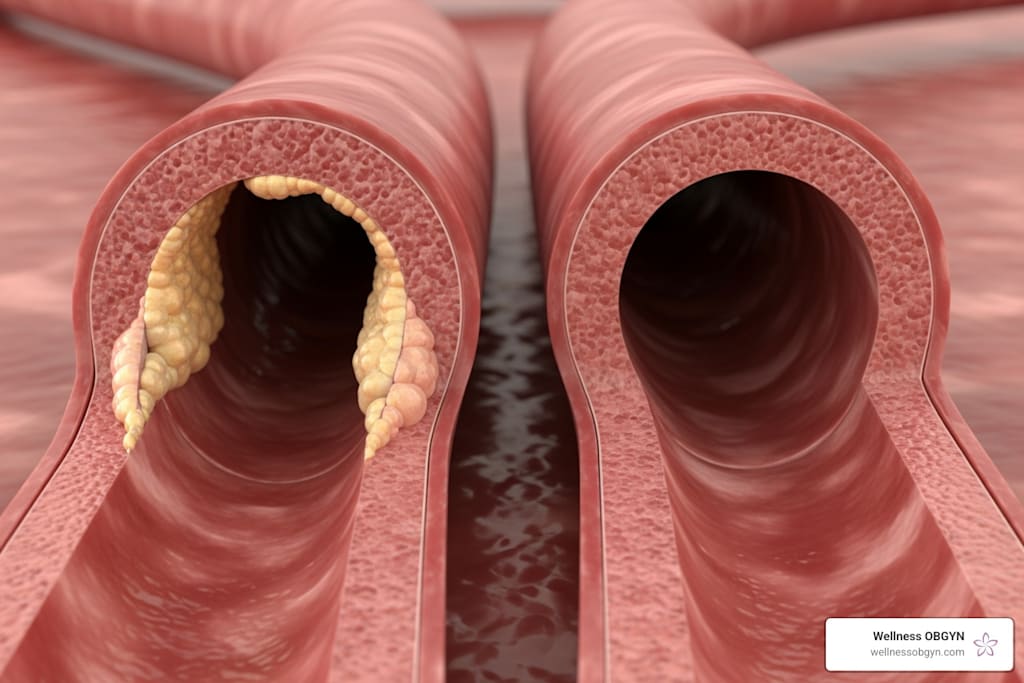
This is the biological truth that the heart attack mythology obscures: atherosclerosis — the progressive narrowing of arteries by fatty plaques — is not a disease that announces itself. It develops silently, over years, responding to inflammatory inputs, to dietary patterns, to metabolic signals, to stress hormones, to substances in the food and environment that the arteries absorb long before any test or symptom reflects the accumulating damage. By the time a plaque ruptures and causes a heart attack, it has typically been building for a decade or more.
Which means the heart attack at thirty-five began in the mid-twenties. Which means the risk factors that produced it were present — and in many cases, measurable — long before any physician thought to look. Which means the window for prevention, the period during which the trajectory could have been altered, was not in the year before the attack. It was ten years before it.
What is accelerating that timeline in today's generation of young adults? The evidence points to a convergence of forces that are, taken individually, familiar — and taken together, without precedent in terms of simultaneous exposure in a single generation from birth.
Ultra-processed foods have been linked to cardiovascular mortality, with 10 to 14% of premature deaths in the US attributable to ultra-processed food consumption. A landmark 2024 study published in the New England Journal of Medicine found microplastics in 58% of carotid artery plaques. Patients with detectable microplastics had a 4.5 times higher risk of heart attack, stroke, or death over 34 months. Each 10 μg/m³ increase in air pollution (PM2.5) was associated with a 43% increase in fatal coronary heart disease.
The largest pooled analysis to date, presented at the American College of Cardiology in 2025 and studying 4.6 million people, found that cannabis users under 50 had a six-times increased risk of heart attack, even among those with no baseline cardiovascular risk factors, normal blood pressure, normal LDL, and no tobacco use. A sixfold increase in heart attack risk among cannabis users with no other risk factors. In a generation that has normalized cannabis use at a rate no previous generation approached.
A 2025 systematic review found that even nicotine-free e-cigarettes caused acute vascular impairments including endothelial dysfunction, oxidative stress, and increased arterial stiffness. A generation that largely avoided cigarettes — and replaced them with vaping, believing they had made the safer choice — may have traded one arterial assault for another.
Patients who have a heart attack in their 20s or 30s face the same risks as older patients. Once you have that first heart attack, you have the same chance of dying from a second major heart event or a stroke regardless of your age. Youth is not a buffer in the aftermath. It does not confer a gentler prognosis. It only shifts the timing — which means the decades of life that follow a young person's heart attack carry the same cardiovascular risk burden that would normally accumulate at 60, now distributed across a 35-year-old's remaining lifespan.
The Colon Cancer Nobody Saw Coming
The rise of early-onset colorectal cancer is, if anything, even more confounding to the established medical framework — because colorectal cancer was perhaps the disease most confidently age-stratified in all of medicine. Screening colonoscopies begin at 45 in the United States (recently lowered from 50 in recognition of the rising early-onset trend). Nobody screened at 32. Nobody screened at 38. And nobody suspected, because the classic risk profile — older, family history, red meat diet, sedentary — did not describe the young adults who were now sitting across from oncologists with stage II and stage III diagnoses.
Colorectal cancer is increasingly showing up in younger adults, with cases now appearing in people as young as their thirties — often with no family history or warning signs. A large international study published in The Lancet Oncology found a clear increase in colorectal cancer diagnoses among younger adults, with incidence rates rising in 27 of 50 countries included in the analysis for people under the age of 50.
The American Cancer Society projects 158,850 new cases of colorectal cancer in the US in 2026 and estimates that 55,230 individuals will die from the disease. Nearly one-third of those deaths are estimated to be in people younger than 65.
The question that has consumed researchers for a decade is the same one the cardiac community is asking about young heart attacks: why? What changed, and when, and in which direction did the change travel?
The answer, increasingly, is the gut.
The Gut Microbiome: The Crime Scene Medicine Is Just Beginning to Read
The human gut microbiome — the ecosystem of approximately 38 trillion microorganisms that inhabit the gastrointestinal tract — has emerged as perhaps the central character in the early-onset colorectal cancer story. And what has happened to the gut microbiomes of people born since the 1980s and 1990s is, the research suggests, substantially different from what happened to the gut microbiomes of previous generations — in ways that may be driving the cancer trend with a directness that no single dietary or lifestyle factor can fully explain.
Diets low in fiber and high in ultra-processed foods, excessive consumption of refined sugars, indiscriminate use of antibiotics, and low levels of physical activity are all factors that alter the microbial diversity of the intestine. Added to this is early exposure to environmental pollutants, food additives, and increasing levels of chronic stress. All of this not only affects digestive health but can also induce a state of persistent inflammation, weakening of the intestinal barrier, and activation of molecular pathways that promote carcinogenesis.
A specific bacterium has emerged as particularly significant. Scientists believe some confluence of environmental factors, including diet, sedentary lifestyle, and medication, is driving the steep rise in early-onset colorectal cancer, and these could be having downstream effects on the microbes in the gut — particularly certain strains of E. coli that produce a toxin called colibactin. Colibactin is one "hit" among many to the microbiome which, together, may place some people on a faster trajectory for developing cancer.
The ultra-processed food connection has now been directly substantiated in the most clinically meaningful terms. A study published in JAMA Oncology in November 2025, following more than 29,100 female nurses for a median of 13 years, found that participants with the highest intake of ultra-processed foods — about 10 servings daily — had a 45% higher risk of developing precancerous colorectal growths before age 50 compared with those consuming the lowest amounts.
"One thing that has been clear is that the US intake of ultra-processed food has really risen in the past few decades in a way that mirrors the staggering increase in colorectal cancer cases," said Dr. Andrew Chan, a gastroenterologist and chief of the clinical and translational epidemiology unit at Massachusetts General Brigham.
That parallel — ultra-processed food consumption rising, early-onset colorectal cancer rising, on overlapping timelines, in overlapping populations — is not proof of causation. But it is, at this stage of the evidence, an alignment too consistent to dismiss.
Sedentary behavior compounds the risk. A meta-analysis of 23 studies involving more than 4.3 million participants found that prolonged sedentary behavior is significantly associated with a higher risk of colon cancer, with individuals who sit the most facing a 30% increased risk compared with those who are more active. Excessive screen time — particularly TV-watching — has been linked to a higher incidence of colorectal cancer in young adults, even after accounting for obesity and physical activity levels.
Microplastics are emerging as a further provocative environmental link — they are ubiquitous, exposure begins at an early age, and their presence within the human digestive tract has been confirmed in colectomy samples. A generation raised in a plastic-saturated food and packaging environment, eating from plastic containers, drinking from plastic bottles, absorbing microplastics through food packaging at every meal — may be carrying an environmental colorectal carcinogen that no previous generation encountered at anything approaching this scale.
The Shared Root: Inflammation, the Body in Chronic Crisis
Pull back from the specific mechanisms of early heart disease and early colorectal cancer, and something becomes visible that the individual disease frameworks tend to obscure: both crises share a common biology.
Chronic, low-grade systemic inflammation — the persistent, smoldering inflammatory state produced by ultra-processed diets, gut dysbiosis, microplastic exposure, sleep deprivation, sedentary behavior, and chronic stress — is the underlying condition that connects a 33-year-old's coronary artery disease to a 37-year-old's sigmoid colon cancer. Inflammation drives the progression of atherosclerotic plaques. Inflammation weakens the gut lining, enabling the bacterial and chemical insults that initiate colorectal carcinogenesis. Inflammation is the environment in which both diseases thrive.
This generation — raised on a diet that was, increasingly and systematically, inflammatory at its core — has been conducting an inadvertent experiment in what happens when a human body is exposed to chronic inflammatory inputs from birth to adulthood. The results of that experiment are now appearing in the data, and they are appearing in the bodies of people who have not been warned to expect them, have not been screened for them, and are encountering them at an age when neither they nor their physicians had reason to look.
The tragedy of early-onset disease is not only the disease itself. It is the delay between symptom onset and diagnosis — a delay that, in both heart disease and colorectal cancer, is consistently longer in young patients than in older ones. These individuals are not routinely screened. They do not fit the clinical profile that triggers aggressive investigation. Their symptoms — the fatigue, the irregular bowel patterns, the chest tightness during exercise — are attributed to stress, to anxiety, to the busy unremarkableness of a young adult life. And by the time the attribution is corrected, the disease has had months or years of uninterrupted progression.
What the Screening Guidelines Have Not Yet Caught Up To
The screening systems that exist to catch these diseases were designed around the epidemiology of a previous generation — one in which colorectal cancer in a 35-year-old was rare enough to not warrant systematic attention, and in which the clinical profile of a heart attack patient reliably included age, smoking history, and years of metabolic accumulation.
That epidemiology has changed. The screening systems are lagging behind it.
The colorectal cancer screening age was lowered to 45 in the United States in recognition of the early-onset trend. Some gastroenterologists believe it will need to drop to 40. But the crisis is appearing in people younger than 40 — in the 30s, in the late 20s — in individuals who will not reach even the newly lowered threshold for another decade, who have no family history that would trigger early intervention, and who would not, under any current guideline, be directed toward the investigation that could catch their cancer in time.
The cardiac risk stratification tools that primary care physicians use to estimate heart disease risk — most of them derived from Framingham cohort data that is now decades old — were not calibrated for a generation with novel exposures: cannabis, e-cigarettes, microplastics, the specific inflammatory profile produced by ultra-processed food consumption at the scale this generation has normalized. A 33-year-old who smokes cannabis daily, eats 60% of calories from ultra-processed foods, has a sedentary desk job, and has microplastics embedded in his carotid plaques does not register as high-risk on a Framingham score. He is not being evaluated in any systematic way. He is one event away from becoming a statistic.
The Intervention That Is Still Possible
The research on early-onset heart disease and colorectal cancer does not, at this stage, support fatalism. It supports urgency — a different quality of urgency than the field has had, because it is now directed at a different population in a different time window.
The interventions that move the needle on both crises share the same profile as the exposures driving them: dietary, microbiome-related, activity-related, environmental. Reducing ultra-processed food consumption reduces inflammatory burden, improves gut microbiome diversity, and directly lowers colorectal adenoma risk. Regular physical activity reduces colon cancer risk, reduces cardiovascular risk, and improves the metabolic profile that underpins both. Sleep — adequate, consistent, restorative sleep — reduces the chronic inflammatory state that both diseases require to progress.
These are not revelations. They are the same messages that public health has been delivering for decades. What is new is the urgency of their application — the recognition that the window for intervention is not at 50, at 45, at the threshold of the screening guidelines. It is now. It is in the 30s. It is in the late 20s. It is in the diet of the 25-year-old who has no symptoms and no family history and no reason to believe that anything going on inside their body requires attention.
And it is in the medical system's willingness to extend its gaze downward in age — to take seriously the chest pain of the 34-year-old runner, to investigate the bowel changes of the 36-year-old without waiting for a family history that never arrives, to refuse the clinical shorthand that says you're too young for this when the data has already established that young is no longer the protection it was.
The Generation That Didn't Know It Was at Risk
There is a particular grief in the early-onset disease story that the statistics don't capture. It lives in the gap between expectation and reality — in the 35-year-old who had done everything she was told, eaten well, exercised, stayed away from cigarettes, managed her weight, and still sat in a consulting room that was supposed to be somewhere else, for someone else, at a different decade of her life.
That gap — between the health behaviors she performed and the protection she expected them to provide — is real and it matters. But it is not a reason to stop the behaviors. It is a reason to understand that the behaviors were never the whole story. That the food environment, the chemical environment, the sleep environment, the stress environment, the sedentary infrastructure of modern work — these are not individual choices. They are structural conditions that accumulate in bodies regardless of individual intention, and they are producing disease in a generation that had every reason to believe it was too young to be at risk.
They were not told. That must change.
Because the next 35-year-old sitting in that consulting room is sitting there right now — before the diagnosis, before the test, in the window where the trajectory can still be altered — and what they know, and what their doctor asks, and what the screening system catches, and what the food system provides, and what the public health conversation warns them about, will determine whether that window closes quietly or is used.
The diseases did not come for their parents. They came early.
And early is exactly when we still have time.
About the Creator
Soibifaa
Public Health Practitioner | Cobbler | Content Creator ✨
Blending health, creativity & craftsmanship to inspire purposeful living and meaningful connections. Passionate about storytelling, people, and creating impact one step at a time.
Enjoyed the story? Support the Creator.
Subscribe for free to receive all their stories in your feed.
Comments
There are no comments for this story
Be the first to respond and start the conversation.