
What Living on an Island Taught Me About Longevity (And Why Science Agrees)
What looked effortless was actually built on daily habits science now links to lower inflammation, better aging, and a longer life.

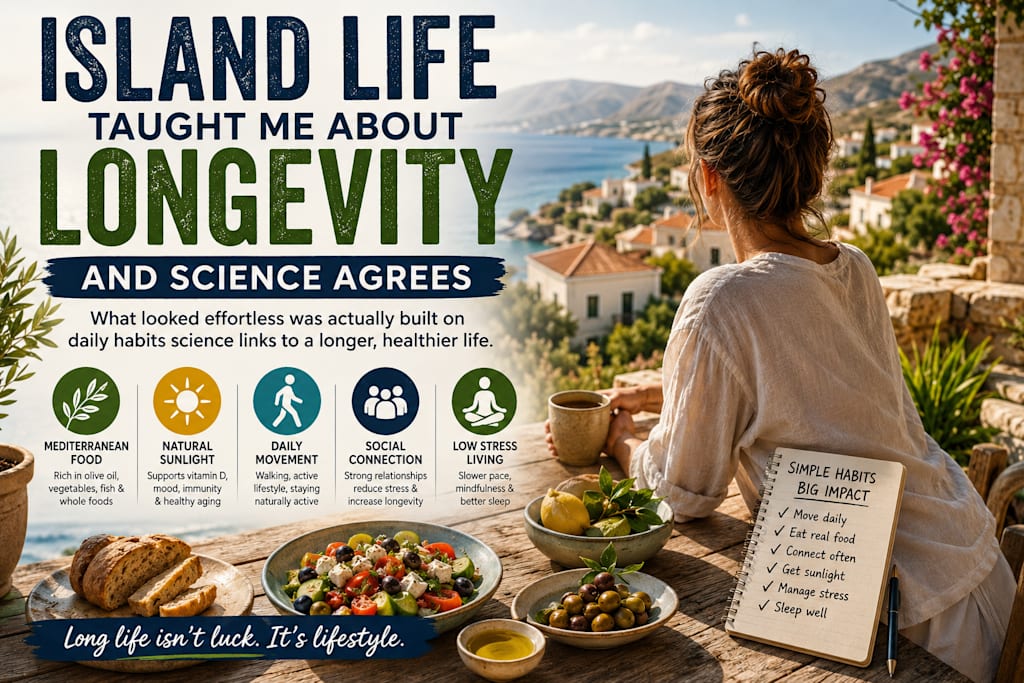
In September 2006, I moved to Cyprus with a one-way ticket, nervous energy, and more stress than I knew how to carry.
I was 20 years old.
Like many people leaving home for the first time, I thought the biggest challenge would be adapting to a new country, new routines, and university life.
But I was also carrying something invisible.
For nearly a decade, I had lived with severe psoriasis — a chronic inflammatory skin condition that affected far more than my appearance. It affected confidence, stress levels, sleep, and the way I experienced everyday life.
By then, I had heard every standard piece of advice:
Get more sunlight.
Spend time near the sea.
Reduce stress.
At the time, those suggestions sounded vague and almost annoyingly simple.
Life-changing health advice rarely sounds convincing when you’re struggling.
I didn’t move to Cyprus because of psoriasis.
But part of me quietly hoped the environment might help.
What I didn’t realize was that over the next seven years, I would unintentionally experience something researchers now spend enormous amounts of time studying:
How lifestyle quietly shapes longevity.
Not through expensive supplements.
Not through complicated biohacking.
But through ordinary habits that seem almost too simple to matter.
The First Thing I Noticed: Life Moved Slower
Back home, stress felt constant.
In Cyprus, something felt different.
People walked slower.
Meals lasted longer.
Conversations didn’t feel rushed.
Nobody seemed obsessed with productivity every second of the day.
At first, it honestly frustrated me.
I interpreted it as laziness.
But over time, I noticed something important:
People seemed calmer.
Less reactive.
Less constantly overwhelmed.
Science increasingly supports this observation.
Chronic stress does more than affect mood.
Long-term stress increases inflammation, raises cortisol levels, impacts sleep, and contributes to faster biological aging.
In simple words:
Stress ages us.
And many Mediterranean cultures naturally build “stress interruptions” into everyday life.
Long meals.
Social connection.
Afternoon breaks.
Outdoor living.
These aren’t luxuries.
They’re protective behaviors.
Without realizing it, I had stepped into an environment where slowing down wasn’t weakness — it was normal.
Sunlight Wasn’t Just About Feeling Good
Before Cyprus, sunlight was something I mostly ignored.
But island life changed that quickly.
Walking to class.
Eating outdoors.
Spending evenings near the sea.
Sun exposure became part of daily life rather than something intentional.
And something surprising happened.
My skin slowly improved.
My mood improved too.
At the time, I didn’t fully understand why.
Today, science offers better explanations.
Moderate sunlight supports vitamin D production, which plays roles in immune function, inflammation regulation, mood, and overall health.
It’s not magic.
And no — sunlight alone doesn’t solve everything.
But modern life often keeps people indoors under artificial light, disconnected from one of the most natural biological rhythms humans evolved with.
The people around me weren’t trying to optimize health.
They simply lived closer to nature.
Ironically, that may have been the optimization.
Food Was Never Treated Like a Punishment
One of the biggest surprises in Cyprus was food culture.
Nobody seemed obsessed with diets.
Nobody constantly counted calories.
Meals felt social.
Relaxed.
Balanced.
Olive oil.
Fresh vegetables.
Fish.
Legumes.
Fruit.
Simple ingredients showed up repeatedly.
And yet, people genuinely enjoyed eating.
There was less guilt.
Less restriction.
Less “earning” food through suffering.
Science has repeatedly linked Mediterranean-style eating patterns to lower inflammation, better heart health, reduced disease risk, and even longer lifespan.
But what struck me most wasn’t only what people ate.
It was how they ate.
Slowly.
Together.
Without screens.
Without rushing.
That changes things more than many people realize.
Your body digests differently when stress is lower.
Food becomes nourishment instead of emotional chaos.
Longevity Was Hidden in Ordinary Habits
When people imagine longevity, they often picture expensive wellness routines.
Supplements.
Ice baths.
Perfect morning routines.
Complex anti-aging hacks.
But what I observed in Cyprus looked strangely ordinary.
People walked everywhere.
Older adults stayed socially active.
Neighbors talked.
Families ate together.
Movement happened naturally instead of being forced inside gyms.
There was rhythm.
Consistency.
Connection.
Nothing looked optimized.
Yet many behaviors quietly aligned with what longevity research supports today.
Lower chronic stress.
Whole foods.
Regular movement.
Social connection.
Time outdoors.
Better sleep patterns.
In hindsight, the lesson felt surprisingly obvious:
Healthy aging often hides inside ordinary routines.
Not dramatic interventions.
Not perfection.
Just repetition.
What Cyprus Quietly Taught Me
I moved to Cyprus expecting education.
What I didn’t expect was a completely different relationship with health.
I stopped seeing wellness as something extreme.
Something expensive.
Something requiring endless discipline.
Instead, I began noticing how environments shape us.
How stress shapes inflammation.
How slowing down affects the body.
How food feels different when shared.
How sunlight matters.
How connection matters.
Most importantly, I learned this:
Longevity isn’t usually built through grand gestures.
It’s built quietly.
Daily.
Repeatedly.
Often through habits so normal we barely notice them.
Science now gives names to many of these things.
But years before I understood the biology, I simply lived it.
And looking back, what seemed effortless was never accidental.
It was lifestyle — repeated often enough to become health.
About the Creator
Mohib Ullah
I write about crime, justice, and political affairs, focusing on real cases and current events. My goal is to deliver clear, research-based content that informs readers about law, society, and government systems.
Enjoyed the story? Support the Creator.
Subscribe for free to receive all their stories in your feed.
Comments
There are no comments for this story
Be the first to respond and start the conversation.