
The Art of Listening to the Body
After more than 25 years in physical therapy, French-American practitioner Sabine Combrie has built an approach to healing around a deceptively simple idea: the symptom is rarely the whole story. It is only a whisper, a first line, sometimes a metaphor.

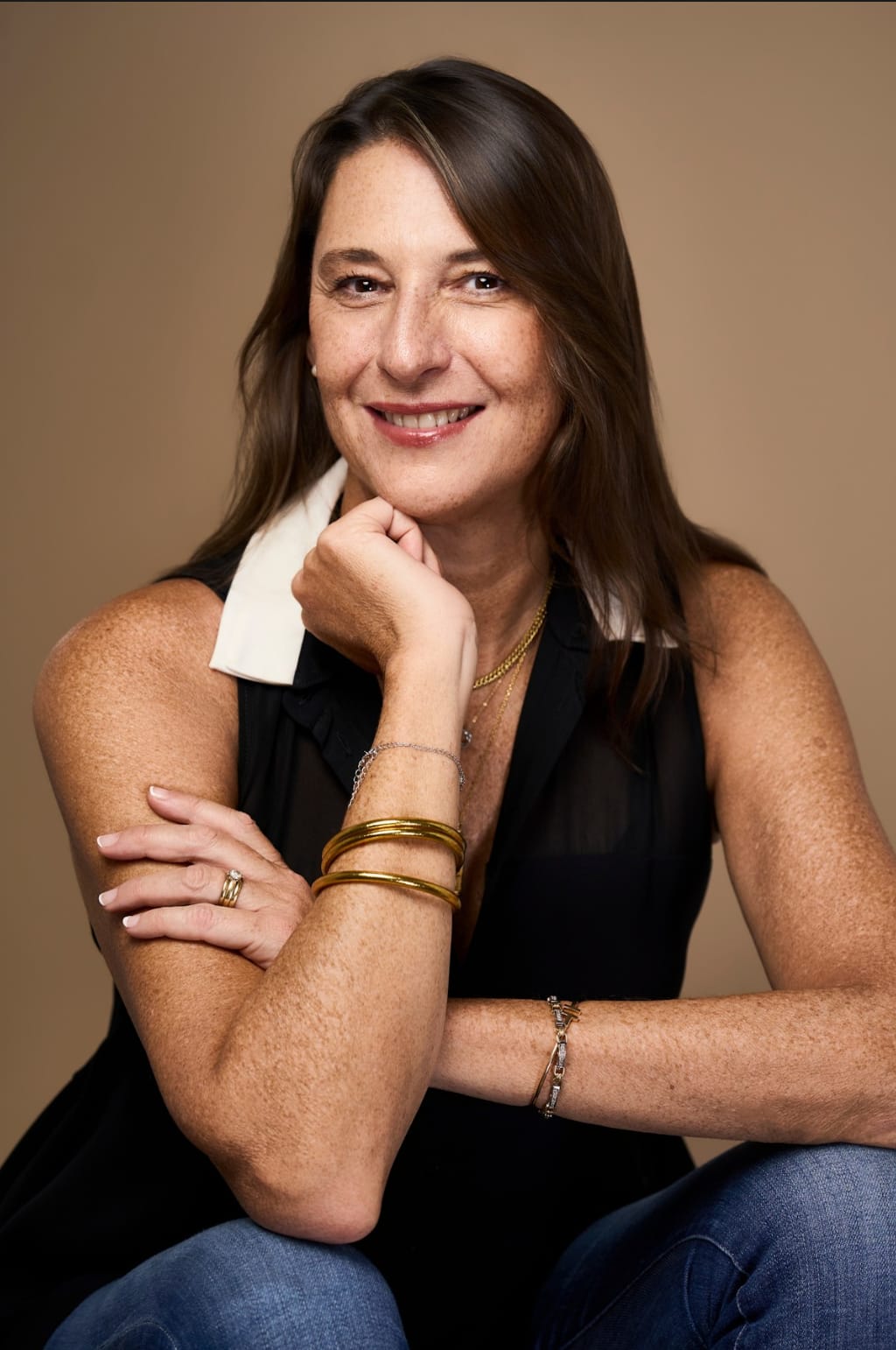
Pain demands attention. It tells us where it hurts, when to stop, what movement has suddenly become difficult. Modern medicine has become extraordinarily sophisticated at locating, imaging, measuring, and treating pain. But Sabine Combrie has spent more than 25 years asking a different question: what if the place that hurts is only part of the story?
The French-American physical therapist and founder of Integrative Touch Physical Therapy in Los Angeles has built her career around that question. Her practice combines physical therapy with osteopathic techniques, including craniosacral therapy, visceral and neural manipulation, sophrology, and Pilates. On paper, they may appear to belong to different schools of thought. For Sabine, they are different ways of understanding the same human body.
“Integrative healing means looking beyond the diagnosis and treating the whole person,” she says. “My goal is to understand the person behind the condition.”
This philosophy emerged gradually from a career spanning two countries, high-performance sports, pediatric and adult care, and patients dealing with everything from acute injury to debilitating chronic pain.
From Performance to Understanding
Sabine did not initially set out to become a physical therapist; she began medical school in France certain she wanted to work in healing, but her experiences as a young athlete and patient redirected her. Physical therapy offered something she found particularly compelling: science and movement combined with an unusually close relationship between practitioner and patient.
Before establishing her practice in the United States, she worked extensively with athletes and sports-related injuries in France. The experience gave her an early lesson in a principle that would eventually extend far beyond sports: more is not necessarily better.
“Peak performance isn’t just about pushing harder,” she says. “It’s about understanding the body’s limits and potential.”
Said Sabine Combrie
Knowing when to challenge the body matters. Knowing when to allow it to recover matters just as much. Over time, that understanding of balance became central to her work. Physical therapy gave her the tools to address mobility, strength, posture, and function. Osteopathic techniques expanded her attention to the relationships between different structures and systems in the body. Pilates provided movement and reinforcement. Sophrology introduced another dimension entirely: awareness of the connection between the physical body, nervous system, and mind. Rather than seeing these disciplines as alternatives, Sabine Combrie sees them as complementary. The objective is not to accumulate techniques. It is to have enough ways of looking at a patient to recognize when the obvious answer may not be complete.
When the Symptom Is Not the Problem
That distinction becomes particularly important with chronic pain. For patients living with it, Sabine believes one of the greatest difficulties is precisely what others cannot see.
“The most misunderstood aspect of chronic pain is that it is often invisible,” she says. “Too often, patients are told that it’s ‘all in their head,’ which can make them feel dismissed and discouraged.”
Said Sabine Combrie
Her point is not that emotions replace physiology. Quite the opposite. It is that separating them too rigidly can prevent practitioners from understanding the full experience of pain.
“The mind and body are inseparable,” she says. “The nervous system influences how we experience pain, stress, movement and healing.” This is where sophrology has become particularly relevant to her work. Still relatively unfamiliar in the United States, the practice originated in Europe and uses breathing, gentle movement, relaxation, and guided visualization to develop greater awareness of the body and mind.
Said Sabine Combrie
Sabine Combrie describes it as a form of focused relaxation in which the person remains conscious and in control. More importantly, she views it as something patients can carry beyond the treatment room, while working, exercising, or navigating stress in everyday life. That ability to participate in one's own recovery may be one of the most important threads running through her philosophy.
The Patient as the First Healer
After more than two decades of practice, Sabine Combrie says one lesson has become increasingly clear: the practitioner can provide knowledge, treatment and guidance, but healing cannot remain an entirely passive process.
“I’ve come to see patients as active participants in their own healing rather than passive recipients of care,” she explains. “In that sense, they are their own first healer.”
Sabine Combrié
It may be the most revealing statement about how she practices.
For Sabine, finding the root cause matters because eliminating a symptom without understanding why it developed may only solve part of the problem. A person's history, stress, sleep, movement patterns, lifestyle, and even earlier stages of physical development can reveal what the body is experiencing today. Her years working with children reinforced that perspective. Pediatric care taught her to observe early movement patterns, but also to let go of rigid protocols. Children force practitioners to adapt to attention, emotion, energy, and circumstances in real time.
That flexibility followed her into adult practice. The result is less a predetermined method than an investigative process: listening, observing, treating, and adjusting. Some of her most memorable cases have involved patients with severe chronic foot pain who had reached the point where wearing a shoe or bearing weight was difficult. Through a gradual combination of osteopathic techniques, sophrology, and progressive physical therapy, some eventually returned not only to everyday activities but even to skiing. For Sabine Combrie, these cases reinforce the value of gradual progress rather than the promise of an instant fix.
What Technology Cannot Replace
Healthcare, meanwhile, is moving in the opposite direction in at least one respect. Diagnostics are becoming more sophisticated. Imaging is more precise. Technology is increasingly part of how patients are assessed and treated. Combrie welcomes innovation, but she believes medicine cannot afford to lose one thing in the process: communication.
Physical therapists often spend significant amounts of time with their patients. That proximity lets them hear not simply where something hurts, but when it hurts, what changed before it began, what a patient fears doing, and how the condition is affecting daily life.
Those details are not incidental. In functional and musculoskeletal care, Sabine Combrie believes they can be clinically significant. Technology can show a structure. It cannot always fully capture the experience of the person whose structure appears on the screen. Perhaps that is why, after a career spent acquiring increasingly sophisticated techniques, some of Sabine's advice for everyday health sounds remarkably simple.
Breathe properly. Move throughout the day. Pay attention to hip mobility and posture. Notice what the body is telling you before discomfort becomes impossible to ignore. Build prevention into life rather than waiting for pain to impose it. And, every so often, check in with yourself.
“To me, living a healthy life means listening to your body and intuition,” she says. “It’s not only about physical health, but also about making time for what brings you joy and emotional well-being.”
Said Sabine Combrie
It is an uncomplicated conclusion to a complex approach. In a culture increasingly fascinated by optimization, better performance, faster recovery, more data, more technology, Sabine's philosophy suggests something quieter. The body is constantly providing information. Healing sometimes begins not by doing more, but by becoming better at hearing what it has been trying to say.
The symptom is never the whole story.
It is only a whisper, a first line, sometimes a metaphor. When the mind falters, the body keeps speaking. It reacts, tightens, freezes, grows heavy. It is not a simple container for mechanical pain; it is a sensitive barometer, a quiet seismograph of what we live, think, and feel.
The body tells stories when the mind can no longer keep up. It holds the memory of restrained impulses, old fears, and nights cut short. It records our accelerations, our silences, our small abandonments. And when pain appears, it is not always a failure; sometimes it is an invitation. A request for slowness. A call back to oneself.
This is where healing begins for Sabine Combrie: in that fragile space where we finally agree to listen. To listen to what pulls, what burns, what tires. To listen to what returns, what insists, what is trying to be said. Because the body has never stopped speaking. It has simply been waiting for us to offer it a bit of presence, a bit of gentleness, a bit of time.
Perhaps living a healthy life, in the end, is nothing more than learning to hear the stories the body writes in silence and choosing to read them before they turn into cries.
About the Creator
Léa Carlsen
Based in Los Angeles, Léa Carlsen is a journalist who began her career at VSD (French Magazine) , covering the Oscars and interviewing stars such as John Travolta, Geena Davis, Ben Affleck, Cameron Diaz, or Andy Garcia, to name a few...
Enjoyed the story? Support the Creator.
Subscribe for free to receive all their stories in your feed.
Comments
There are no comments for this story
Be the first to respond and start the conversation.