
Scientists have discovered a less intrusive method of fertilisation for couples by using magnets to guide sperm to fertilise eggs.
Constructing magnetic sperm

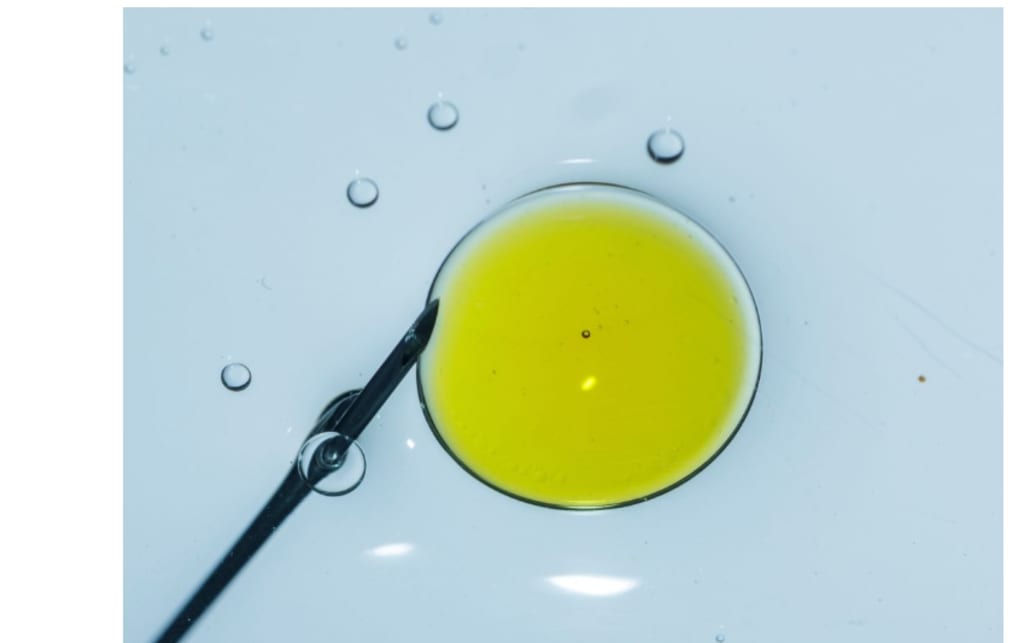
Magnets can now be used to guide sperm as they continue to swim independently. While the tail is free to propel the cells forward, tiny magnetic beads affixed to each sperm head allow researchers to direct the cells in the direction of an egg.
That may indicate a less invasive form of reproductive treatment for couples who are having trouble getting pregnant. In order to eliminate the necessity to combine sperm and eggs in a lab dish, researchers seek to eventually guide sperm within the body.
These days, the placement is done by a fertility center. In a plate, sperm that would never reach an egg are placed next to one. A route that kills almost every cell in the body is replaced by an inch or so (a few centimetres) of plastic. The new work adopts an alternative approach. It allows a magnet to navigate while reintroducing the sperm into the body.
Constructing magnetic sperm
A group from the Spanish nanoscience facility CIC nanoGUNE, under the direction of Dr. Mariana Medina-Sánchez, came up with the concept. Her team has spent years creating microrobots, which are tiny machines designed to do functions within living things.
This magnetic sperm is their most recent invention. The tail is unaffected, but the head is covered in beads. allowing the cell to swim on its own. The issue has long been obtaining clean batches. Samples that are nearly entirely pure and around ten times larger than before are now produced by a new sorting stage, providing sufficient material to conduct research.
Beads that protect cells
A living cell could be harmed if foreign beads were adhered to it. Thus, the team examined the health of tagged and untagged sperm side by side, immediately following tagging and again two hours later.
No damage was the best they could hope for. The cells' DNA remained unaltered. As with untagged sperm, the protective cap that aids the sperm in breaking into the egg holds up just as well.
The energy source of the cells revealed the true surprise. Over the course of two hours, the percentage of untagged sperm containing healthy mitochondria—structures that fuel cells—was approximately half. That percentage hardly shifted among the magnetised sperm.
In the untagged cells, oxidative stress—damage from unstable, reactive chemicals that can impair sperm motility and DNA—nearly doubled, but it remained flat in the tagged cells.
It's still unclear why the beads shield the cells. One theory is that each bead develops a protein covering that serves as a sort of protection. It is commonly known that oxidative stress and sperm failure are related.
Growing embryos
Whether these cells could still form an embryo was the true test. Using sperm and eggs from cow, The group performed complete rounds of in vitro fertilisation (IVF), a process that unites sperm and egg outside of the body. It was the first attempt at IVF using magnet-tagged sperm.
A healthy early embryo is identified by the division and growth of fertilised eggs into blastocysts, which are balls of roughly 100 cells. They were created by the magnet-tagged sperm at almost the same rate as regular sperm at the same dose. Even conventional IVF frequently fails.
There was another comparison that was more significant. The team tested a batch with just the few dozen wayward, bead-free sperm that were still present in the marked sample, but it produced no embryos at all. That was proof that the fertilisation was carried out by the magnetic cells.
Using magnets for steering
It's only half the point to tag the sperm. They are being driven by the other half. The group developed a device that uses a microscope to observe the cells, selects one, and then swings a magnetic field to encourage development.
When the guidance was turned on, the number of sperm that reached a narrow target zone was almost twice as high as when they were allowed to roam freely. Five distinct cells were guided one after the other to the edge of a single egg in a single run.
The researchers used a spinning magnetic field to herd a large number of labelled cells into compact clusters. After moving the entire swarm, they gave the order for it to disperse. Because the cells continue to swim against the force that is bunching them up, holding a swarm together is challenging.
directing sperm in the
The bigger picture extends beyond the lab dish. One day, the team wants to release marked sperm into the body and direct them into the fallopian tube, where fertilisation occurs naturally. After that, they want to take a step back and allow the rest happen.
In this manner, conception would take place outside of a dish, in its natural environment. For women whose partners have low sperm counts, this could make treatment less intrusive. Additionally, it might aid in the breeding of threatened species that are resistant to laboratory fertilisation.
There's still one problem. According to one study, sperm typically adhere to the lining of that tube by their heads for days prior to fertilisation. That grasp might be hampered by beads on the head. However, preliminary pictures indicate that the surrounding cilia, which are microscopic hair-like structures, still reached the
What follows
One item that was before unclear is now evident. Magnetic bead-carrying sperm can be guided toward a target while fertilising an egg that grows into a healthy early embryo. The project is currently in its early stages. It ran only a few complete repeats, employed cattle instead of humans, and ended at the embryonic stage, raising unanswered questions regarding genetics and pregnancy.
Nevertheless, there is a clear way forward. Researchers now have a practical method for producing large quantities of magnetic sperm and directing them as needed. This transforms the concept of directing conception within the body from a sketch into something they can start experimenting with.
About the Creator
Enjoyed the story? Support the Creator.
Subscribe for free to receive all their stories in your feed.
Comments
There are no comments for this story
Be the first to respond and start the conversation.