
D.E.A.R MARGARET
An apology that tries to stay small… and fails… for the “Sorry About That” challenge.

I've written and deleted this letter forty-seven times.
I know you said you didn't want to hear from me again, and I'm respecting that, this letter is addressed to you, but I'm not sending it. I'm leaving it here, on your porch, in a waterproof envelope, with explicit instructions on the envelope that it should only be opened if: (a) something happens to me, or (b) you find out from someone else first, at which point my explanation will at least be on record. So this is not me trying to contact you. This is me creating plausible deniability while also ensuring you know the whole truth. I'm sure your therapist would have thoughts about that.
Here goes.
About the money.
I know you've been wondering. You keep looking at your bank statements with that expression you get, the one where your eye twitches slightly, and you keep not asking me directly, which is worse than if you just asked, because it means you're pretty sure you already know the answer and you're trying to figure out how much you know before you confront me. So let me just say it before you find the receipts, which you're going to find, probably next week when you're reconciling the quarterly statements.
I spent four hundred and thirty-two dollars of the joint account on a hobby.
Okay, first of all, I know that doesn't sound that bad. Four hundred and thirty-two dollars spread across a year is not catastrophic. That's like... thirty-six dollars a month. You spend more than that on those fancy coffees. You won't even notice it.
But the thing is, I need to be honest about what the hobby is, because if you find out that I've been spending money on something without telling you, and then you find out what that something is, you're going to wish I had lied about the money part and just kept lying about the thing itself.
The hobby is pigeons.
Not that I keep pigeons, before you think I'm running some sort of unlicensed aviary in the garage. I don't keep them. I feed them. There's a difference. It's a very important difference and it is going to become the central argument of every conversation we have for the foreseeable future, so I want to establish that distinction right now.
I've been going to Riverside Park, specifically to the open area near the old bandstand where the fountain doesn't work anymore, and I've been feeding pigeons. Not excessively. I'm not that guy. I'm measured about it. I bring maybe a pound of birdseed each time, mixed with some of the sunflower seeds you buy for your stupid Christmas decoration wreaths that you never actually make because you get the supplies and then forget about them until January. The pigeons are actually doing a public service by helping me clear out the pantry of your abandoned craft projects.
You're probably wondering why I would do this. Why I would, of my own volition, with our money, spend time feeding animals that everyone agrees are rats with wings. Why I would become the kind of person that other people point at and think, "Oh God, that's the guy at the park feeding pigeons at 7 AM on a Tuesday."
Here's the answer, and I need you to hear me out on this: I was unhappy.
Not unhappy with you. Let me be clear about that, because I know how you read things. Unhappy in a general sense. Unhappy at work. Unhappy with the direction my life was taking. Unhappy that I'm forty-two years old and I've never been particularly good at anything or known what I wanted or made any meaningful impact on anyone or anything. I was very, very unhappy, Margaret, and I needed something that was just mine that I didn't have to be good at, that didn't require me to prove anything or show growth or reach any markers of achievement.
The pigeons don't care if I'm successful. They don't judge me. They just show up because they know I'm going to be there, and that mattered to me.
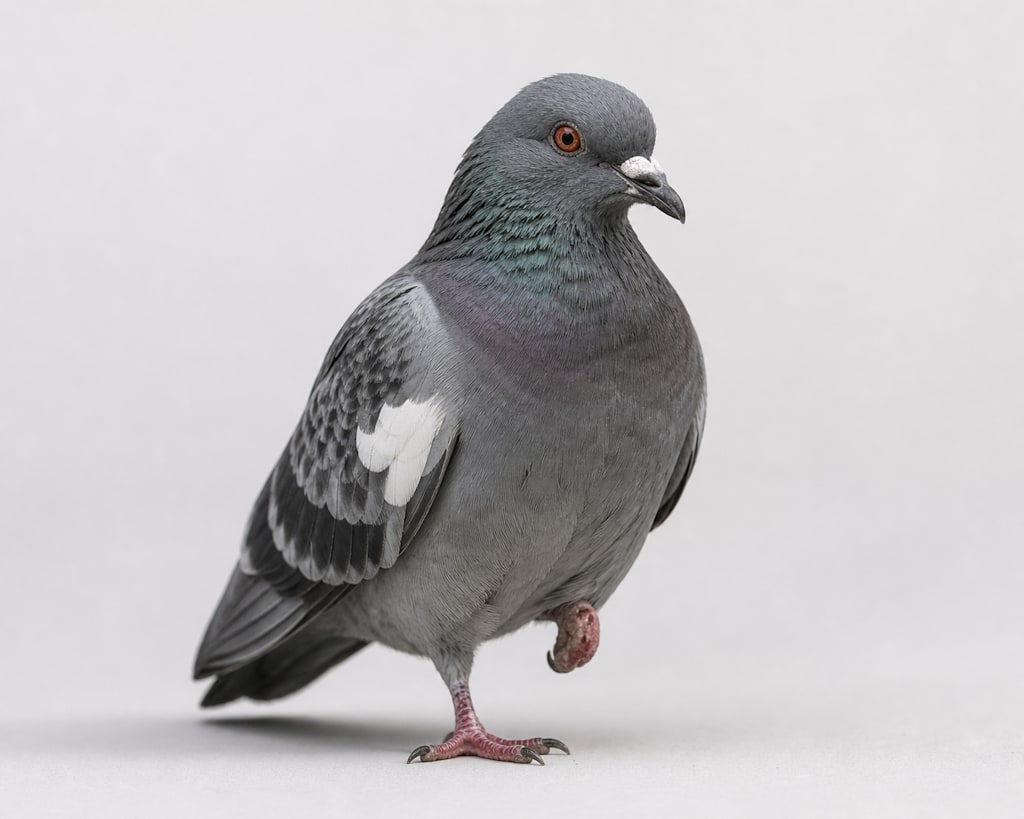
It started small. Like, barely-I-noticed-I-was-doing-it small. Then I started going more often. Then I started researching the best seeds. Then I started noticing that there was one particular pigeon, a gray one with a white patch on his left wing that I called Winston, that was more aggressive than the others, and he'd shoulder out the smaller birds, and I found myself bringing extra seeds just to make sure the timid ones got to eat too. Then I started worrying about Winston when he didn't show up one day. I was genuinely distressed. I thought maybe a hawk had gotten him.
He came back the next day, and I was so relieved that I almost cried at a public park over a pigeon.
That's when I knew this wasn't a normal hobby.
But here's where I need you to understand the timeline, because this is important: I've been feeding pigeons for about eight months. The money, the four hundred and thirty-two dollars, that was just the seeds and supplies. That was not the expensive part.
The expensive part came three weeks ago.
You know that conference I said I was going to in Portland? The "work conference" that I left for on Thursday and came back on Sunday? The one that you didn't really listen to me talk about because it's just work and you were in the middle of watching that true crime documentary series?
I did not go to Portland.
I went to Portland, Oregon, yes—but not for a conference. I went to Portland to visit a woman named Dr. Sarah Chen, who is a veterinary behaviorist, and I paid her $3,200 to spend the weekend helping me develop a comprehensive behavioral modification plan for a pigeon.
Specifically for Winston.
Okay, I can hear the question you're not asking out loud because you're in shock: "Why would you take a pigeon to a veterinary behaviorist?" And the answer is: I didn't take him anywhere. I took photographs. Very good photographs, with reference points and scale, and I took videos of his behavior, and I documented his feeding patterns, and I described his aggressive tendencies in detail, and I paid a woman with a PhD to analyze all of that data and tell me that Winston is probably experiencing what she termed "resource-stress syndrome," which apparently affects wild birds in urban environments where food availability is unpredictable.
In other words, Winston was anxious. And I was making him more anxious by creating an expectation that I'd be there every morning with food, and then varying when I showed up, which made him competitive and aggressive toward other birds.
Dr. Chen suggested that the solution was to either (a) stop feeding him entirely, which would traumatize him, or (b) establish a completely consistent schedule where I fed him at the exact same time every morning, with the exact same portion size, with no variation whatsoever, which would eventually help him relax and stop seeing feeding time as a competition.
So I committed to that. Every morning, 7:47 AM—specifically 7:47 because that was the time I first noticed Winston showed up looking for me, I have been at Riverside Park with exactly 2.3 cups of mixed birdseed, and I have been feeding Winston and the other pigeons while monitoring their behavior patterns.
Every morning. For three weeks.
Including the morning you asked me to meet you for breakfast with your mother because it was her birthday and you'd "specifically mentioned this last month and you're always so forgetful." You did mention it. You mentioned it once. I wrote it down. And then I also wrote down that I had a commitment that was more important than that breakfast because I was in the middle of a critical behavioral stabilization period with an urban pigeon who was depending on my consistency.
So I didn't show up. Your mother thinks I don't respect her. Your mother is correct in assessing that I don't respect her, but that's not actually why I didn't show up. I didn't show up because I was at a park feeding a pigeon seeds at a very specific time.
But wait, it gets worse.
Or better, depending on your perspective. I'm genuinely not sure which anymore.
Two weeks into the behavioral modification plan, something changed. Winston stopped showing up.
Not temporarily. Not like before when he was just late. He disappeared completely. And after the first morning, I knew something was really wrong, because I had created an expectation, and he had become dependent on that expectation, and now he was gone, and my absence from his life was possibly traumatizing him, or he was dead, or something else had happened, and I had no way of knowing which.
This was, I want to note, exactly when you asked me why I seemed "weird and distracted" and "not present" during dinner. I was not present because I was thinking about a pigeon, and I could not tell you that because you would have made that face you make.
I called Dr. Chen. I told her Winston was missing. I asked her if I should continue showing up with the seeds or if that would make things worse. She said that at this point, continuing the schedule was as much for me as for him, that I had invested so much in this behavioral modification that I couldn't just abandon it, because I would probably suffer some kind of psychological consequence from that abandonment.
So I kept showing up.
Every morning. 7:47 AM. Exact same amount of seed. For a pigeon that wasn't there.
By day five, I was having conversations with myself about whether Winston was alive. By day eight, I had started leaving slightly larger portions in case he was watching from somewhere but afraid to come out. By day twelve, I had called animal control to report him missing. They were not helpful. They suggested that it was "just a pigeon" and that "nature takes its course." They did not understand the stakes.
By day fifteen, I had gone to that park at different times of day. I had walked the surrounding neighborhood calling his name. I had checked shelters. I had posted on the local community Facebook group asking if anyone had seen a gray pigeon with a white wing patch. Three people thought I was joking. Two people told me I should get a therapist. One person privately messaged me asking if I wanted to meet up and "talk about my feelings," which I think means they assumed I was in crisis.
They were not entirely wrong.
But then, Margaret, and this is the thing that I couldn't tell you because it doesn't sound real, on day seventeen, Winston came back.
Not exactly the same. He was favoring his left leg. There was a small cut on his wing, the white part, which means he'd survived something but not unscathed. And he was thinner. He'd been through something. But he came back.
And do you know what I did?
I cried. In the middle of Riverside Park at 7:47 AM, I stood there with my 2.3 cups of birdseed and I cried like I was greeting a soldier coming home from war. A man passing by asked if I was okay and I said, "My pigeon came back," and he walked away very quickly.
I have been feeding Winston for two more weeks. His leg seems better. The cut on his wing is healing. He looks less anxious. The behavioral modification appears to be working, though Dr. Chen pointed out in a follow-up email that his absence and return has probably created some new patterns that we'll need to monitor.
The email cost me another $400 because I answered "just a few follow-up questions" which apparently triggered her consultation rate.
So that's $7,200 total. Not $432. I'm sorry about the lie by omission on the initial number.
Here's what I can't tell you in person:
I think I love that pigeon more than I love most people. I think I've been using that pigeon as a way to feel like my life matters. I think I'm aware that this is not normal and I'm not willing to stop. I think you're going to ask me to choose between feeding Winston every morning and staying in this marriage, and I think I'm going to make the wrong choice from your perspective.
I think I've spent the last two weeks quietly looking at apartments in the area, specifically apartments with a parks-and-recreation budget, because I'm calculating whether I can afford to move out, pay rent somewhere, and still maintain the 7:47 AM feeding schedule that Winston is now dependent on.
I think you're going to read this letter and think that I'm insane, and you'll probably be right.
I think I'm going to leave you, Margaret. Not because of anything you did. Not because I don't love you, because I do love you, but not in the way you deserve to be loved. I love you in the way that a person who doesn't know how to love things properly loves them, with a kind of careless attachment that eventually becomes neglect.
I think I'm going to leave you because I've discovered that I'm the kind of person who can commit completely to a pigeon, and if I can do that for a pigeon, then I should be able to do it for a person, and the fact that I'm not doing that means something is fundamentally broken in me, and you don't deserve to spend your life trying to fix that.
I'm sorry about the money.
I'm sorry about the breakfast with your mother.
I'm sorry about every time I said "I was working late" when I was actually at a park.
I'm sorry about the apartment I'm going to move into, which you'll find out about when I finally work up the courage to tell you that courage part.
But mostly, I'm sorry that you married someone who could break your trust so thoroughly, so slowly, and so completely in service of something that seems, to any objective observer, completely insane.
I'm sorry, Margaret.
Actually, I'm not sorry. I'm sorry that I'm not sorry.
I'm sorry about that too.
________________________________________________
P.S.. I just realized that by the time you read this letter, it will have been a minimum of five days since it was left on your porch, because you don't check the porch every day. That means Winston and I have already had five more 7:47 AM appointments without you knowing. I'm including this postscript so you know that even in apology, I'm prioritizing the pigeon. That feels like information you should have.
About the Creator
Aarsh Malik
Poet and storyteller who believes in the quiet power of words.
My first book, QUIET FLAME
Buy Coffee
⏳ 90 days. $2,000
If my words stay with you, a little tip can help me get there.
Enjoyed the story? Support the Creator.
Subscribe for free to receive all their stories in your feed. You could also become a paid subscriber, letting them know you appreciate their work.
Comments
There are no comments for this story
Be the first to respond and start the conversation.