
Anxious That Your Partner Is Still Swiping on a Dating App?
Two ways of resolving it


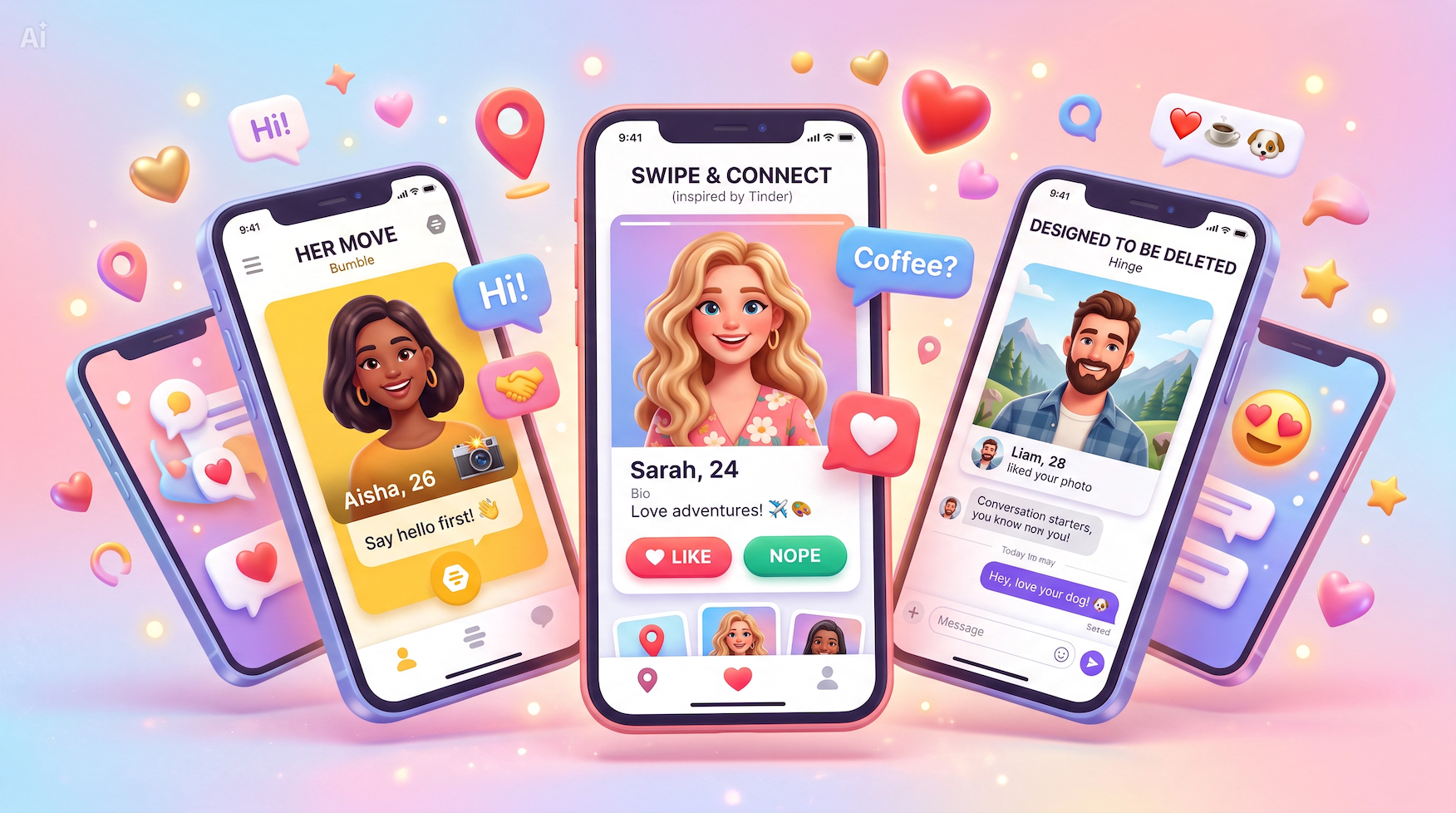
Entering a relationship should bring a sense of security, yet few things undermine that peace quite like the lingering suspicion that your partner hasn't fully closed the door on their single life. Discovering - or simply fearing - that your partner might still be active on a dating app, like Tinder and Bumble, is likely to trigger an immediate feeling of anxiety, self-doubt, and betrayal. Suddenly, you are left questioning where you stand, whether your connection is being treated as dispensable, and how to protect your own emotional well-being without jumping to unfounded conclusions.
Navigating this uncomfortable territory requires a delicate balance of emotional clarity and directness. Before allowing paranoia to run riot, or rushing into accusatory confrontations, it helps to step back, to examine the situation objectively, and decide how best to honestly address the situation to retain your self-respect.
In my opinion, there are two main approaches to this: one providing an immediate solution that might be hurtful and the other more conciliatory.
Immediate Withdrawal Solution
This approach says: If you have to wonder whether your girlfriend or boyfriend is on a dating app, you should stop right there and break it off. No ifs or buts!
A relationship is primarily about TRUST between the couple from the first day of meeting each other. If one person starts to lie, or begins to check up on the other, that's a relationship that will be fuelled by insecurity, anxiety, fear and control. In that kind of suspicious atmosphere love, care and value for each other would hardly find space to thrive.
Some people might wonder why, no matter what they do, their relationships do not work, and are always at odds with their dates. It could have a lot to do with the perception of love between a couple and the expectations of it.
For example, many people are simply in love with the 'idea' of love, the heart stopping, bell ringing, excited, physical part, but shy away from the 'responsibility' of love - which is the mundane, routine, demonstrations required. The two aspects are not the same. The love ideal is just that - a perfect ideal which has lust at its core. Nothing else seems to matter except being with that person and sharing affection as required. That will feel fantastic for a short while but, if the responsibility of love isn't there, that relationship or dating experience is doomed from the start.
The responsibility of love contains four elements: Affection, Caring, Sharing and Commitment, which can come in any order for an individual, depending on his/her personal needs and priority. This order is very important for matching couples together. For example, Affection is a top priority for me as I like feeling close to my partner. It could be that commitment is a high priority for you, but perhaps not for your partner.
If you believe he/she might still be on a dating app, you would need to acknowledge a few truths, three of them in particular, rather than checking up on your spouse:
She probably isn’t finding your company, or the relationship, as satisfying or exciting as she thought, and is still looking for what is missing. She is clearly disappointed in the friendship but lacks the courage to tell you.
He is not really committed to the friendship and doesn’t want you to know, as he probably wants to have his cake and eat it, too.
She is incapable of having an honest, close relationship which might curtail her freedom.
Only by talking about your fears to them, to find out IF they is still on a dating app, and why, will you get an answer. However, you also have to be careful that you are not letting possible fears and insecurity get the better of you.
The Conciliatory Route
This approach gives the partner the benefit of the doubt, while trying to achieve a positive outcome for both parties. There are four key actions to follow:
1. Separate The Facts From Your Anxiety
Distinguish between active use of the app and an abandoned profile. Understand how dating apps operate to maximise traffic - profiles often remain visible to others long after an app has been deleted from a phone screen, if the account itself wasn't explicitly deleted or deactivated.
Acknowledge the emotional trigger: Validate your feelings without letting fear dictate your immediate reaction; impulsive snooping or hyper-vigilance often increases anxiety rather than resolving it, and creates unnecessary tension between you.
2. Assess the State of the Relationship
Examine the level of reciprocity and commitment you share: Has there been a clear conversation about exclusivity, or are you operating on unspoken assumptions? Does your partner share the same level of commitment and personal appreciation?
Identify patterns of behaviour: Look at how your partner treats the relationship overall. Are they present, open, and invested, or do they relegate you to being an option while keeping their choices open?
3. Suggest a Direct, Non-Accusatory Conversation
Focus on getting clarity over confrontation: Frame the discussion around your boundaries and needs for transparency rather than presenting a list of accusations.
Pay close attention to how they react. A partner committed to a genuine relationship will offer calm reassurance and clarity, whereas deflecting, shifting blame, or gaslighting often reveals a hidden motive or deeper lack of respect.
4. Decide on Your Boundaries and Next Steps
Protect your self-worth: Being kept in a state of perpetual uncertainty deprives you of genuine security and affection, and also erodes your self-esteem.
Know when to step back: If the trust is broken or your partner refuses to offer reciprocity, recognise that staying in an ambiguous situation that only pleases one person will cost you peace of mind and your self-respect.
The stark truth you need to face is this: If someone wants you, they will devote all their attention to you. If they don’t, or they feel they are not getting what they expected, they are likely to seek it from somewhere else.
A relationship should make you happy, joyful and zingy, not fretful, unhappy, or insecure. If you honestly believe she or he is on a dating app because you don’t trust him, you really should leave her to it. Constantly having to fret and wonder about someone’s behaviour is not very uplifting or helpful to your wellbeing.
Why have such a friendship at all, unless you believe you can’t do better for yourself, or don’t deserve better than that? Appreciation and value start with you for yourself.
• Like this post? Show your appreciation with a SUBSCRIPTION and even a TIP. Thanks for your support! •
SubscribeAbout the Creator
Elaine Sihera
British Life Coach & Consultant. Founder of LOVE & LIFE: The Growth Guide, for insights into managing challenging life issues. Author of books on Confidence, Relationships & Wellbeing. Graduate/Doctor of Open Univ; Postgrad Cambridge Univ.
Enjoyed the story? Support the Creator.
Subscribe for free to receive all their stories in your feed.
Comments
There are no comments for this story
Be the first to respond and start the conversation.