
What’s the Deal with American Cheese?
The divisive dairy product demystified


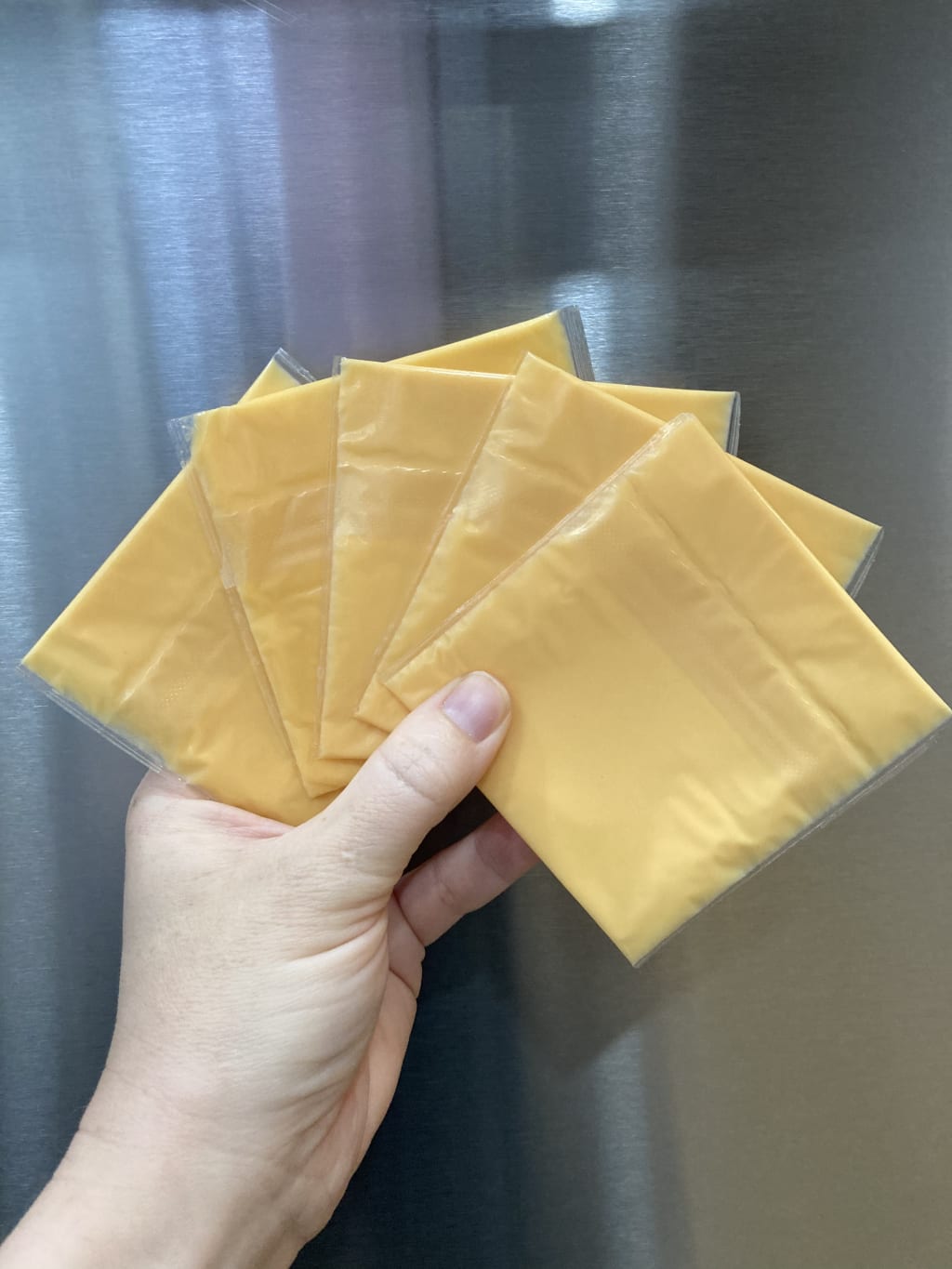
I was recently scrolling the Vocal Top Stories and came upon this delightful culinary odyssey, by Rasma Raisters, highlighting the best cheese dishes from around the world. I was immediately hungry, but also inspired to write about the neon orange specimen native to my homeland. I am talking, of course, about American cheese.
It is a cheese born of science, an unholy gelatinous frankencheese, that according to our own Food and Drug Administration, cannot legally be classified as cheese. For that esteemed distinction, a product must contain more than 50% milk. On the label, manufacturers must refer to American cheese as a “pasteurized prepared cheese product.”
As is true with many American products, this cheese was developed by the Kraft company as a cheaper substitute for the real thing. But American cheese is not without its merits. It melts into a thick sauce which makes a great topping and filling for a variety of treats such as nachos, burgers, and grilled cheese sandwiches.
In order to achieve the product’s consistent melt, the makers combine a selection of mild cheeses (think cheddar and colby). Then they heat and homogenize the mixture, adding emulsifying agents among other less pronounceable ingredients.
American cheese works in mysterious ways and like the pantheon of ancient gods, it comes to us in a variety of forms, each to fulfill its own dark purpose.
- Kraft Singles - They call them singles because they are not sliced. Each one is molded into a perfect square, then individually wrapped in plastic for maximum shelf life. I remember my grandpa used to unwrap one and toss it to his German Shepherd as a treat. She’d snatch it in mid-air, then suck it down like a big orange noodle.
- Velveeta - This variation comes in a 32 oz. block. It is good for melting over vegetables to disguise them from picky eaters or combining with salsa to make a rather inauthentic “queso dip.” I can’t imagine eating it cold.
- Easy Cheese - A shelf stable cheese that is squirted from a can onto crackers or directly into your mouth if that’s your thing. I do not recommend this one. It may be a novelty, but the price is your dignity.
You can’t talk about American cheese without mentioning "government cheese.” The US government began producing processed cheese to feed the military during World War II. When the war was over, they foisted the cheese onto the public schools. The purpose of the program was to maintain milk prices when government subsidies created a surplus. As part of the ongoing program, cheese was stored in hidden underground warehouses throughout the country, like the Fort Knox of fromage.
In the 1980’s, the Regan administration was criticized for hoarding all this cheese, while simultaneously reducing food stamp benefits to low-income Americans struggling with food insecurity. In response, Regan released all of the cheese. The first round of cheese to be distributed was moldy from sitting in the warehouse too long.
As you might guess, American cheese is not the healthiest choice, with its high fat and sodium, plus preservatives. Nutrition experts argue that the prevalence of American cheese along with other cheap processed foods has contributed to the obesity epidemic, particularly among low-income families.
The popularity of American cheese has fallen slightly over the years. My family eats it occasionally in one form or another, but we prefer cheddar, munster or Swiss for sandwiches. When we can afford it, our fridge contains natural cheeses from around the world. I never met a cheese I didn’t like.
If you liked this article you might also enjoy...
Sources:
https://www.tasteofhome.com/article/what-is-american-cheese-is-american-real-cheese
https://en.wikipedia.org/wiki/American_cheese
About the Creator
Leslie Writes
Another struggling millennial. Writing is my creative outlet and stress reliever.
Enjoyed the story? Support the Creator.
Subscribe for free to receive all their stories in your feed. You could also become a paid subscriber, letting them know you appreciate their work.
Comments
There are no comments for this story
Be the first to respond and start the conversation.