
In the Maldives, the Coconut Is More Than Food
What one island ingredient reveals about flavour, waste, local knowledge and the people behind hospitality.


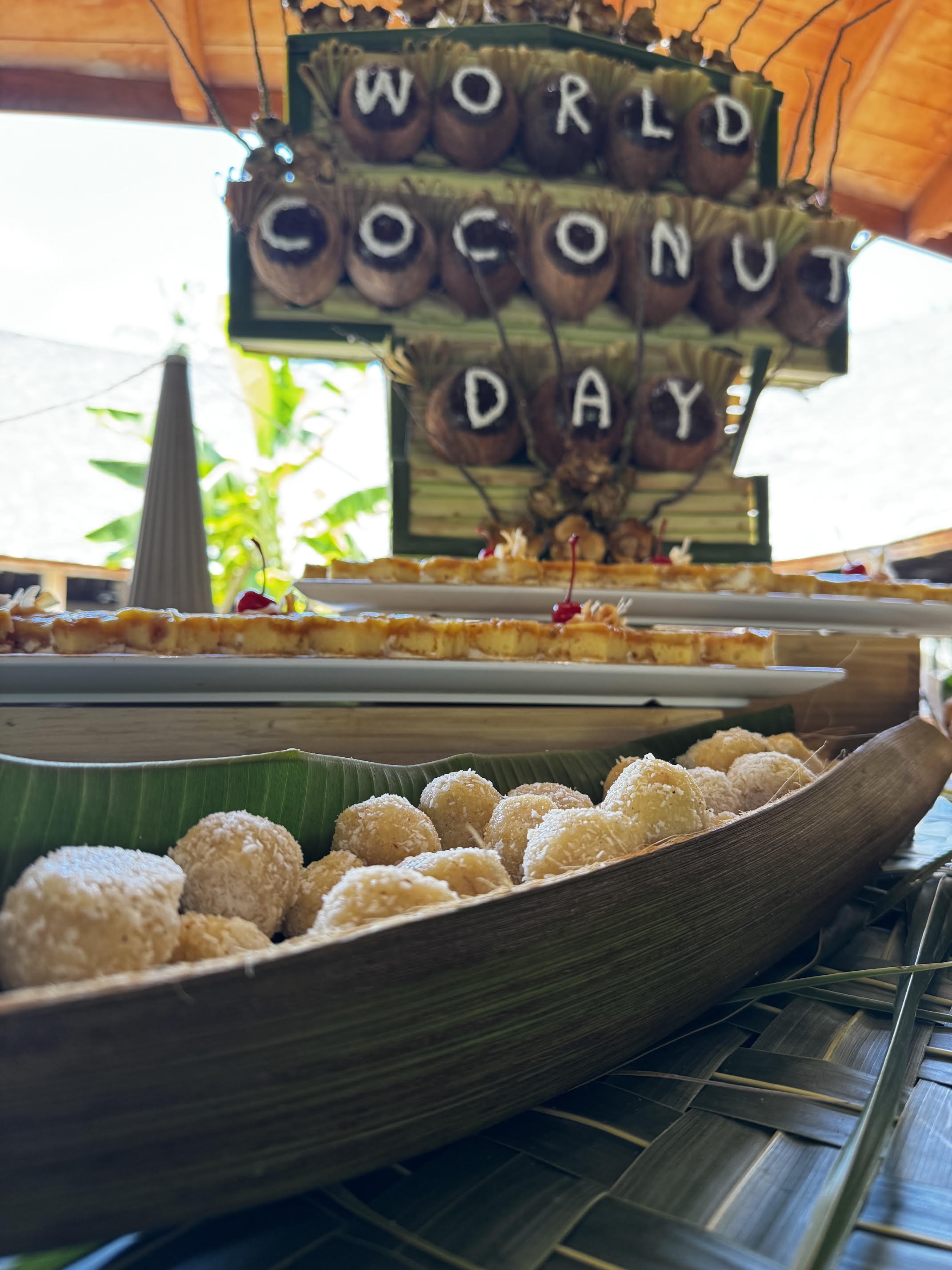
Fresh coconuts cover the table. Some are still whole, while others have been opened to reveal their white flesh. Around them are sweets, tropical ingredients and natural decorations prepared for a World Coconut Day buffet in the Maldives.
The finished display is colourful and inviting, but its appearance tells only part of the story. Before the first guest arrives, members of the culinary team have already spent hours selecting, opening, preparing and arranging every element.
For Italian executive chef Cristian Marino, this work represents something larger than a themed buffet. Living and working in the Maldives has changed the way he understands the coconut. It may be one of the most familiar images of tropical life, but here it is not simply a decoration or an ingredient for desserts.
It is part of everyday life.
A Fruit With Many Lives
A freshly opened coconut offers an immediate reward. Its water is light and refreshing, while the flesh can be delicate and soft or firmer and richer, depending on its maturity.
In the kitchen, that flesh can be served fresh, dried, toasted or transformed into milk, cream and oil. It can bring sweetness to desserts, depth to curries and balance to dishes built around spice, acidity or seafood.
Yet the useful life of a coconut does not end when the water and flesh have been removed.
Its shell can become fuel, a serving vessel or material for craft. The fibrous husk can be used for rope, brushes, growing medium and other practical purposes. Coconut leaves and timber have also supported island communities far beyond the kitchen.
Marino sees this as one of the coconut’s most important lessons. The fruit demonstrates what happens when people learn to understand a resource completely rather than valuing only its most obvious part.
Nothing about the coconut is automatically sustainable. Its value depends on the decisions made around it: how it is grown, harvested, transported, prepared and eventually used.
What the Kitchen Can Learn
Professional kitchens are busy places. Ingredients are ordered for specific recipes, and the parts that do not fit those preparations can easily be treated as waste.
The coconut challenges that habit.
It encourages chefs to look at an ingredient before dividing it into useful and useless parts. One preparation may support another. Coconut milk can become the base of a sauce, while the remaining flesh may be toasted for texture or incorporated into a sweet. A cleaned shell may become part of a presentation rather than being immediately discarded.
This approach is not about forcing every leftover element onto the plate. It is about thinking before throwing something away.
Can it be used safely? Does it improve another preparation? Can purchasing be adjusted to match the real needs of the menu? Does the team understand the ingredient well enough to recognise its possibilities?
These simple questions are often more meaningful than a sustainability slogan displayed beside a buffet.
For World Coconut Day, Marino’s team brought fresh coconut, sweets and natural materials together in a presentation designed to celebrate the ingredient without separating it from its surroundings.
Guests saw the final arrangement. Behind it were planning, preparation, teamwork and dozens of small decisions made throughout the day.
That invisible work is part of hospitality too.
The Hands Behind the Ingredient
Every coconut that reaches a resort kitchen has passed through human hands.
Someone tends the palm and understands how it grows. Someone climbs or harvests the fruit. Other people transport it, open it and prepare it. Experience determines whether a coconut is best suited for drinking, cooking, producing milk or extracting oil.
When a coconut is presented only as an inexpensive tropical symbol, this chain of labour and knowledge disappears from view.
Respecting an ingredient therefore means more than finding an attractive way to serve it. It also means recognising the people who understand it.
An international chef may arrive with professional techniques, established standards and experience from other countries. Local communities bring a different form of expertise—knowledge shaped by the climate, the land and generations of practical use.
The strongest hospitality experiences appear when these two forms of knowledge support each other.
Working in the Maldives has reinforced that principle for Marino. Professional standards remain important, but they become more relevant when they are combined with the intelligence already present in the destination.
More Than a Beautiful Buffet
Guests naturally respond to colour, abundance and presentation. A coconut display can create an immediate sense of place, particularly for travellers experiencing the Maldives for the first time.
Food should be attractive and enjoyable. A buffet is not a classroom, and dinner should never feel like a lecture.
Still, a culinary experience can communicate something meaningful without explaining every detail. It can present a local ingredient honestly, avoid unnecessary excess and allow the culture of a destination to appear through the food itself.
The story does not need to be exaggerated. It only needs to be true.
This is where responsible hospitality becomes visible—not through a single campaign, but through the connection between sourcing, preparation, presentation and people.
A Lesson Beyond One Day
World Coconut Day creates an opportunity to celebrate an ingredient that supports food, livelihoods and everyday life across many tropical communities.
Its lesson, however, should not disappear when the buffet is cleared.
The coconut shows that resilience is rarely the result of one dramatic action. It develops through attention, adaptability and the ability to recognise value where others may see only waste.
For a professional kitchen, that means understanding ingredients before transforming them, respecting the people behind them and using resources with greater care.
The guest may never see every decision involved. What arrives at the table should still feel effortless, generous and pleasurable.
Behind that experience, however, is a way of thinking.
In the Maldives, the coconut is more than food. It is an ingredient, a livelihood, a connection to place—and, for those willing to pay attention, a teacher.
About the Creator
Enjoyed the story? Support the Creator.
Subscribe for free to receive all their stories in your feed.
Comments
There are no comments for this story
Be the first to respond and start the conversation.