All about the thought leading tech entrepreneurs who are paving the digital path of the future.
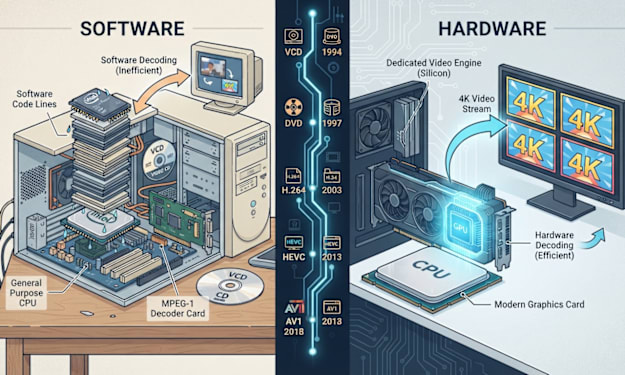
1. What hardware and software decoding mean Many people pause when they hear “GPU hardware decoding, CPU software decoding.” CPU and GPU are both chips. Both are circuits on silicon. Why is one hardware and the other software? Is the CPU software?
By Jin19 days ago in 01
On your bed, your phone says it is connected to 5 GHz. A short video spins. You switch to 2.4 GHz. It plays right away. You start blaming the router, the broadband, the phone. Before you buy anything, walk to the router and run a speed test on 5 GHz. In most homes, it will hit 800 to 1000 Mbps. Then walk back to the bedroom, through a load-bearing wall. The same 5 GHz connection may fail to load a web page.
By Jin20 days ago in 01
Ten days after the iPhone 18 Pro series went on sale, Apple customer service confirmed a system vulnerability tied to Face ID. It causes devices to freeze and restart in specific situations. The issue is software, not hardware, and Apple says a future update will fix it.
On October 2, 2026, Geekerwan published Logic Folding Deep Dive! How Strong Is Huawei’s Mate 90 Series Tao’s Law Chip? It is not a routine flagship review. The first half cuts open a Kirin 9050 Pro, images the internals with an electron microscope, and turns “logic folding” from a presentation phrase into a physical structure. The second half runs the Mate 90 Pro Max through benchmarks and games. The performance numbers matter. The teardown matters more. The teardown’s publication may matter most.
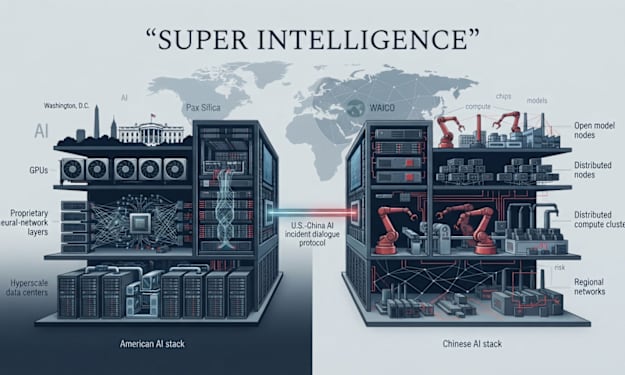
Washington changed the name. The competition did not. On September 29, 2026, the Trump administration did something that looked cosmetic but had broader policy consequences: it instructed the U.S. executive branch to replace “Artificial Intelligence” and “AI” with “Super Intelligence” and “SI” in official correspondence, websites, reports, policy documents and other non-statutory government communications. The executive order says existing AI systems should now be understood under the new term and directs the administration to develop a federal definition of “Super Intelligence.”
By Jin21 days ago in 01
When the AI safety conference let out, a cleaner was still in the hallway, spearing empty water bottles into a trash bag. Lu Yuanzhou caught up with her. His tie was crooked. He held his phone like it was a warrant. Lin Zhao was zipping her recorder into her bag. He stepped in front of her. The screen lit up. An internal memo: warnings were part of a PR strategy, used to build a regulatory moat.
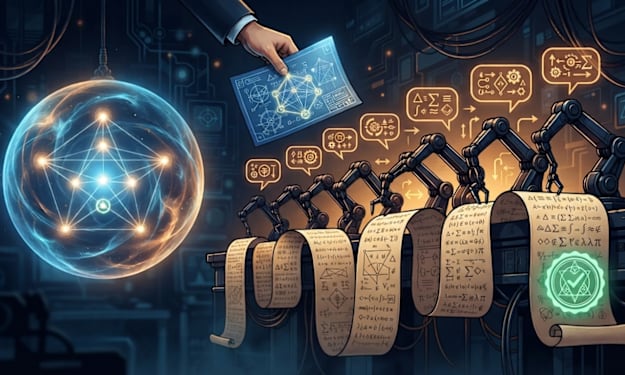
On September 30, 2026, Xinzhiyuan published an article. The headline said ten Claude 5.5 models had cracked a century-old physics conjecture. The article listed numbers: 15 hours, 1,270 messages, 17,895 lines of Lean code. Then it said AI had begun doing research on its own.
1. That Afternoon in the Lab July 2026, London. In Mindgard’s office, a researcher typed a string of instructions into a dialogue box. On the other end was Kimi K2.6, a trillion-parameter open-weight model released by Moonshot.
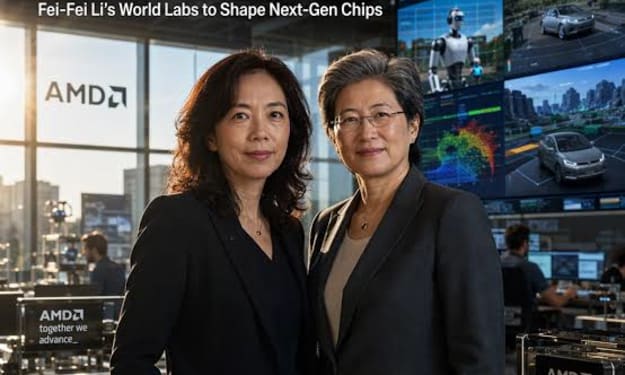
On September 28, AMD announced it had signed a definitive agreement to acquire World Labs in an all-stock deal valued at about $8.2 billion, or roughly RMB 55 billion. The transaction is expected to close by the end of 2026, subject to regulatory approval and other customary closing conditions.
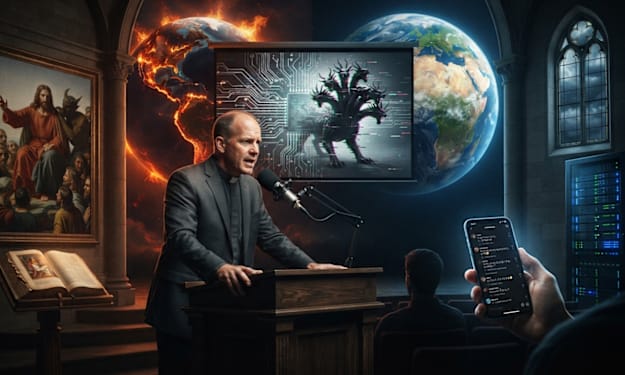
Atlanta, a Sunday. Philip Anthony Mitchell stood behind the pulpit, palms pressed to the wooden edge. Behind him, a screen showed a circuit board, its traces spreading like roots. He said: "Artificial intelligence will play an important role in the end times."
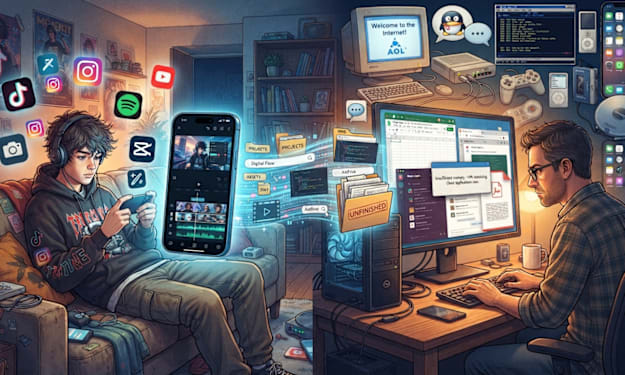
First, a scene. A high school student sits on the sofa, phone in landscape mode, dragging the timeline in CapCut, adding subtitles and music, exporting. No computer. His father is in the study. The desktop fan whirs. Three browser windows, an Excel sheet, a QQ group, and a PDF are open. A pop-up: insufficient memory. The father curses, closes two tabs.
By Jin22 days ago in 01
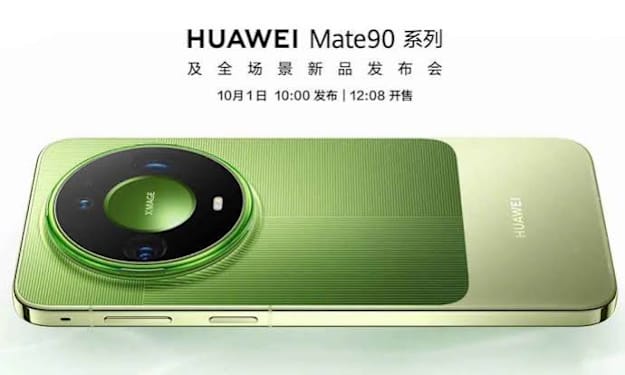
Huawei launched the Mate 90 series on October 1, 2026. Two communication features stand out: multi-device mutual-assistance communication sharing and four-card, triple-standby.