
The performance of being unbothered.
It's a Boomer coping mechanism with some new branding.


You know those people who reiterate how they don’t care when something unexpected happens to them—when they’ve been blindsided by something they should’ve seen coming if they read all the signs right the first time around. It takes a certain type of person to sit there with their arms crossed and a straight face, or say it in a text with three paragraphs of context nobody asked for, or even better—in a caption that took longer to write than the thing they claim not to be affected by. These people, by their own account, are completely unbothered.
And they’re lying through their teeth. To you. To their mother. And definitely to themselves.
Status symbol
A real case of being unbothered won’t announce itself. It won’t need a social media caption, or some follow-up text: just so you know, I’m not mad. The people at peace with something tend to be suspiciously quiet about it—which is inconvenient, because quiet doesn’t perform well, and isn’t performing well the whole point?
In the last few years, unbothered went from a description to a goal. It’s not enough to just be fine—you have to be seen being fine, ideally while doing it on a beach in Mallorca, ideally with good lighting on your ‘story.’ It has to read like power. Cool, composed, and collected. The emotional equivalent of walking away from your car exploding without looking back at it.
When you hear unbothered, we think of Gen Z. Except it isn’t. They didn’t invent emotional detachment as a status symbol. They just watered enough life into it to trend on social media. Every other generation has been doing this for decades. We just called it something that sounded more like character and less like a coping mechanism.

It comes in 3’s
The unbothered personality trait made its way across three different generations.
Boomers didn’t invent unbothered. They invented everything that came before it. Except back then they called it a stiff upper lip. Any display of emotion was a liability. A weakness. Having the emotion itself was fine, but God forbid anyone saw the tears. Boomers didn’t process anything either—divorce, a layoff, a death. They handled it, quietly, privately, and if anyone asked how you were doing: fine. That was the end of that conversation. Boomers played the game of silence, which you can probably say is unbothered’s more disciplined older brother.
Then we have the millennials. My people. We’re always unbothered—but we don’t say it like that. We rebranded it with some therapy vocabulary. We’re ‘healed’. We ‘don’t do drama anymore.’ Or the one I like to use—not my circus, not my monkeys.
To us, these statements seem like we’ve put up boundaries or are entering a new era of growth. But when you break it down, it’s suppression. We brush the problems off. Our phrases sound like we’re fine and want to just move on, but the behavior underneath it is identical to grandpa’s stiff upper lip analogy.
And then you have Gen Z, who turned unbothered into a Pinterest aesthetic. They don’t walk around claiming to be unbothered—they do it with a pose for their Canon G7x, consciously. It’s a performance.
You can literally watch the mood board in real time. The ‘lion’ trend flooding social media—Gen Z and Millennials (unfortunately) calling themselves lions and lionesses who don’t concern themselves with drama, borrowing the line from Game of Thrones about the lion not caring what the sheep think. Scroll through actual videos and it’s not hustle-culture posturing—it’s people listing off things that supposedly don’t bother them. My rent going up again. The algorithm deciding I don’t exist this week, delivered straight-face, half-joking, set to the same trending audio. Again, it’s a performance.
Gen Z isn’t here to convince other generations their unbotheredness is real. It’s a caption, a trend, a template you fill in for the week. It’s not a personality trait you’ve organized your whole self-image around. The generations fooling themselves—thinking this is real regulation instead of suppression—are Boomers and Millennials. Gen Z is borderline acting and mimicking our entire personality. Next month it'll be a different sound and a different pose, because it’s cosplay at best.
The performance is proportional to the wound.
Millennials did everything they were told would work—get a college degree, get a job, get your 401(K) started early—and we watched the ground pull anyway. We came of age right as the 2008 crash hit, the worst downturn since the Great Depression, and most of us graduated straight into it, our hard-earned degrees in hand, walking out with an average of $22,000 in student debt and nowhere to put our knowledge to use. Myself included. I remember my formative years as one big decade of instability. I ended up graduating from university, couldn’t find a day job, and ended up trapped working in nightlife for the next five or so years, because it was one of the only things pulling in real cash at the time.
The world kept overpromising and underdelivering. And when that happens, detachment stops becoming a personality trait, and becomes words of wisdom. Not my circus, not my monkeys isn’t inspiration wisdom. It’s a nervous system that got burned enough times to stop reaching for the hot stove. It’s a nervous system that now dresses up in ‘maturity’ so it doesn’t have to be looked at like a wounded kid.
For boomers, that wound is older. This was a generation raised on the idea that emotional expression was the character flaw—not the actual set of events (divorce, grief, fear), but the audacity of visibly reacting to them. Composure wasn’t a coping strategy so much as a survival requirement in households and workplaces that punished anything else. My grandmother was the stereotypical 1950’s housewife—one of the women actually raising the Boomers. She belonged to the Silent generation—the one before them, raised through the Depression and a world war on a strict diet of ‘children should be seen and not heard.’ She didn’t hand her kids a rulebook about emotions. She modeled the only one she was given, and Boomers, like every generation before therapy made ‘how you were raised’ a sentence people said in casual conversation, absorbed it the same way you absorb a native language: without being taught, just by being present in the room.
The numbers still show it decades later. A UK workplace study by Bupa found two-thirds of employees over 55 were dealing with symptoms like anxiety, insomnia, or a low mood that wouldn’t lift. More than a quarter of them don’t tell a single person about it. Not because it isn’t happening, but because ‘I’m fine’ wasn’t a performance of strength. It was the only answer their parents shoved down their throats to repeat out loud.
Decades later, the habit outlives the reason for it. A Boomer today isn’t going to get sent to an asylum or shamed at the dinner table for showing emotion the way they might have been in the ‘50s or ‘60s. But the reflex to not express their feelings keeps running on autopilot.
Regulation vs. Suppression
Regulation and suppression might look the same from across the dinner table or a quiet car ride home. Same flatness in your tone, same loose shrug, same ‘honestly, I’m not even mad’. But ask the person to actually talk about the thing—not summarize it. Digest it and sit with it. Someone who’s regulated can go there. They can walk you through what happened and what it felt like without their voice cracking, because there’s nothing left to protect. Someone who’s suppressing will change the subject, pass a joke, or say ‘I don’t really want to get into it.’
That's the difference between processed and parked. One happens after you've actually sat with something uncomfortable and come out with the weight lifted. The other is just filing the feeling away somewhere you don't have to look at it; which works right up until it doesn't. The body, unfortunately, keeps a separate set of notes. It tends to notice what the face is being told to ignore, and it tends to show up as the tight jaw, the insomnia, the wildly disproportionate reaction to something small and unrelated six months later, making someone ask why are you tripping?
Regulation is processed where you’re at peace with it, while suppression just looks like you’re okay about it—right up until someone asks you to prove it.
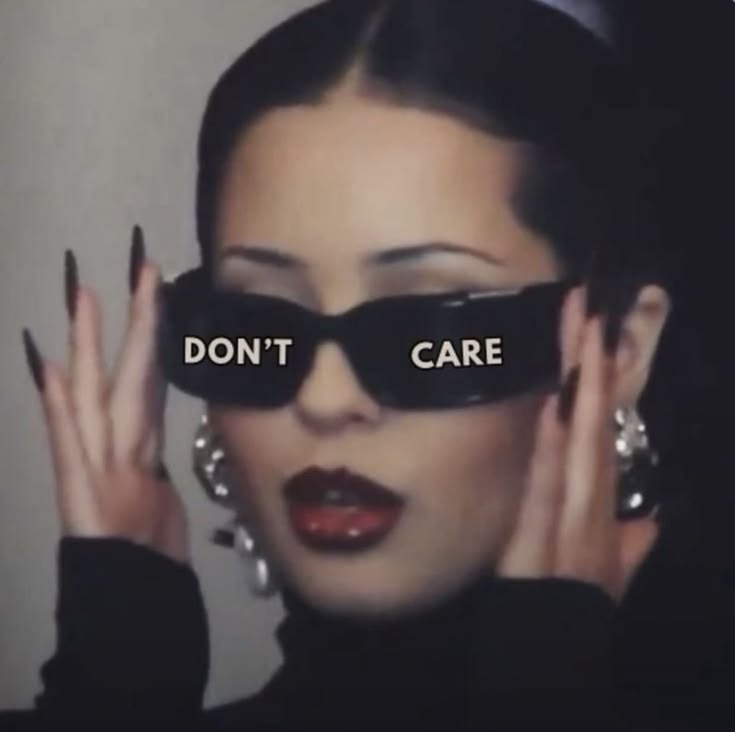
So the question worth sitting with isn't whether you seem unbothered. It's whether you’d still be unbothered if no one was watching you be unbothered.
I know my answer. Five years behind a bar, unbothered was literally the job description. You learn fast that nobody tips the girl who looks rattled. I got so good at it I genuinely couldn’t tell you where the performance ended and my personality came through.
I still catch myself playing the bartender role sometimes—three kids under five, deadline on my novel, and someone asks how everything’s going. Fine blurts out before I’ve even looked around. Seems like old habits don’t retire….
About the Creator
tatiana vitas
observational, a little sarcastic, mostly interested in why people lie to themselves.
tatianavitas.com
[email protected]
Enjoyed the story? Support the Creator.
Subscribe for free to receive all their stories in your feed. You could also become a paid subscriber, letting them know you appreciate their work.
Comments
There are no comments for this story
Be the first to respond and start the conversation.