social media
Social media dramatically impacts our offline lives and mental well-being; examine its benefits, risks and controversies through scientific studies, real-life anecdotes and more.
Keeping the Mind Young: Science-Backed Ways to Slow Brain Ageing
As we age, we often expect wrinkles, weaker bones, or slower movement — but what truly worries most people is the ageing of the mind. Forgetting names, losing focus, or feeling mentally fatigued can be frightening signs that our brain is changing. Yet, science is uncovering hopeful news: the brain is not a machine doomed to wear out. It’s a living, adaptable organ capable of renewal, repair, and growth at any age — if we give it the right conditions.
By Esther Sunabout a year ago in Psyche
The Truth About Shadow
When I was really small and the world was really big and scary, I had an imaginary friend who I had become very reliant on. His name was Shadow and it was kind of a play on Peter Pan's Shadow, and how Peter always had to sew his Shadow back onto the soles of his feet. As a child, surrounded by other children who also loved Peter Pan, the pre-woke generation that didn't see the Racism depicted in it, I felt safe enough to bring my Shadow everywhere.
By Parsley Rose about a year ago in Psyche
Showing Up
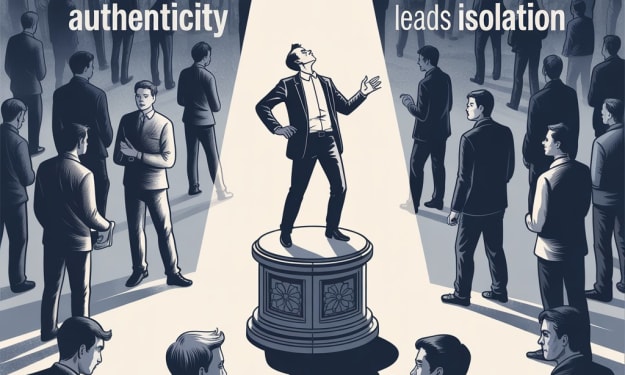
Human beings are social creatures, and much of our identity is built on how others perceive us. Most of us want to be respected, admired, and included. Yet for some people, this need turns into a compulsion. They develop the habit of “showing up”— inserting themselves into situations not to contribute meaningfully, but to be noticed, admired, or seen as superior. To observers, this behavior often comes across as arrogant or ignorant. But psychology shows that behind such attention-seeking displays lie complex motivations, insecurities, and social dynamics.
By Life Hopesabout a year ago in Psyche
The Psychology of Doom scrolling: Why We Can’t Stop Consuming Bad News
Introduction You pick up your phone to check the news “just for a minute.” Maybe you want a quick update on the economy, the weather, or what’s trending online. But an hour later, you’re still there—scrolling through alarming headlines, depressing statistics, and endless negative stories. Your coffee is cold, your to-do list is untouched, and your mood has taken a nosedive.
By arsalan ahmadabout a year ago in Psyche
The Loneliness Epidemic in a Hyperconnected World
On a quiet Friday night, I found myself scrolling through my phone. Notifications pinged, photos loaded, videos played, and conversations unfolded across different apps. Hundreds of people were sharing moments of joy—vacations, birthday parties, or even just a perfectly brewed cup of coffee. My feed was alive, colorful, and noisy. But I wasn’t. Despite being “connected” to more people than any generation before me, I felt profoundly alone. And I’m not the only one. Across the world, people are experiencing what experts now call the loneliness epidemic—a silent crisis that thrives in the very era of hyperconnection. The Paradox of Digital Connection We live in an age where it takes seconds to message a friend across the globe, watch strangers broadcast their daily routines, or join an online community around any interest imaginable. Yet connection isn’t the same as closeness. The likes, emojis, and comments we trade back and forth feel good in the moment, but they rarely leave us feeling seen. It’s like eating fast food: easy, quick, and temporarily satisfying, but lacking the nourishment we actually need. This is the paradox—we are constantly connected, but often emotionally disconnected. Why Loneliness Is Growing So why, in a world bursting with technology, is loneliness spreading? 1. Shallow Interactions Social media encourages snapshots, not stories. We show the highlights of our lives but hide the messy, honest parts. This creates the illusion of connection, but not its reality. 2. Changing Communities Decades ago, people often lived in close-knit towns or neighborhoods. Families stayed closer together, and social bonds were woven into daily life. Today, mobility, remote work, and shifting lifestyles often separate us from those roots. 3. Constant Distraction Phones are designed to steal attention. Notifications, pings, and endless feeds keep us busy, but not fulfilled. They take us away from real conversations, even with people sitting right beside us. 4. The Stigma of Loneliness Admitting you’re lonely feels like admitting weakness. In a culture that celebrates being popular, busy, or independent, many people keep quiet about their isolation. This silence only deepens the problem. The Hidden Costs of Loneliness Loneliness isn’t just about emotions—it carries serious consequences. Research shows that chronic loneliness can be as harmful as smoking 15 cigarettes a day. It increases risks of heart disease, anxiety, depression, and even early death. Unlike other health challenges, loneliness is invisible. Someone might look happy online, post regularly, and chat with friends, while secretly feeling empty inside. A crowded digital life doesn’t always mean a connected emotional life. Paths Toward Real Connection The solution isn’t to throw away our phones or abandon the internet. Technology itself isn’t the enemy—how we use it is. What matters is creating intentional, meaningful connections both online and offline. Here are a few practical ways to do that: Seek Micro-Moments: Small, daily exchanges—a smile with a neighbor, a quick chat with a cashier—add up to real warmth. Nurture Quality Relationships: Instead of chasing more followers, invest energy into a few close friendships. One deep conversation beats fifty surface-level interactions. Practice Digital Boundaries: Before opening an app, ask: Am I connecting, or just consuming? Mindful use of technology shifts how it affects us. Join Communities of Choice: Book clubs, volunteering, or sports groups create shared purpose and belonging—things that go deeper than likes and comments. Be Fully Present: Put the phone away during meals or coffee with a friend. Presence is the strongest form of connection. A Quiet Movement Toward Connection The good news? Across the world, people are beginning to push back against digital emptiness. Phone-free dinners are becoming trendy. Local community gardens are bringing neighbors together. Even some companies now encourage “deep work” breaks to reduce screen fatigue and increase face-to-face collaboration. Humans are wired for connection. Even in a noisy, digital world, we instinctively seek real bonds. And when we make space for them, we find that the loneliness starts to loosen its grip. Final Thought The next time you’re lost in an endless scroll, pause. Ask yourself: Who could I call? Who could I visit? Who could I truly share a moment with? Because in the end, it isn’t the number of connections that matters—it’s the depth of them. We may live in a hyperconnected world, but real connection still lives in the simplest of places: a shared laugh, a quiet walk, a listening ear. And that’s something no app can replace.
By LUNA EDITHabout a year ago in Psyche
The Shattered Mirror
The Shattered Mirror It was 2:37 a.m. when Ethan woke up again. The same sound—sharp, metallic, like glass cracking in slow motion—echoed through his apartment. He sat upright, staring at the tall mirror across the room. His reflection was there, of course, but something felt wrong. The face staring back looked heavier, darker, as if carrying emotions that Ethan himself didn’t feel.
By Article Master about a year ago in Psyche
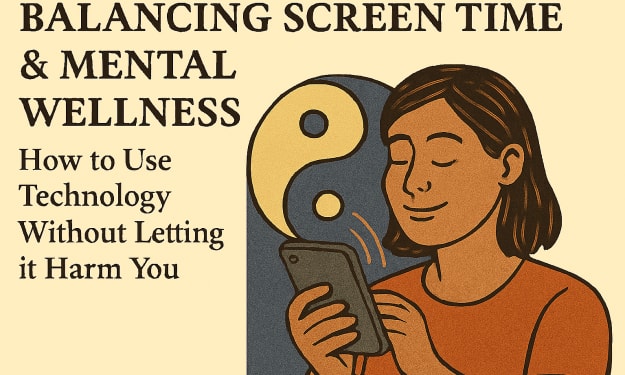
Balancing Screen Time & Mental Wellness: How to Use Technology Without Letting It Harm You. AI-Generated.
Screens have become an inseparable part of daily life. From checking work emails on your laptop to scrolling through social media on your phone, the average person spends several hours a day in front of a screen. While technology provides convenience, entertainment, and connection, too much of it can take a toll on mental health. Prolonged screen time has been linked to stress, anxiety, poor sleep, and feelings of isolation.
By JP Psychiatryabout a year ago in Psyche
Mental Health in the Digital Age
In today’s world, technology is everywhere. From the moment we wake up to the time we go to bed, our lives are connected to smartphones, laptops, and social media. The digital world has given us many benefits, such as quick communication, access to knowledge, and new ways to work and study. But at the same time, it has also created new challenges for our mental health.
By Malik Rohail Khanabout a year ago in Psyche
A Message to The Villain: Flood the world with light. Content Warning.
I wish I could put the world into a snow globe. Water and glycerin so I could make it all happen ploddingly. All the evil so I could rub it away, it’ll be my genie. I would wish for the thought of killing to turn into legends, myths and tales. Events would pause in words, and would only go on when you turn the page.
By Caitlin Charltonabout a year ago in Psyche