social media
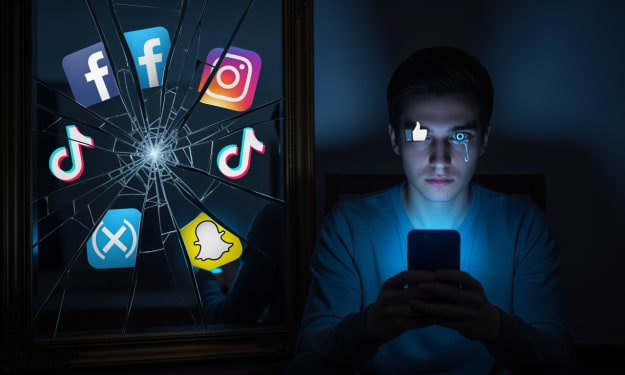
Social media dramatically impacts our offline lives and mental well-being; examine its benefits, risks and controversies through scientific studies, real-life anecdotes and more.
Media vs. Memory
Social Media vs. Memory: The Archive That Owns Us By Hasnain Shah I don’t trust my memory anymore. I used to believe it was a room I could enter freely, open drawers, pull out photographs, smell the dust, and leave when I was ready. Now, when I want to remember a summer night or a birthday, I no longer walk into that room. Instead, I open my phone.
By Hasnain Shahabout a year ago in Psyche
What If Collapse Was the Moment to Come Back to Yourself?
We are living in strange times. Times that shake us, that unsettle and disturb. Every newsfeed feels like a prelude to disaster: rising geopolitical tensions, economic instability, the threat of war, urban violence, the resurgence of extremism, environmental disasters, inflation, and a growing sense that the future is slipping out of reach.
By Bubble Chill Media about a year ago in Psyche
The First Impression: Why We Judge in 7 Seconds. AI-Generated.
Introduction Have you ever met someone and within seconds decided whether you liked them or not? It happens so quickly that we often do not even realize it. Science shows that humans form strong opinions about others in as little as seven seconds. This process is called a first impression and it can have a lasting impact on how we view people in the future. First impressions are powerful because they are based on instinct, appearance, and subtle signals. Once they are formed, they are very hard to change. Understanding how they work gives us an advantage in building trust and better relationships. Why First Impressions Matter In everyday life we meet strangers, attend interviews, or go to social events. Each time we walk into a room, people instantly begin forming an opinion about us. These quick judgments can decide whether we get hired, make a friend, or even find love. First impressions matter because the human brain is built to make fast decisions for survival. In ancient times, our ancestors had to quickly decide whether a stranger was safe or dangerous. Even though the world has changed, our brains still use the same shortcut thinking. How Fast Are First Impressions Research shows that people form opinions within seven seconds of meeting someone. Some studies suggest it can even happen in less than one second. Within this short time, the brain analyzes physical appearance, facial expressions, tone of voice, and body language. These snap judgments are not always accurate but they are very sticky. Once our mind decides something about a person, we tend to see everything they do through that filter. If we think someone looks friendly, we are more likely to notice behaviors that confirm that belief. The Role of Appearance Appearance is one of the strongest factors in first impressions. People often judge confidence, trustworthiness, and social status based on clothing, grooming, and posture. For example, someone dressed neatly with good posture is often seen as professional and capable. This does not mean appearance is more important than character. It means that how we present ourselves influences how others treat us before they even know us. That is why people often say you should dress for the role you want, not just the one you have. Body Language and Facial Expressions:
By Muhammad Hussainabout a year ago in Psyche
I Was the Strong One Until It Broke Me
For as long as I can remember, people have seen me as “the strong one.” The dependable friend. The sibling who always listens. The co-worker who steps up when things fall apart. I carried that title like a badge of honor, proud that others trusted me, proud that I could be the one who held everyone together.
By Nadeem Shah about a year ago in Psyche
Controversial Ads: The Fine Line Between Provocative & Tone-Deaf
Marketing has always been about finding the sharp edge between generating explosive sales growth and being caught on the outside of culture. From the earliest newspaper ads to the golden age of television commercials, brands have looked for ways to disrupt the ordinary. Some have done it with humor, others with spectacle, and some by stepping boldly into uncomfortable territory using controversial ads.
By Awakened Filmsabout a year ago in Psyche
I Didn’t Know These Common Habits Were Signs of Mental Health Issues
“I thought I was just being careful, just being tired, just being introverted. But it turns out the little habits I brushed off as harmless were quiet signals my mind had been sending all along.”
By Zakir Ullahabout a year ago in Psyche
The Science of Loneliness: Why We Feel Alone Even in a Crowd. AI-Generated.
Introduction You’ve probably experienced this before: standing in the middle of a party, surrounded by laughter, conversations, and music yet feeling an emptiness inside, as if you don’t belong. This is loneliness in its rawest form. It isn’t just about being physically alone. It’s a psychological state that can strike even when we are surrounded by people. Loneliness is often dismissed as a passing emotion, but science tells us otherwise. It has real effects on our brain, body, and overall well-being. In fact, researchers warn that chronic loneliness can be as harmful to our health as smoking 15 cigarettes a day. Loneliness vs. Being Alone: First, it’s important to understand the difference between being alone and being lonely. Being alone is a physical state you are by yourself. Some people enjoy solitude and even find it refreshing. Being lonely is an emotional state you feel disconnected, unseen, or misunderstood, even in the presence of others. This means loneliness is not about how many people are around you, but about the quality of your social connections. Why We Feel Lonely in a Crowd: So, why do we sometimes feel lonelier in a crowd than when we’re sitting alone in our room? The answer lies in social connection. Humans crave meaningful bonds. When those bonds are missing, being surrounded by strangers or even acquaintances can highlight the emptiness inside. It’s like being thirsty in the middle of the ocean: water is everywhere, but none of it can quench your thirst. Psychologists explain that this disconnect often comes from: Lack of emotional intimacy Relationships exist, but they don’t feel deep or supportive. Fear of rejection We hesitate to open up, so connections remain surface-level. Comparison culture Social media amplifies the feeling that everyone else is more connected, leaving us feeling isolated. The Brain on Loneliness: Loneliness is not just “in your head.” Neuroscientists have found that it actually changes how the brain functions. The brain goes into alert mode, making lonely people more sensitive to social threats and rejection. Stress hormones like cortisol rise, which weakens the immune system. Sleep patterns get disrupted, leading to fatigue and more negative emotions. In short, loneliness becomes a cycle: the more isolated we feel, the more our brain pushes us toward fear and withdrawal, which then deepens loneliness even further. The Physical Cost of Loneliness: Loneliness is not only an emotional pain it’s also a physical health risk. Research shows that chronic loneliness is linked to: Higher risk of heart disease Weaker immune system Increased inflammation in the body Faster cognitive decline in older adults This is why many experts now call loneliness a public health epidemic of the modern world. Technology: Connecting or Isolating Us? In theory, we live in the most connected era of human history. With a few taps on a screen, we can talk to anyone across the globe. But ironically, social media and digital communication often make loneliness worse. Instead of building deeper bonds, we spend hours scrolling through highlight reels of other people’s lives, which fuels envy and a sense of disconnection. Studies show that the more time people spend on social media, the lonelier they often feel. However, technology is not the villain itself it depends on how we use it. Video calls, online communities, and supportive chats can reduce loneliness when used meaningfully. The danger lies in shallow, passive consumption. Coping with Loneliness: Science-Backed Strategies The good news is that loneliness is not permanent. With conscious effort, it can be reduced and even turned into a source of growth. Here are some science-backed strategies: 1. Prioritize quality over quantity A few deep, meaningful relationships are far more powerful than a hundred casual ones. 2. Practice vulnerability Opening up honestly helps others connect with the real you. 3. Engage in group activities Shared goals, such as volunteering, clubs, or sports, create a natural bond. 4. Limit social media comparison Use it actively to connect, not passively to compare. 5. Spend time in nature Surprisingly, connecting with nature reduces feelings of isolation. 6. Seek professional help Therapy or counseling can provide tools to break the cycle of loneliness. Turning Loneliness into Growth: Interestingly, loneliness is not always negative. Psychologists believe it serves as an important signal, much like hunger or thirst, reminding us that we need connection. If we listen to it, loneliness can push us toward deeper self-reflection, creativity, and stronger relationships. Some of history’s greatest thinkers, writers, and artists turned their solitude into masterpieces. The key difference is choosing intentional solitude instead of suffering from unwanted loneliness. Conclusion; Loneliness is not just a personal struggle it’s a universal human experience. Feeling lonely in a crowd reminds us that human connection is not about numbers but about depth and authenticity. Science makes it clear: loneliness can harm our minds and bodies, but it can also be a catalyst for change. By seeking meaningful relationships, using technology wisely, and embracing moments of healthy solitude, we can transform loneliness into an opportunity for growth and self-discovery. Because in the end, true connection is not about how many people surround us it’s about how many truly understand us.
By Muhammad Hussainabout a year ago in Psyche
Attachment Styles and Coping: Insights from Ukrainian Adolescent Research (2024)
Why This Research Matters Attachment theory and resilience are well-known concepts in psychology. Yet when it comes to Ukrainian adolescents - especially in the context of war and displacement - empirical data is still scarce. My 2024 research project revealed a crucial nuance: attachment styles do not directly determine resilience levels, but they strongly shape the coping strategies adolescents use under stress.
By Daria Barabashabout a year ago in Psyche
Addicted by Design
Every day, millions of us tap open our favorite apps—liking photos, scrolling through memes, sharing stories. It feels harmless, even fun. But behind the endless feeds and filters lies a hidden truth: these platforms aren’t designed to empower us. They’re designed to control us.
By Shehzad Anjumabout a year ago in Psyche
Hobbies, Skills, and the Freedom from Social Media
Why Hobbies Matter for Character Building Having a hobby isn’t just about filling time — it’s about shaping your life, and who you really are. When you find something you truly enjoy, it reduces your dependence on others for entertainment or for certain tasks. Investing in hobbies can keep you from following the crowd out of boredom and help you to develop self-respect.
By Out of The Draftsabout a year ago in Psyche