
Are You a Farmer Too?
Food for thought.


Playing Fortnite everyday to complete the 3 daily goals feels more important to me than anything else. Getting those 45,000 points, or else they will disappear if I don't claim them. What are those points used for? What are their significance? I have been playing for months, and I don't know. The only thing I do know is that I want more "XP". I must hoard.
And you, too, are most likely farming and hoarding. Posting on social media, waiting a few hours, and then going back to check your likes on Facebook, read your replies on Twitter, see the view count of your Instagram and TikTok videos. What you are going to do when you accumulate those stats you really don't know, but you want more of them, right?

Winter, a time of scarcity. If it was summer all year, we wouldn't need to do farming, we could just pick berries off of trees.
In ancient times, the impending dread of the coming winter (or dry season in parts of the world) would cause our brains to freak out and stack up supplies. The live for the moment types, who didn't have that tendency, didn't survive the winter. Organizing and counting vast inventories of essentials was essential to last through the more than 100 days of winter. For our ancestors, with few guarantees that things wouldn't spoil, be stolen, or otherwise be lost, they could almost never accumulate enough to absolutely ensure they would make it to spring. So they kept hoarding.
Tech companies have hacked our instinct to hoard. Instead of stacking up firewood and barrels of grain, we are stack up likes, faves, view counts, or Fortnite XP points. Saving up for a future virutal tech winter which will never happen.
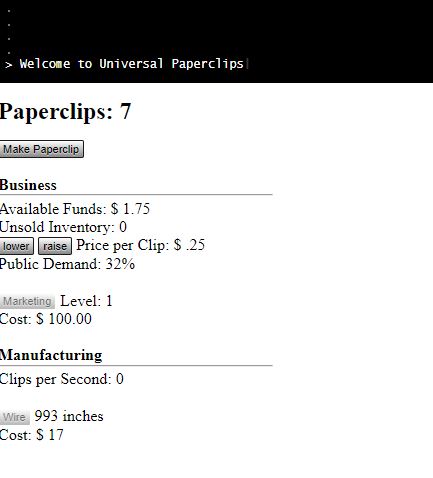
If you don't believe in my hypothesis about our mania to endlessly count things and organize inventory, there's quite an addictive game where you do nothing except click a button to make paperclips. I urge you to try it. (if you spend hundreds of hours clicking buttons, please don't blame me)
The world's simplest game: https://www.decisionproblem.com/paperclips/

Frank Lantz is the creator of the paperclip game. A professor at NYU, he researched the fundamental instincts of our desire to accumulate "points", and refined that down to the simplest possible game. Text-only with no graphics or sound effects, it still has all the potential to hold our attention in the same way as a commercial game with all brightly colored graphics and bells and whistles.
It might not be a surprise that Frank earlier worked for the company that made the game that inspired the word "farming".
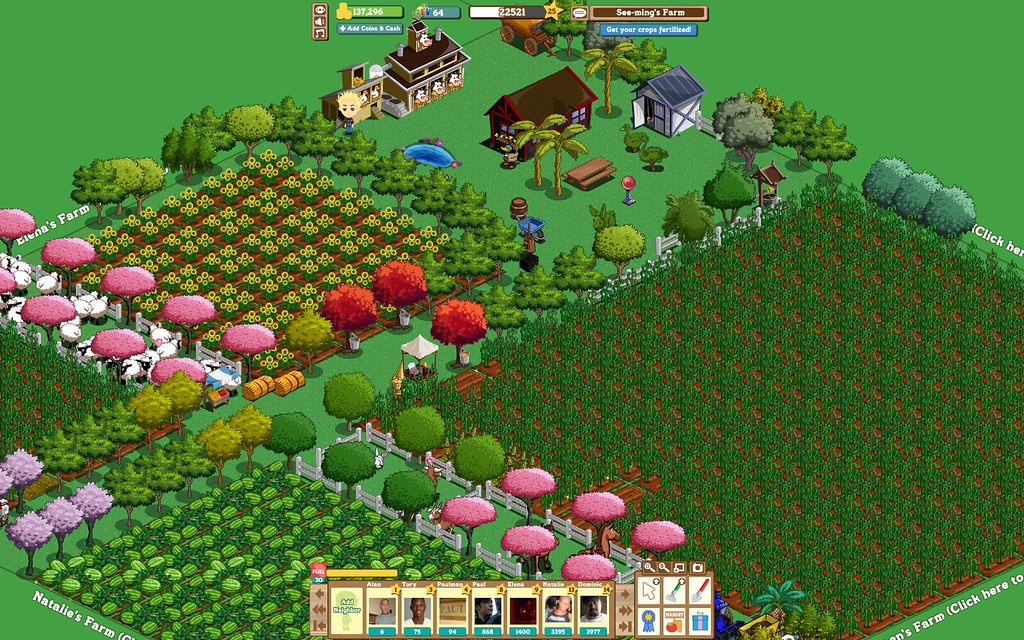
Released in 2009, Farmville was the first breakout "farming" game. Each day you would log in, plant crops, water them, and watch them grow. That was about all.
In a gaming market full of complex immersive games such as Call of Duty, Assassin's Creed, and Grand Theft Auto, Farmville became a surprise internet sensation. It had over 30 million active users by the end of the year.
Look back at yesterday. If you've spent considerable time checking your mobile phone, logging into an app or a game to see how many "points" you have, you are probably a farmer too.
**
Do you spend time checking the number of likes on social media, or points on an app or casual game... and if so what is your guilty pleasure ? Please leave a note in the comments.
**
What a coincidence (and I'm not being ironic!), yesterday, Frank Lantz published his first book, about the...
The Beauty of Games
Frank Lantz
How games create beauty and meaning, and how we can use them to explore the aesthetics of thought.
Are games art? This question is a dominant mode of thinking about games and play in the twenty-first century, but it is fundamentally the wrong question. Instead, Frank Lantz proposes in his provocative new book, The Beauty of Games , that we think about games and how they create meaning through the lens of the aesthetic. We should think of games, he writes, the same way we think about literature, theater, or music—as a form that ranges from deep and profound to easy and disposable, and everything in between. Games are the aesthetic form of interactive systems, a set of possibilities connected by rules of cause and effect.
In this book, Lantz analyzes games from chess to poker to tennis to understand how games create beauty and evoke a deeper meaning. He suggests that we think of games not only as hyper-modern objects but also as forms within the ancient context of artistic production, encompassing all of the nebulous and ephemeral qualities of the aesthetic experience.
About the Creator
Scott Christenson🌴
Born and raised in Milwaukee WI, living in Hong Kong. Hoping to share some of my experiences w short story & non-fiction writing.
Enjoyed the story? Support the Creator.
Subscribe for free to receive all their stories in your feed. You could also become a paid subscriber, letting them know you appreciate their work.
Comments
There are no comments for this story
Be the first to respond and start the conversation.