
The Four Agreements
Here are four agreements that lead to a life of freedom and peace.

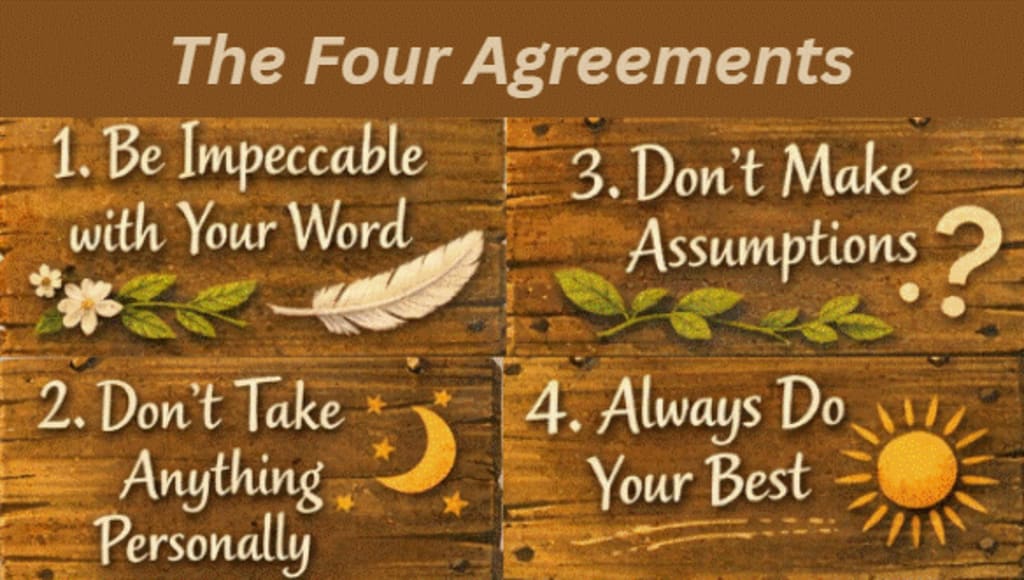
In a world filled with stress, expectations, and constant noise, finding peace can feel overwhelming. The peace we seek can come from four quiet promises given in the book The Four Agreements by Don Miguel Ruiz. It is short enough to read in an afternoon.
The book offers a powerful code of conduct that can rapidly transform lives into a new experience of freedom, true happiness, and love. Ruiz draws from the ancient Toltec wisdom to offer four practices that help us live with more clarity, compassion, and freedom. Instead of complicated rules, he gives clear principles to foster personal freedom and happiness.
The first agreement is to speak with honesty, integrity, and kindness. It encourages us to treat our words like seeds because whatever we plant will grow. Whatever we speak about ourselves or others grows into something. Being “impeccable” doesn’t mean being perfect. It means choosing words that build, heal, and align with who you want to be.
Words are powerful. They can build someone up or tear them down—including ourselves. Being “impeccable” means using our words with care.
Simple way to practice:
- Speak truthfully.
- Avoid gossip.
- Refrain from negative self-talk.
- Say what you mean clearly.
- Avoid using words to hurt others or yourself.

The second agreement is to understand that others' actions are a reflection of their own reality. This agreement can be life-changing. Ruiz teaches that what others say and do is a reflection of their own thoughts, feelings, fears, and experiences—not ours.
When we stop taking things personally, we stop carrying burdens that were never ours to hold.
When someone criticizes you or acts negatively, it usually has more to do with them than with you.
Simple way to practice:
- Don’t let others’ opinions define your worth.
- Pause before reacting emotionally.
- Remind yourself: “This is not about me.”
- When you stop taking things personally, you protect your peace.
Assumptions are the stories we tell ourselves without checking the facts. They create misunderstandings, hurt feelings, and unnecessary conflict.
We often assume we know what others are thinking or why something happened. This leads to misunderstandings, stress, and unnecessary conflict. Most of the time, the truth is far simpler—and far kinder—than the story we imagined.
Instead of making assumptions, we should communicate clearly to avoid misunderstandings. Instead of assuming, seek clarity.
Simple way to practice:
- Ask questions when unsure.
- Communicate openly.
- Avoid jumping to conclusions.
Clear communication saves relationships and reduces anxiety.

This last agreement is about giving effort, not being perfect. When you do your best, you avoid regret and self-judgment. Your best will vary, but strive to do your best in every situation. It doesn't matter if our “best” is not the same every day. Ruiz reminds us that doing our best means showing up with what we have in that moment.
When we honor our best, we release guilt, shame, and self‑judgment. We also build a life rooted in steady, compassionate effort.
Simple way to practice:
Focus on effort, not perfection.
Accept that your energy will vary.
Be kind to yourself when things don’t go as planned.
Doing your best is enough.
The beauty of these four agreements is their simplicity. They are easy to understand but powerful when practiced consistently. By applying those principles in your daily life, you can reduce stress, improve relationships, and feel more at peace with yourself.
Change doesn’t happen overnight. Small, consistent steps can lead to a big transformation. Start with just one agreement today, and build from there.
Why The Four Agreements Matter
Those four agreements help us protect our peace, strengthen our relationships, speak with intention, and let go of unnecessary emotional weight. They are practices that lead to a healthier way of living.
About the Creator
Margaret Minnicks
Margaret Minnicks has a bachelor's degree in English. She is an ordained minister with two master's degrees in theology and Christian education. Thanks for reading and sending TIPS her way.
Enjoyed the story? Support the Creator.
Subscribe for free to receive all their stories in your feed. You could also become a paid subscriber, letting them know you appreciate their work.
Comments
There are no comments for this story
Be the first to respond and start the conversation.