
The Hum You Stopped Hearing
What if the exhaustion you call adulthood is just stress you’ve learned to live inside?

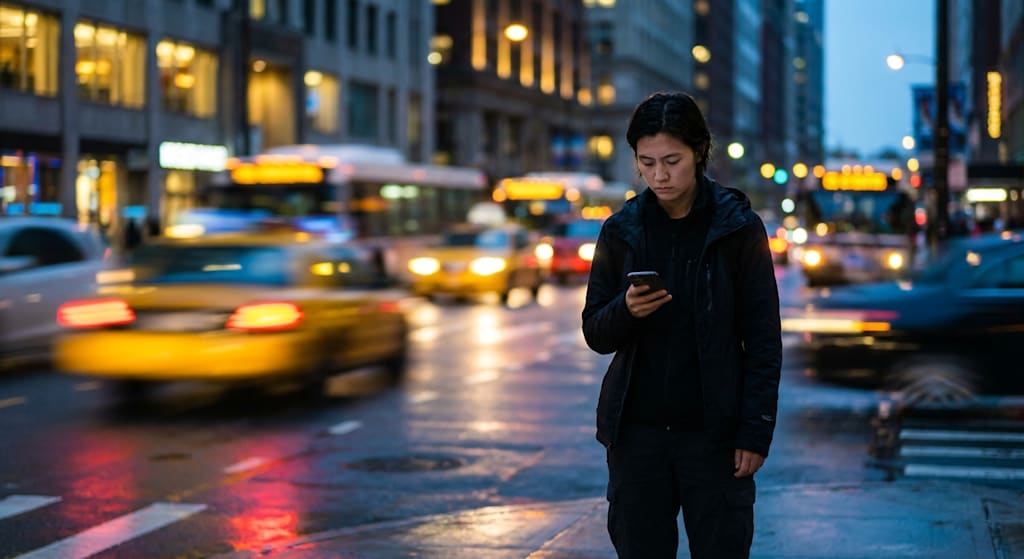
It’s 7:40 a.m. The coffee is still too hot to drink, and you’re already three tabs deep: the electric bill, the banking app, a headline you wish you hadn’t opened.
Nothing is technically wrong. The bill gets paid. The headline scrolls away. And yet, by the time the mug is cool enough to hold, you feel like you’ve worked half a shift.
You don’t call this stress. You call it Tuesday.
Nobody tells you when exhaustion is supposed to become permanent. It just does, somewhere between the first rent check and the third “unprecedented” year in a row. We stop saying I’m overwhelmed and start saying that’s adulting, the way people who live near train tracks stop hearing the trains.
We may not be alone in this. In its Stress in America 2026 survey, the American Psychological Association found that 77 percent of U.S. adults named the cost of living (rent, groceries, childcare, getting to work) as a significant source of stress. Nothing else on the list was cited more often.
But the number isn’t the most unsettling part. The APA’s own reading of its data is: many adults appear to be growing accustomed to stress, treating it less as an interruption to life and more as part of the baseline.
Which raises an awkward question. If stress is the baseline, what are we measuring against?
People are remarkably good at getting used to things. That talent carries us through hard seasons. But it has a cost that never shows up on a bank statement. When pressure becomes the floor, we quietly lower the ceiling to match.
The shrinking rarely looks dramatic. Nobody announces, I am giving up on joy. It sounds more like: Let’s do dinner next month. Maybe after the holidays. I’ll start that thing when work calms down.
The book club you skip once, then twice, then forget you belonged to. The friend you’ll call back eventually, when you have something resembling energy.
In the same survey, 47 percent of adults said they had pulled back from at least one form of social participation over the past year, and they attributed it to stress, uncertainty, or feeling overwhelmed. Seventeen percent said they had stopped planning for the future.
Those are people’s own explanations, not proof of cause; a survey can’t trace that line with certainty. Still, it’s hard to read those numbers without recognizing someone. Possibly yourself.
Most of us didn’t stop wanting connection or ambition. We started budgeting for them like luxuries, something to afford later, once things settle. And uncertainty, it turns out, is in no hurry to settle.
This is where the distinction matters. Being used to stress is not the same as being well. One is a skill. The other is a state.
You can get very good at carrying something heavy and still be carrying it. From the outside, and sometimes from the inside, competent endurance looks almost exactly like peace.
Part of what makes chronic stress so hard to see is that it doesn’t feel like an event. It feels like weather. You don’t wake up thinking, I’m anxious about the future. You wake up thinking, I’m tired, and then, of course I’m tired, and the second thought closes the case before the first can be examined.
Think of the refrigerator. You don’t hear its hum all day. Then, late one night, it switches off, and the silence is so sudden that the whole kitchen seems to exhale. Only then do you realize how loud it had been all along.
Most of us haven’t heard that silence in a long time. Which may be why, when it finally comes, it doesn’t feel like peace.
It feels like something’s wrong.
Source: American Psychological Association. (2026, October 22). Stress in America™ 2026: The stress of uncertainty. Survey conducted online by The Harris Poll on behalf of APA among 3,132 U.S. adults, July 29 to August 24, 2026. https://www.apa.org/pubs/reports/stress-in-america/2026
About the Creator
Khali Sollis
Khali Sollis is a writer and independent researcher exploring the science of the human mind and behavior. Her work examines questions at the intersection of neuroscience, psychology, cognition, mental health, and everyday human experience.
Enjoyed the story? Support the Creator.
Subscribe for free to receive all their stories in your feed.
Comments
There are no comments for this story
Be the first to respond and start the conversation.