wellness
The state of being in great health, and continually striving to attain all of your goals.
Truth Is Not Obligated to Conform to Your Comfort
Truth does not exist to regulate emotions. It does not exist to protect identity. It does not exist to maintain a person’s sense of safety. Truth describes reality as it is, whether that reality is welcomed, hated, resisted, misunderstood, or completely unprepared for. That is not cruelty. That is simply the nature of truth.
By Peter Thwing - Host of the FST Podcast6 months ago in Longevity
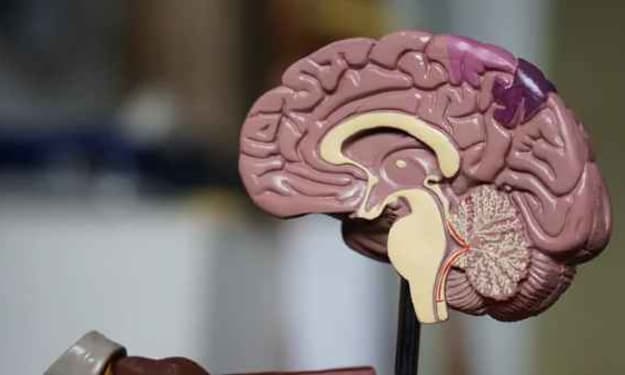
The Digital Burnout: Why Your Brain Is Losing the War Against Your Smartphone — and How to Actually Fight Back . AI-Generated.
The Digital Burnout: Why Your Brain Is Losing the War Against Your Smartphone — and How to Actually Fight Back It's 2 AM. Your neck is at an angle that would concern a chiropractor. Your thumb is moving on its own — scrolling, scrolling, scrolling — through content you won't remember in the morning. You're not even enjoying it anymore. You're just... doing it. Like breathing. Like a reflex nobody taught you but somehow you learned anyway. We've all been there. Most of us are there right now. Your Phone Isn't a Device. It's a Slot Machine. Let's be honest with ourselves for a second. We didn't get addicted to our phones because we lack willpower. We got addicted because some of the smartest engineers and behavioral psychologists on the planet spent years making sure we would. Every notification ping, every pull-to-refresh, every infinite scroll — designed. Deliberately. To trigger the same dopamine loop as a casino slot machine. The kicker? It works on everyone. CEOs. Therapists. People who know exactly what's happening to them and still can't stop. Because this isn't about discipline. It's about neuroscience being used against you at scale. Think about it like junk food. You know a bag of chips isn't good for you. You know it's engineered — the salt, the crunch, the exact amount of flavor that keeps you reaching in for one more. Your phone is the same thing. Except the bag never empties. And the factory is watching how fast you're eating so it can make the next chip even harder to put down. What It's Actually Doing to Your Head (It's Not Pretty) Here's the thing nobody really talks about in the "just put your phone down" conversation: chronic digital overstimulation isn't just tiring. It's restructuring how your brain operates. Shortened attention span. Disrupted sleep architecture. A baseline anxiety that hums underneath everything — that low-grade feeling that you might be missing something, even when nothing important is happening. Researchers have a name for it: Fear of Missing Out. But honestly, FOMO undersells it. This is closer to a nervous system that's been trained to expect constant input and starts panicking the moment things go quiet. Is it just me, or does sitting in silence feel genuinely uncomfortable now? Not peaceful. Uncomfortable. Like something's wrong. That's not a personality trait. That's a conditioned response. And it crept up on most of us without a single moment of conscious consent. The Leaky Faucet You've Been Ignoring Here's a metaphor that might land: imagine your mental energy is water in a tank. A leaky faucet drips slowly — you barely notice it. But run that leak for months and suddenly you're exhausted by noon, irritable for no clear reason, unable to focus on anything for longer than four minutes. That's what constant digital interruption does. Each notification, each quick check, each "I'll just look at this one thing" — drip, drip, drip. Anyway, the good news is that leaky faucets can be fixed. But you have to actually decide to fix them, which most people don't do because the leak is so normalized it doesn't feel like a problem anymore. So Here's What I Want You to Try — Genuinely Not a 30-day digital detox. Not throwing your phone in a lake. Real, sustainable things. Start with your mornings. Don't touch your phone for the first 30 minutes after you wake up. That's it. Just 30 minutes where your brain gets to boot up on its own terms, without being immediately hijacked by someone else's agenda. It'll feel strange at first. Do it anyway. Turn off every notification that doesn't require an immediate human response. Every single one. Your phone should be calling for your attention when you decide, not whenever an app feels lonely. And once a week — one hour, phone in another room, doing literally anything else — reading, walking, cooking, staring at a wall. Let your brain remember what boredom feels like. Boredom is not the enemy. Boredom is where creativity lives. Your attention is the most valuable thing you own. It's worth protecting like it.
By Ahmed Tolba6 months ago in Longevity
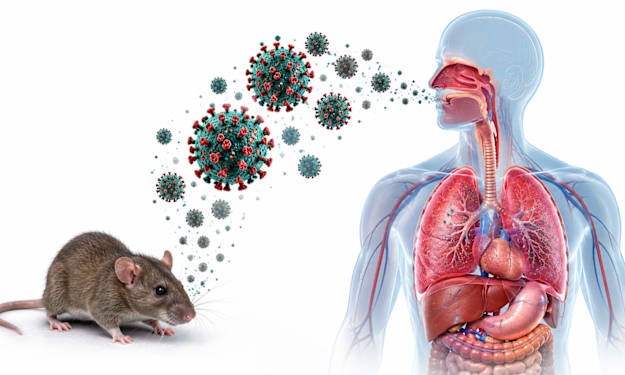
Is Hantavirus the Next Global Health Crisis? What You Need to Know
Understanding Hantavirus Hantavirus, a rare but potentially deadly pathogen, continues to draw the attention of health authorities worldwide for its ability to cause severe illness in humans. While infections remain uncommon, the virus poses a persistent threat in environments where humans and rodents intersect. Recent discussions have extended even to cruise ships, raising new questions about how emerging zoonotic diseases could exploit modern travel networks.
By Lynn Myers6 months ago in Longevity
100 Days Under the Sea: The Engineer Who Says He Gained 10 Extra Years
The 100-Day Underwater Experiment In 2023, biomedical engineer and retired U.S. Navy officer Joseph Dituri carried out one of the strangest human endurance experiments in recent history by spending 100 consecutive days living underwater inside a submerged habitat near Key Largo. The experiment, known as Project Neptune 100, took place inside the Jules’ Undersea Lodge, a small underwater research habitat located 22 feet beneath the ocean’s surface. Dituri’s mission officially broke the world record for the longest continuous time living underwater without depressurization, surpassing the previous record of 73 days set in 2014. But for Dituri, the record itself was only secondary. His real goal was to study how prolonged exposure to increased atmospheric pressure could affect human aging, recovery, sleep, inflammation, and overall biological health.
By History Seeker6 months ago in Longevity
When Reward Replaces Meaning
There is a recognizable pattern that appears across many modern activities: effort is rewarded quickly, feedback is constant, and progress is always visible. Points accumulate, levels advance, streaks are maintained, dashboards update, and notifications confirm that something is happening. The person receives a steady stream of evidence that effort has produced movement.
By Peter Thwing - Host of the FST Podcast6 months ago in Longevity
Internal Change Without Embodiment
There is a point at which internal growth becomes visible only by its absence in the outer world. A person may speak with increasing clarity, articulate values with precision, and analyze patterns with depth, yet still live in ways that remain largely unchanged. This discrepancy often produces quiet confusion because something has shifted internally, but the life surrounding that shift appears almost identical.
By Peter Thwing - Host of the FST Podcast6 months ago in Longevity
Being Good at Something the World Ignores
There is a particular kind of loneliness that comes from competence without recognition. It emerges when someone discovers that they are genuinely good at something that matters deeply to them, only to realize that the surrounding culture has little use for it. The skill is real. The effort is real. The contribution is real. Yet it exists largely outside the systems that reward, amplify, or even notice such things.
By Peter Thwing - Host of the FST Podcast6 months ago in Longevity
Why the Unseen Is More Real Than the Seen
Most people instinctively treat what they can see as what is most real. Events, outcomes, behavior, and results feel concrete because they can be measured, witnessed, recorded, and verified. What happens in front of us appears more solid than what formed it before anyone noticed. That instinct is understandable, but it quietly reverses the order of reality. The visible world is usually not where causality begins. It is where causality finally becomes visible.
By Peter Thwing - Host of the FST Podcast6 months ago in Longevity
What Is Hantavirus? Symptoms, Transmission, Risks, and Prevention Explained
Hantavirus is a rare but potentially deadly viral disease that has recently gained international attention after a cluster of cases linked to a cruise ship outbreak in 2026. While the illness remains uncommon, health experts continue to warn that hantavirus infections can become severe very quickly, especially when symptoms affect the lungs or kidneys. Understanding how the virus spreads, what symptoms to watch for, and how to prevent exposure can help reduce the risk of infection.
By Story Prism6 months ago in Longevity