
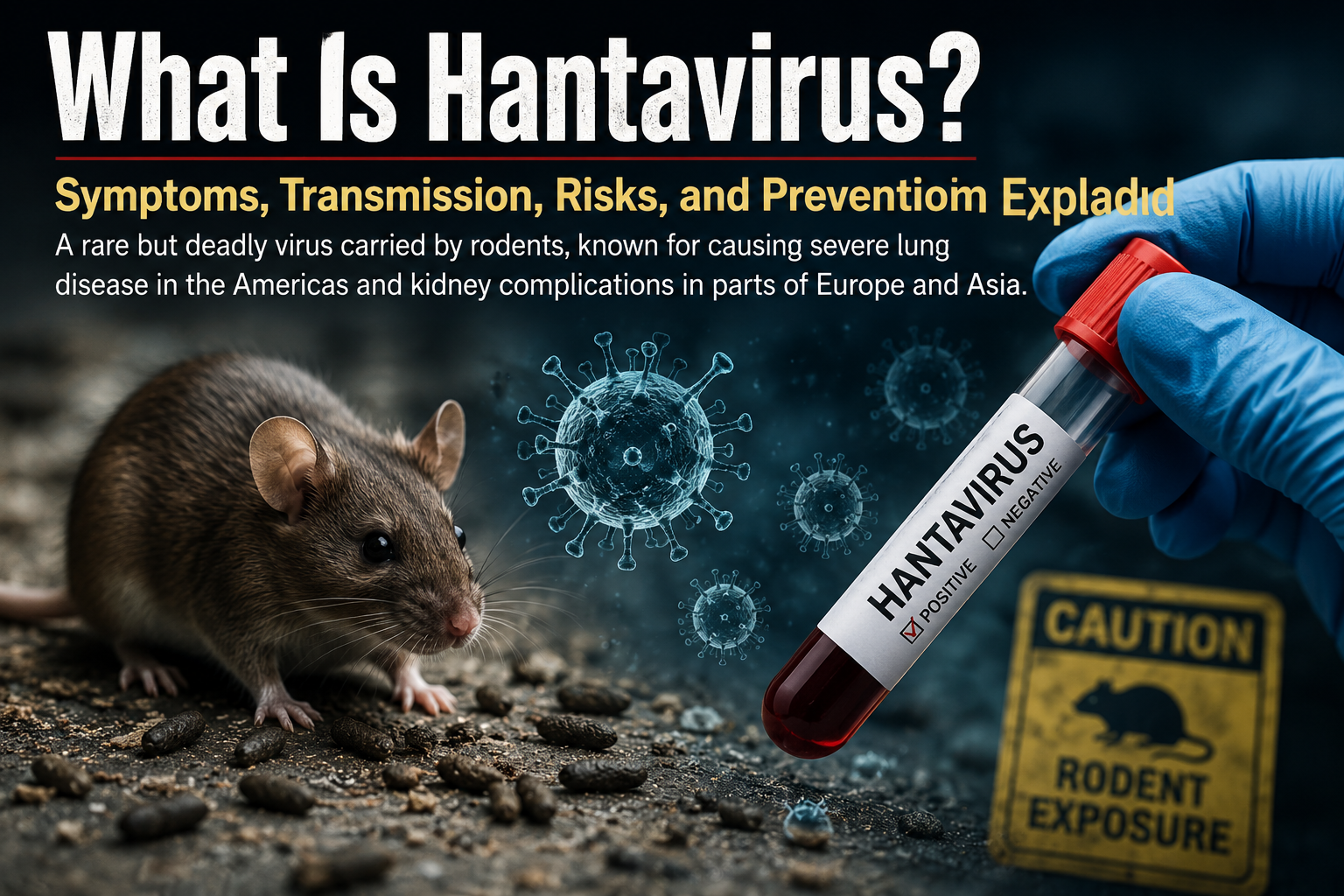
What Is Hantavirus? Symptoms, Transmission, Risks, and Prevention Explained
How a rare rodent-borne virus became a growing global health concern after recent international outbreaks and renewed public health warnings.


Hantavirus is a rare but potentially deadly viral disease that has recently gained international attention after a cluster of cases linked to a cruise ship outbreak in 2026. While the illness remains uncommon, health experts continue to warn that hantavirus infections can become severe very quickly, especially when symptoms affect the lungs or kidneys. Understanding how the virus spreads, what symptoms to watch for, and how to prevent exposure can help reduce the risk of infection.
Hantaviruses belong to a group of viruses scientifically classified under the genus Orthohantavirus. These viruses are primarily carried by rodents such as mice and rats. Infected rodents usually do not become sick themselves, but they can spread the virus through urine, saliva, and droppings. Humans become infected mainly by inhaling tiny airborne particles contaminated with rodent waste.
The disease is divided into two major forms depending on the region of the world and the strain involved. In North and South America, hantaviruses mainly cause Hantavirus Pulmonary Syndrome, also known as HPS or HCPS. This severe respiratory illness attacks the lungs and can lead to life-threatening breathing complications. In Europe and Asia, hantaviruses are more commonly linked to Hemorrhagic Fever with Renal Syndrome, or HFRS, which primarily affects the kidneys.
According to health organizations including the World Health Organization and the Centers for Disease Control and Prevention, hantavirus infections often begin with symptoms that resemble the flu. Early signs may include fever, chills, muscle aches, fatigue, headaches, nausea, vomiting, diarrhea, and abdominal pain. These symptoms can appear anywhere from one to eight weeks after exposure to infected rodents.
What makes hantavirus especially dangerous is how rapidly it can worsen. After several days of flu-like illness, some patients suddenly develop coughing, chest tightness, and severe shortness of breath as fluid begins filling the lungs. In advanced cases, blood pressure may drop dramatically, and respiratory failure can occur within hours. Medical experts note that once breathing symptoms begin, the disease can become critical very quickly.
Fatality rates for Hantavirus Pulmonary Syndrome are alarmingly high. Studies and public health reports estimate that roughly one-third to nearly half of patients with severe respiratory disease may die despite intensive medical care. Although no specific antiviral cure currently exists, early diagnosis and rapid supportive treatment improve survival chances. Patients with severe infection often require oxygen therapy, intensive care monitoring, mechanical ventilation, and in extreme situations, ECMO support to help the lungs and heart function.
One of the most discussed hantavirus strains is the Andes virus, which is found mainly in parts of South America. Unlike most hantaviruses, Andes virus has shown limited person-to-person transmission in rare cases involving prolonged close contact. This unusual feature drew attention during the 2026 cruise ship outbreak investigated by global health authorities. Even so, experts stress that hantavirus is not considered highly contagious like influenza or COVID-19.
The recent outbreak connected to the Antarctic cruise ship MV Hondius highlighted how international travel can complicate infectious disease investigations. Several passengers reportedly developed fever and respiratory illness after traveling through Argentina before boarding the vessel. Health agencies coordinated contact tracing efforts across multiple countries while monitoring exposed travelers for symptoms.
Despite media attention, public health officials continue to describe the overall global risk from hantavirus as low. Most infections are linked directly to environmental exposure to infected rodents rather than widespread community transmission. People who work in farming, construction, pest control, or cleaning abandoned buildings may face increased risk because they are more likely to encounter rodent-infested areas.
Prevention remains the most effective defense against hantavirus infection. Health authorities recommend sealing holes and cracks where rodents can enter homes or buildings, safely storing food, removing nesting materials, and using traps to control rodent populations. When cleaning areas contaminated with rodent droppings, experts strongly advise against sweeping or vacuuming dry waste because it can release infectious particles into the air. Instead, contaminated surfaces should be sprayed with disinfectant or bleach solution and cleaned while wearing gloves and protective masks.
Although hantavirus infections are rare, the disease serves as a reminder of how environmental exposure and wildlife can influence human health. Increased awareness, early medical attention, and proper rodent control remain essential tools for preventing severe illness and protecting public health worldwide.
About the Creator
Enjoyed the story? Support the Creator.
Subscribe for free to receive all their stories in your feed.
Comments
There are no comments for this story
Be the first to respond and start the conversation.