
Sleep Is Not Laziness. It Is the Most Powerful Drug Your Body Produces — and You Are Refusing to Take It
If a Pharmaceutical Company Discovered a Compound That Repaired Your DNA, Cleared Your Brain of Toxins, Regulated Every Hormone in Your Body, and Extended Your Life — You Would Pay Anything for It. You Already Have Access to It. You Just Keep Setting Your Alarm Earlier Instead.

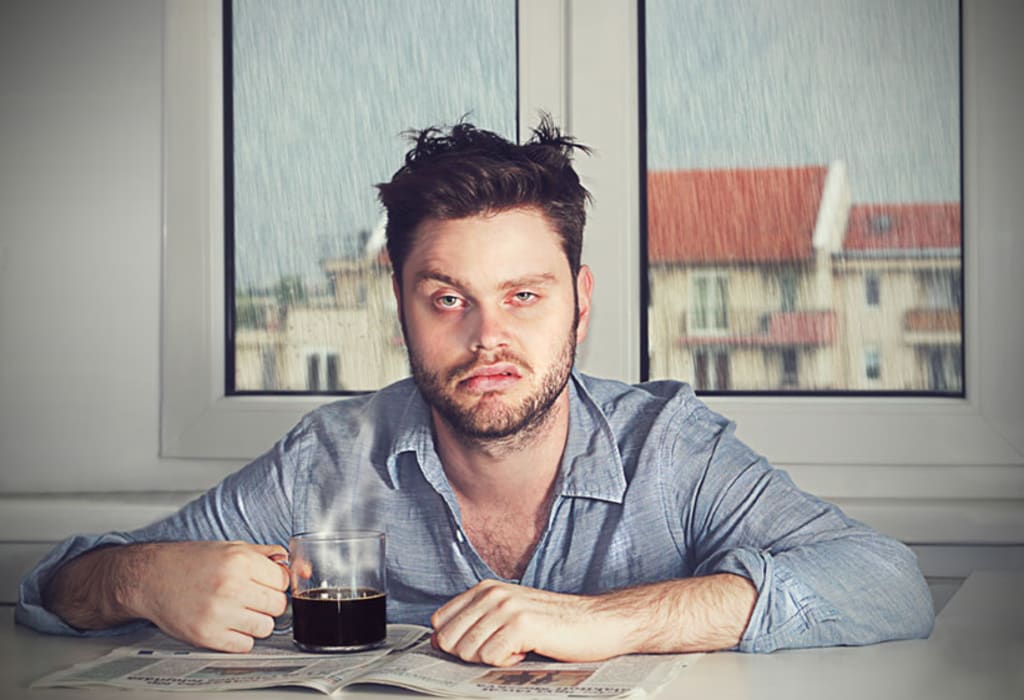
Imagine a drug.
A drug so effective that a single adequate dose enhances memory consolidation, accelerates physical recovery, regulates appetite hormones, repairs cellular DNA damage, clears neurotoxic waste from the brain, recalibrates the immune system, restores emotional equilibrium, reduces cardiovascular risk, and meaningfully extends life expectancy. A drug with no dangerous side effects at therapeutic doses, no addiction potential, no withdrawal syndrome, and no prescription required.
Now imagine that this drug is free. That it is produced automatically by your own body. That it has been refined by approximately 3.4 billion years of evolutionary biology into the most sophisticated physiological restoration system ever developed in any organism on this planet.
Now imagine that the majority of the population in every developed nation is chronically under-dosed on this drug. That the culture you live in actively stigmatizes taking the full recommended dose as weakness, indulgence, or lack of ambition. That the most celebrated version of a successful person in your society is someone who openly boasts about how little of this drug they take — who wears their deprivation like a medal, who says "I'll sleep when I'm dead" without registering the grim, literal accuracy of that statement.
That drug is sleep.
And the war we have declared on it — the cultural, commercial, and professional assault on the one thing our biology most non-negotiably requires — is producing a public health catastrophe so vast, so normalized, and so profitable to so many industries that it has become almost entirely invisible as the crisis it actually is.
What Sleep Actually Is — Because You Were Never Really Told
Most people understand sleep the way they understand breathing: as something the body does automatically, the significance of which can be safely ignored until it stops working properly. This understanding is, neurologically speaking, catastrophically incomplete.
Sleep is not rest. Rest is what you do when you sit quietly in a chair. Sleep is an entirely different biological state — an active, structured, extraordinarily complex physiological process that your brain and body enter because they cannot perform certain critical functions in any other state. It is not downtime. It is, in the assessment of virtually every major sleep researcher currently working, the single most important health behavior a human being can engage in.
During sleep, your brain cycles through distinct architectural stages — light sleep, deep slow-wave sleep, and REM sleep — each performing specific, irreplaceable biological functions. Deep slow-wave sleep is when the glymphatic system activates: a waste-clearance network unique to the sleeping brain that uses cerebrospinal fluid to flush out metabolic byproducts, including amyloid-beta and tau proteins — the very compounds that accumulate in Alzheimer's disease. The glymphatic system is almost entirely inactive during wakefulness. It operates during deep sleep, and only during deep sleep, at a scale roughly ten times greater than its minimal daytime function.
To put that plainly: your brain cleans itself while you sleep. Every night that you shortchange that process, you leave a residue. Every night of insufficient sleep is another missed sanitation cycle in the organ you depend on for every thought, memory, decision, and perception you will ever have.
REM sleep — the stage most associated with dreaming — performs a different set of miracles. It is the stage during which the brain processes emotional experience, consolidates declarative and procedural memory, integrates new learning with existing knowledge, and performs what sleep researcher Matthew Walker describes as "overnight therapy" — a process in which the emotional charge of distressing experiences is systematically stripped away, allowing the memory to be retained without the full physiological pain of its original impact. The emotional resilience you bring to each waking day is substantially a product of the REM sleep you had the night before. Deprive yourself of it, and the world does not get harder. It only feels that way — because your brain's capacity to regulate its own emotional responses has been measurably degraded.
This is the drug you are skipping. This is what that extra hour of email costs you.
The Catastrophic Biology of Sleep Deprivation
There is no organ system, no biological process, no aspect of physical or mental health that is not measurably impaired by insufficient sleep. This is not hyperbole. It is the summary statement of decades of sleep science, stated plainly because it is plainly true.
Cardiovascular system: sleeping six hours or fewer per night is associated with a 200 percent increased risk of fatal heart attack and a significantly elevated risk of stroke. The mechanism is well understood — sleep deprivation elevates sympathetic nervous system activity, raises cortisol, drives inflammatory pathways, and elevates blood pressure in ways that compound over years into structural cardiovascular damage.
Immune system: a single night of four to five hours of sleep reduces natural killer cell activity — the frontline immune cells that identify and destroy cancerous cells and virally infected cells — by 70 percent. A study of over 150 healthy adults exposed to a common cold virus found that those sleeping fewer than six hours were 4.2 times more likely to develop a cold than those sleeping seven or more hours. Your immune system does not operate independently of your sleep. It is calibrated by it, restored by it, and devastated without it.
Metabolic system: sleep deprivation dysregulates the hormones that govern appetite — suppressing leptin, which signals satiety, and elevating ghrelin, which drives hunger — producing a state in which the sleep-deprived brain craves high-calorie, high-carbohydrate food with an urgency that feels biological, because it is. Research shows sleep-deprived individuals consume, on average, 300 to 500 additional calories per day. Simultaneously, insulin sensitivity drops in states of sleep deprivation, elevating blood glucose and accelerating the progression toward metabolic syndrome and type 2 diabetes.
Brain and cognition: after seventeen hours of continuous wakefulness, cognitive impairment is equivalent to a blood alcohol level of 0.05 percent. After twenty-four hours, it reaches 0.10 percent — legally drunk in most jurisdictions. The chronically sleep-restricted brain — sleeping six hours when it needs eight, week after week — shows cognitive deficits equivalent to total sleep deprivation, with one additional cruelty: the sleep-deprived brain loses the ability to accurately assess its own impairment. You become worse at everything and simultaneously more confident that you are fine. This combination is, from almost any angle you choose to examine it, terrifying.
Mental health: the relationship between sleep deprivation and psychiatric conditions is bidirectional, but the causal arrow pointing from poor sleep to mental illness is stronger than most people understand. Insufficient sleep amplifies amygdala reactivity by up to 60 percent — the amygdala being the brain's threat and emotional alarm system — while simultaneously weakening the prefrontal cortex's regulatory control over it. The result is a brain that overreacts to threat, underregulates its emotional responses, and loses access to the executive function and perspective needed to navigate stressors that a well-rested brain would handle with ease. Chronic sleep deprivation is one of the strongest modifiable risk factors for depression and anxiety that exists. It is also among the most consistently ignored.
The Culture That Made Exhaustion a Virtue
How did we arrive at a moment in which the deliberate deprivation of our most essential biological restorative process became not merely normalized but celebrated?
The answer is economic, ideological, and historical — and it is worth tracing, because understanding how the mythology of productive sleeplessness was constructed is the first step toward dismantling it.
The Industrial Revolution reframed human beings as productive units in a way that had no precedent in human history. The factory clock did not care about circadian rhythms. It cared about output. The moral language of industriousness — the equation of hard work with virtue, of rest with sloth — was partly theological in origin but found its most powerful modern expression in the economic logic of industrial capitalism, which needed workers who would subordinate biological needs to production schedules.
That logic metastasized through the twentieth century into the professional culture most of us now inhabit. The glorification of the overworked executive, the startup founder sleeping on an office couch, the medical resident surviving on thirty-six-hour shifts, the academic grinding through the night — these are not anomalies. They are ideals. They are the aspirational images the culture holds up as evidence of dedication, competitiveness, and seriousness of purpose.
The tech industry, in particular, turned sleep deprivation into an identity. Silicon Valley's "hustle culture" — with its 4 AM wake-ups, its four-hour sleep prescriptions, its bathetic pride in human biological override — exported itself globally through media, social platforms, and the aspirational narratives of founders who built billion-dollar companies on the apparent foundation of refusing to sleep. The fact that the neuroscience of sleep comprehensively demolishes the productivity claims of this culture has done, so far, almost nothing to alter it.
Because this is not really about productivity. It is about identity. In a culture that has made busyness the primary signal of value and importance, sleep is the most visible form of not-being-busy. To sleep is to be, for those hours, unproductive — and unproductivity, in the value system of modern capitalism, is indistinguishable from worthlessness. The alarm set for 5 AM is not primarily a productivity tool. It is a statement about the kind of person you are — or the kind you are performing being.
The Industries That Profit From Your Exhaustion
The sick-care economy, as ever, has positioned itself perfectly around the wound.
The global caffeine market — coffee, tea, energy drinks, caffeinated supplements — is worth over $400 billion annually. Energy drinks alone represent a $90 billion industry growing at approximately 8 percent per year, marketed most aggressively to the young, the sleep-deprived, and the overworked. Caffeine does not restore what sleep deprivation removes. It temporarily blocks adenosine receptors — the brain's sleep-pressure signaling system — creating the subjective sensation of alertness while the underlying sleep debt continues to accumulate, the cognitive impairment continues to compound, and the biological damage continues to progress.
You are not less tired on caffeine. You are borrowing wakefulness against a debt that charges compound interest and collects at midnight.
The sleep economy — mattresses, sleep trackers, white noise machines, sleep supplements, blackout curtains, sleep coaching apps — is now worth over $80 billion annually, a figure that continues to grow precisely because the culture that creates the sleep deprivation epidemic shows no signs of abating. We have built a robust commercial ecosystem not to fix the conditions that destroy sleep, but to help individuals compensate, at personal expense, for a crisis that is structural and collective in its origins.
The pharmaceutical sleep aid market generates billions more — not in drugs that restore healthy sleep architecture, but in compounds that produce sedation, a biological state that resembles sleep superficially while failing to deliver most of its restorative functions. Sedation is not sleep. It is sleep's less competent, pharmacologically produced understudy, and the brain knows the difference even if the clock doesn't.
The mental health treatment industry, the cardiovascular disease treatment industry, the metabolic disease treatment industry, the oncology industry — all of them are, in part, downstream beneficiaries of the culture that convinces its most ambitious members to chronically deprive themselves of the one thing that most reliably prevents the conditions these industries treat.
The incentives, as usual, point everywhere except toward rest.
What Eight Hours Actually Does — Hour by Hour
Within the first ninety minutes of sleep, your body enters its first cycle of deep slow-wave sleep. Human growth hormone — the primary driver of physical tissue repair, muscle recovery, and cellular regeneration — is released in its largest pulse of the entire day. This is not a metabolic footnote. This is when your body repairs the microtears in muscle from exercise, rebuilds bone density, regenerates skin cells, and begins the overnight restoration of every physical system that waking life degrades.
Between hours two and five, the glymphatic system reaches peak activity. The brain's interstitial space expands by approximately 60 percent, allowing cerebrospinal fluid to flow more freely through brain tissue, binding to metabolic waste products and flushing them toward the liver for disposal. This nightly neural housekeeping is the brain's primary defense against the neurodegenerative diseases that accumulate over decades — and it cannot be replicated, accelerated, or substituted.
In the second half of the night — hours five through eight — REM sleep dominates. This is when emotional memory processing occurs, when creative integration of disparate information happens, when the brain rehearses recently learned skills and consolidates them into long-term procedural memory. The insight experiences that people describe as "sleeping on a problem" — the solution that arrived fully formed in the morning, the creative connection that wasn't there the night before — are products of REM sleep's associative processing. When you cut the night short at six hours, you are disproportionately truncating REM sleep, because REM periods lengthen through the night and are most abundant in the final hours. You are cutting the part of sleep most responsible for emotional resilience, creative thinking, memory integration, and the psychological processing of your own experience.
The last two hours of sleep are not extra credit. They are arguably the most neurologically valuable hours of the night. And they are the first ones sacrificed to the alarm clock.
The Permission You Have Been Waiting For
There is a question that sits underneath most of the cultural conversation about sleep, unspoken but present: Am I allowed to need this much?
The answer — biological, evolutionary, and moral — is unequivocal: yes. You are not only allowed to need eight hours of sleep. You are built for it. Your brain's glymphatic system was not designed for six hours. Your immune system's overnight recalibration was not optimized for five. Your emotional processing architecture was not engineered for truncated REM. The human organism, refined over millions of years of evolution, has a sleep requirement that has not changed since before we invented alarm clocks, electric lights, or the concept of a productivity hack.
The eight hours is not a suggestion. It is a specification.
And the person who consistently meets that specification is not lazy. They are not undisciplined. They are not sacrificing ambition on the altar of comfort. They are operating their brain and body at the biological parameters they were designed for — which means better cognitive performance, stronger emotional regulation, more creative problem-solving, more resilient immune function, lower risk of the chronic diseases that will, if they develop, demand far more time than the sleep they were supposed to prevent.
Protecting your sleep is not weakness. It is the most evidence-based, most biologically fundamental, most consistently undervalued performance intervention available to any human being on this planet.
Your body produces it for free. Every single night.
All you have to do is stop treating the most powerful restorative process in your biology as an inconvenience between days.
Go to sleep.
Not because you are tired — though you almost certainly are.
But because the version of you that wakes up after eight real hours of it is categorically, measurably, neurologically different from the version that has been running on six.
And that difference compounds.
Every. Single. Night.
About the Creator
Soibifaa
Public Health Practitioner | Cobbler | Content Creator ✨
Blending health, creativity & craftsmanship to inspire purposeful living and meaningful connections. Passionate about storytelling, people, and creating impact one step at a time.
Enjoyed the story? Support the Creator.
Subscribe for free to receive all their stories in your feed.
Comments
There are no comments for this story
Be the first to respond and start the conversation.