
Later Life Renewal and Active Living
Stretching to Change the Paradigm
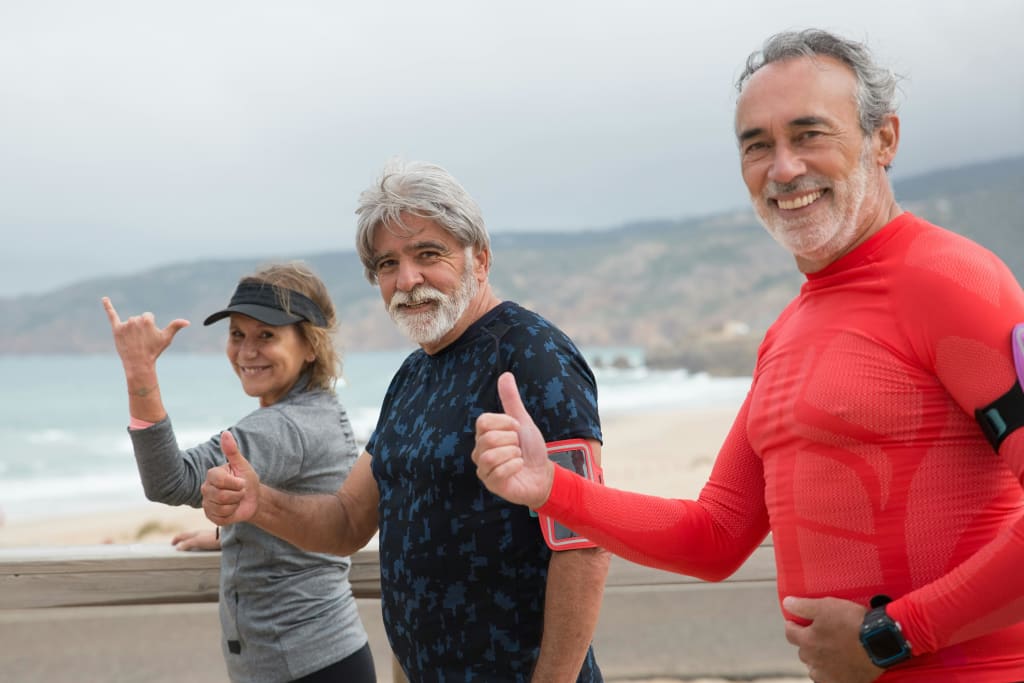
Decline and deterioration have, for far too long, been what people equate aging with, especially when coupled with the term “retirement”. A growing body of research suggests, however, that such a narrative need not be adopted. Embracing healthy holistic choices, such as engaging in regular stretching exercises can lead to an active redefinition of what it means to grow old. “We [can] choose the stories by which we live, and age,” asserts an article in the Generations Journal of the American Society on Aging. This powerful statement reminds us that inevitable loss need not be the defining characteristic of aging. Seeing it as an opportunity for active living and renewal can also be the paradigm of one’s later life.
The Changing Narrative of Aging
Asking someone to think of a maxim that portrays the aging process--within three seconds--will almost always yield answers synonymous with frailty and dependency. Even though this narrative is pervasive in today’s society, it does not encapsulate the full potential of one’s later life. Aging can be viewed as a journey of empowerment. It can be marked by continuous physical and mental health improvement. The first step towards active aging is a change in mindset. For example, with the right exercise interventions, aging adults can break free from the stereotype of decline. Instead, they can build lives characterized by strength, flexibility, and balance.
Evidence for Stretching Exercises
Although there are many factors that facilitate the paradigm shift, regular stretching has proven significance. Two studies shed light on the benefits of stretching exercises for seniors. The recently published systematic review and meta-analysis by Salse-Batán et al. (2025) demonstrated that stretching significantly enhances walking performance by increasing gait speed. This is particularly important because walking speed is not only a measure of mobility but also a predictor of survival, as established by Studenski and her colleagues in their 2011 study. Together, these findings underscore the potential of stretching exercise to maintain or even improve key aspects of physical health in older adults.
Mechanisms Behind the Benefits of Stretching
The benefits of stretching extends beyond improved physiological mobility. Regularly engaging in this form of exercise can reduce stiffness, improve joint motion, and enhance muscle elasticity, according to Batra et al. (2019). These are crucial factors in preventing falls because of how strongly they influence balance, whether stationary or in motion. When done correctly, regular stretching will lead to smoother, more coordinated movement. The aging adult will then be able to perform activities of daily living with confidence. Moreover, stretching even promotes better blood circulation and assists in minor injury recovery resulting in better overall health.
Practical Guidelines for Incorporating Stretching into Daily Life
Many seniors still hesitate to adopt stretching as part of their exercise routine or any new exercise routine for that matter, despite having a clear picture of the benefits. They are concerned not only about the potential complexity it may entail but also about how it might adversely impact their safety.
Fortunately, making stretching part of one’s daily routine can be both simple and effective. Begin with a few gentle stretches. Focus on major muscle groups (e.g., the calves, hamstrings, and lower back). Over time, increase the duration and intensity gradually.
Community-based programs, such as EnhanceFitness, provide excellent models that are safe, structured, and vetted by health professionals. An integral component of all such programs is stretching. These classes are led by certified experts who tailor each session to the specific needs of older adults.
There are also self-guided routines of equivalent quality, Simple Stretching for Seniors, for instance, offers a comprehensive video guide and an ebook specifically designed to walk laymen through easy-to-replicate techniques. It is a resource designed to help seniors build strength, improve balance, and enhance their quality of life by integrating stretching into a holistic program and by keeping the exercise routines accessible and enjoyable.
Tips for Overcoming Common Barriers
It is natural to worry about the potential dangers when starting a new exercise program. When performed correctly and gradually, stretching is one of the safest among the various exercise forms. To further reduce the risks, start slowly by using some form of stable support, such as a chair or the wall. Gradually progress from there towards standing stretches without support. Think weeks, not days, and be consistent. Small, regular sessions will ultimately lead to significant improvements. Seek ways to stay motivated. Adding a social dimension, such participating in group classes, can foster a sense of community and provide encouragement when needed.
Real-Life Success Stories and Testimonials
The transformative benefits of incorporating stretching into daily life has already been experienced by many older adults. Positive testimonies left by participants of programs like EnhanceFitness demonstrate how regular exercise can not only improve physical function and significantly lower the risk of falls; it can also improve a person’s mental state by reducing depression. These success stories offer tangible proof that adopting a stretching routine empowers seniors making more active, fulfilling lives a reality.
In Conclusion
The evidence is compelling: stretching exercises for seniors offer numerous benefits, from enhanced mobility, to improved balance, and even to a more positive outlook on aging. By challenging outdated traditional stereotypes and embracing a more holistic active lifestyle, older adults can not only improve their physical health but also enrich their overall quality of life.
If you are ready to take control of your health and redefine your aging journey, consider incorporating stretching into your daily routine. Start with a simple plan, be consistent, and explore tried and true resources to guide you along the way. Discover a simple, effective stretching routine today and embrace a more active, empowered future!
Disclosure: Some links in this post are affiliate links. If you click through and make a purchase, I may receive a commission at no extra cost to you.
References:
- Batra, A., Palmer, R. C., Bastida, E., McCoy, H. V., & Khan, H. M. R. (2019). Determining the Long-Term Effectiveness of a Group-Based Physical Activity Program. Health Promotion Practice, 20(3), 401–408. https://www.jstor.org/stable/27008455
- EnhanceFitness. (n.d.). What is EnhanceFitness? Accessed February 19, 2025, at https://projectenhance.org/enhancefitness/
- Randall, W. L., & Randall, B. (2023). In Praise of Adventure: Changing the Narrative of Later Life. Generations: Journal of the American Society on Aging, 47(3), 1-8. https://www.jstor.org/stable/48756424
- Salse-Batán, J., González-Devesa, D., Duñabeitia, I., Bidaurrazaga-Letona, I., Ayán-Pérez, C., & Sanchez-Lastra, A. (2025). Effects of stretching exercise on walking performance and balance in older adults: A systematic review and meta-analysis, Geriatric Nursing, 61, 479-490. https://doi.org/10.1016/j.gerinurse.2024.12.018
- Simple Stretching for Seniors. (n.d.). Retrieved from https://stretching.learnnow.top/#aff=vitalvoyager
- Studenski, S., Perera, S., Patel, K., Rosano, C., Faulkner, K., Inzitari, M., Brach, J., Chandler, J., Cawthon, P., Connor, E. B., Nevitt, M., Visser, M., Kritchevsky, S., Badinelli, S., Harris, T., Newman, A. B., Cauley, J., Ferrucci, L., & Guralnik, J. (2011). Gait speed and survival in older adults. JAMA, 305(1), 50–58. https://doi.org/10.1001/jama.2010.1923
About the Creator
Enjoyed the story? Support the Creator.
Subscribe for free to receive all their stories in your feed.
Comments
There are no comments for this story
Be the first to respond and start the conversation.