
Early indicators of brain development may be found in a baby's gut flora.
A covert dialogue

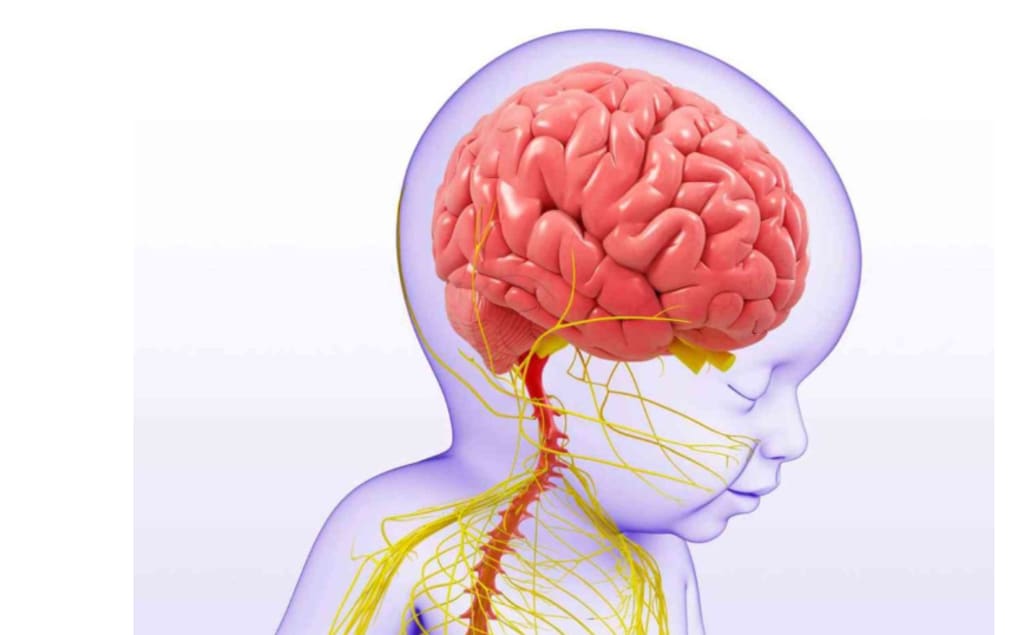
When a baby is born, a lot of things seem to have already been decided. Many of us believe that a child's DNA largely determines their temperament, brain wiring, and likelihood of developing disorders like autism.
That story is subtly complicated by the first year. According to recent research, a baby's brain development is influenced by the bacteria it acquires over those months, and some of these bacteria may mitigate dangers that appeared to be fixed at birth.
A covert dialogue
Though the early years of this communication remained unclear, scientists have long understood that the brain and gut communicate. Siew Chien Ng, a gastroenterologist at The Chinese University of Hong Kong (CUHK), led a team that went out to listen in.
In the middle were two systems that were hardly ever studied together. One is the thriving bacterial population that settles in the gut after birth, known as the gut microbiome. The other is a collection of chemical markers on the infant's DNA that act as switches to activate or deactivate genes.
On its own, each had already been linked to long-term health. The way they converse in the early months and if that back-and-forth pushes a youngster toward disorders like autism or attention issues had not been studied.
Monitoring the initial year
571 newborns' umbilical cord blood was obtained by the investigators, who then read the chemical markers on their DNA. The gut microbes of each infant were then monitored, with samples taken at 2, 6, and 12 months.
Almost a thousand families provided samples throughout the third trimester. Parents completed a behavioural questionnaire intended to identify early indicators of autism and attention issues when their kid turned three.
Previous research and animal studies have suggested that gut microorganisms can influence a growing brain. Small groups provided the most of such evidence. In so many families, it had not been possible to trace the entire chain throughout a baby's first three years of life.
What directs the gut
The microorganisms that took hold were determined by ordinary things. The way a baby was born, whether it was nursed, whether antibiotics were administered early, and whether older siblings occupied the home all had an impact on the expanding community.
A somewhat diverse set of influences was reflected in the birth tags. A pattern was left by the mother's allergies, the length of the pregnancy, the delivery mode, and older siblings.
Remarkably, there was no discernible fingerprint left on those birth tags by the parents' own gut microbes. However, the tags themselves appeared to direct the signatures that followed. Compared to kids born vaginally, babies delivered via caesarean section have unique chemical tags on genes related to immune defence and brain development.
Additionally, a caesarean delivery alters the microorganisms that a newborn acquires. A large portion of the typical handoff following a vaginal delivery is just overlooked. a gap that can persist, according to prior study. A portion of it appeared to be filled with the father's germs.
The tags did more than simply indicate the baby's delivery method. By the time they became one year old, infants with higher immune gene marking—the genes that aid the body in identifying invaders—tended to have a smaller diversity of gut flora.
Bacteria that resist
Some birth markers matched behaviour by the age of three. Early indicators of autism and ADHD were more prevalent in children with heavier marking on brain-building and wiring genes; this effect appeared to be partially mediated through the gut.
The study's most startling finding was found there. Children who were exposed to the gut bacterium Lachnospira pectinoschiza from infancy were less likely to exhibit symptoms by the time they were three years old, even though their tags tended toward higher autism risk.
Parabacteroides distasonis, a different bacterium, seems to have a similar effect on attention issues. If this species settled in during the first year, children with tags associated with a higher risk of ADHD were less likely to exhibit them.
This type of rescue had never been demonstrated in healthy infants who were monitored from birth. The genetic starting point was not destroyed by the bacteria. However, where it led, they appeared to soften. A danger that appeared fixed was suddenly more negotiable.
Hein Min Tun, a co-senior author and public health researcher at the institution, stated that "the foundations for brain health are laid very early, even before birth." He referred to it as a conversation between a baby's germs and biology.
Babies, brains, and guts
The study demonstrates that brain development is not entirely predetermined at birth. The probabilities are influenced by a baby's early genetic markers, but the microorganisms that develop later can change the result.
Since the research has only discovered connections, not evidence that the bacteria actually control the brain, more laboratory work will be required. They refer to it as one tiny piece of a much bigger puzzle.
Nevertheless, it unlocks a concrete door. Doctors may eventually support a baby's gut with specific probiotics or selected meals if beneficial bacteria can reduce a risk a child is born with, and a more comprehensive review points in the same direction. These same kids are already being followed by the team to see how the narrative develops.
About the Creator
Enjoyed the story? Support the Creator.
Subscribe for free to receive all their stories in your feed.
Comments
There are no comments for this story
Be the first to respond and start the conversation.